
Abandoned furniture removal options are the practical methods available to homeowners, renters, and landlords for disposing of unwanted large household items safely, affordably, and without legal risk. The most effective approach combines municipal bulky-item pickup, donation through organizations like Salvation Army or Goodwill, and professional junk removal services such as Junky Jan. Each method has distinct cost profiles, timing requirements, and eligibility rules. Knowing which option fits your situation saves you time, money, and potential fines.
1. Municipal bulky-item pickup programs
Municipal bulk pickup is the most affordable legitimate disposal method for most homeowners, but it requires strict adherence to scheduling and placement rules to avoid failed collection or fines. Cities across the country offer these programs as part of standard solid waste services, and the rules vary significantly by location.
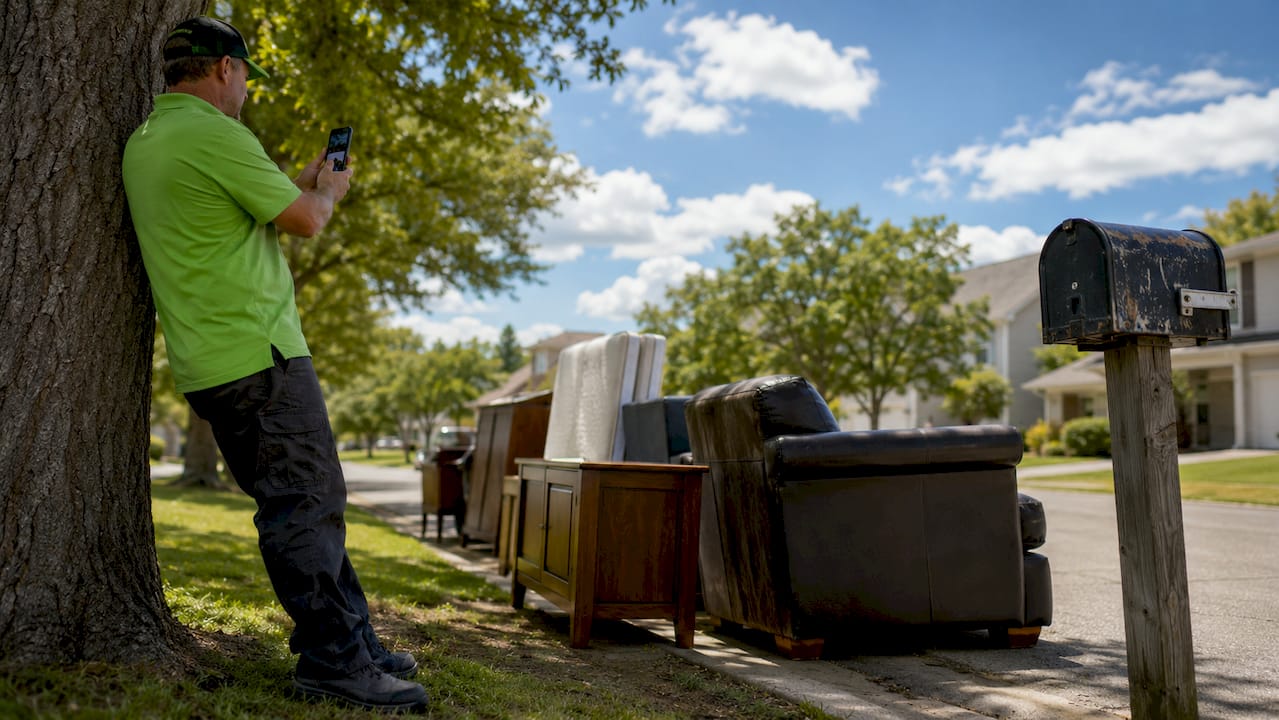
Cities like Tacoma, Providence, and Atlanta each run structured programs. Tacoma's Call-2-Haul program allows residents to schedule curbside pickup of up to 3 large items and 15 boxes or bags of smaller items, with strict rules about timing and placement. Items must be at the curb by 7 a.m., with no obstructions and only pre-disclosed items accepted. Providence offers free bulky item pickup for residents in buildings with six or fewer units, but items must be placed no earlier than 4 p.m. the night before and no later than 4 a.m. on collection day. Atlanta residents submit requests through a 311-style system to schedule official bulk collection of large items like furniture and appliances.
To use municipal pickup correctly:
- Check your city's solid waste website for eligible items and quantity limits
- Schedule your pickup online or by phone before placing anything at the curb
- Follow exact placement timing to avoid fines or a missed collection
- Never place items not listed in your original request
Pro Tip: Photograph your furniture at the curb with a timestamp and save your confirmation number. This protects you against illegal dumping claims and gives you evidence if the pickup is missed.
For a deeper look at how these programs work, the bulk furniture removal guide from Junky Jan covers curbside rules and preparation steps in detail.
2. Donation and resale options
Donation is a viable furniture disposal option when items are in acceptable condition, and it benefits both the community and the environment. The catch is that most charities have strict acceptance criteria, and abandoned furniture often fails to meet them.
Donation eligibility typically requires items to be clean, structurally intact, free of major damage, odors, or pest issues. Organizations like Salvation Army and Goodwill refuse furniture that shows signs of mold, infestation, or heavy wear. That means a couch left behind by a tenant for months may not qualify, even if it looks salvageable from a distance. Always call ahead to confirm acceptance before hauling anything to a drop-off location.
If the furniture is in decent shape, resale platforms like Facebook Marketplace or Craigslist are worth considering. Listing is free, and buyers often arrange their own pickup, which eliminates your hauling cost entirely. The tradeoff is time. You may wait days or weeks for a buyer, which does not work if you need the space cleared quickly.
Before donating, take these steps:
- Wipe down surfaces and vacuum upholstered pieces
- Tighten any loose screws or hardware
- Remove personal items from drawers or cushions
- Confirm the charity's current acceptance list by phone
Pro Tip: Minor repairs like tightening a wobbly leg or spot-cleaning a cushion can be the difference between a charity accepting or rejecting a piece. Ten minutes of prep can save a trip to the landfill.
3. Professional junk removal services
Professional junk removal is the fastest and most convenient abandoned furniture removal option, particularly when items are heavy, located upstairs, or need to go quickly. Junk removal services handle all the heavy lifting, hauling, and disposal, but costs vary by item size, location, and volume.
The core advantage over municipal pickup is speed. Most professional services offer same-day or next-day scheduling, with no waiting for a city pickup window. This matters when you are clearing a rental unit between tenants or dealing with a property cleanout on a deadline. The tradeoff is cost. Municipal pickup is typically free or low-cost, while professional haulers charge based on load size.
Before hiring a junk removal company, confirm whether they recycle or donate usable items rather than sending everything to a landfill. Many providers default to landfill disposal unless you ask specifically. A company that partners with local donation centers or recycling facilities reduces your environmental footprint without extra effort on your part.
Situations where professional removal makes the most sense:
- Furniture is on an upper floor with no elevator access
- You need same-day or next-day removal
- You have multiple large items that exceed municipal pickup limits
- The property is a rental unit requiring a fast turnaround
To understand exactly what these services include, the junk removal service guide from Junky Jan explains scope, pricing structures, and what to expect on the day of pickup.
4. Legal considerations for landlords and property managers
For landlords and property managers, abandoned furniture disposal is both a logistics challenge and a legal risk-management issue involving timing, notice, and documentation. Getting this wrong can expose you to liability claims, even after a lawful eviction.
Florida law provides a clear framework. Landlords must not dispose of tenant property before writ execution and should avoid self-help eviction to prevent liability. After the writ is executed, the protocol involves holding valuable items for 24 to 72 hours or up to 10 days, sending written notice to the tenant before disposal, and retaining documentation to protect against future claims. Disposing of property prematurely or without notice creates legal exposure regardless of how clearly the tenant abandoned the unit.
Best practices for landlords handling abandoned furniture:
- Photograph and inventory all items left behind immediately after gaining access
- Send written notice to the tenant's last known address before disposing of anything
- Hold items that appear valuable for the legally required period
- Use municipal pickup, donation, or a licensed junk removal service for final disposal
- Keep records of all removal steps, including receipts and confirmation numbers
Renters in multi-unit buildings should coordinate with their landlord or property manager before arranging any bulk disposal. Municipal eligibility often depends on trash service contracts and building type, and improper handling can create complications for both parties.
5. How to choose the right removal option for your situation
The best furniture disposal option depends on four factors: item condition, your timeline, your budget, and your property type. Running through a short decision framework before acting saves both money and effort.
Start by assessing item condition. If the furniture is clean and intact, donation or resale should be your first move. If it is damaged, stained, or pest-affected, skip donation entirely and go straight to municipal pickup or professional hauling. Next, check your municipal program. If your city offers free bulky-item pickup and your timeline allows for scheduling, this is almost always the most cost-effective path. If timing is tight or item volume exceeds municipal limits, professional junk removal becomes the practical choice.
Pro Tip: Combine options for maximum efficiency. Donate what qualifies, list resalable pieces on Facebook Marketplace, and schedule a junk removal service for everything that remains. This approach minimizes cost and keeps usable furniture out of landfills.
Here is a direct comparison of the main options:
| Option | Cost | Speed | Best for |
|---|---|---|---|
| Municipal bulk pickup | Free or low-cost | 1 to 2 weeks | Homeowners with time to schedule |
| Donation (Salvation Army, Goodwill) | Free | Variable | Clean, intact furniture |
| Resale (Facebook Marketplace) | Free to list | Days to weeks | Good-condition pieces |
| Professional junk removal | Moderate to high | Same day or next day | Urgent, heavy, or high-volume removal |
| Landlord-managed disposal | Varies | Depends on legal timeline | Post-eviction or rental vacancy |
For renters, the most important step is confirming with your landlord or building manager before placing anything at the curb. Many municipal programs restrict eligibility by building size, and placing items incorrectly can result in fines that fall on the property owner.
Key takeaways
The most cost-effective abandoned furniture removal strategy combines free municipal bulk pickup for eligible items, donation for clean pieces, and professional junk hauling for urgent or oversized loads.
| Point | Details |
|---|---|
| Municipal pickup is cheapest | Free or low-cost, but requires scheduling and strict placement rules to avoid failed collection. |
| Donation requires condition standards | Salvation Army and Goodwill refuse damaged, odorous, or pest-affected furniture. |
| Professional hauling offers speed | Same-day removal is available but costs more than municipal programs. |
| Landlords face legal obligations | Florida law requires written notice and a holding period before disposing of tenant property. |
| Combining options saves money | Donate what qualifies, resell what has value, and haul the rest for the lowest total cost. |
What I have learned from watching people get this wrong
Most people treat furniture disposal as a last-minute problem. They wait until moving day, then panic when they realize the city pickup window closed three days ago and the charity van is booked for two weeks. The result is furniture left on the curb illegally, a fine from the city, or a rushed call to a hauler at full price.
The single most common mistake I see is skipping the municipal program entirely because it "seems complicated." It is not. Most cities have an online form, a phone number, and a two-week window. That is a free service most homeowners leave on the table because they did not plan two weeks ahead.
The second mistake is assuming all junk removal companies handle disposal responsibly. Many do not. Some haul everything to the nearest landfill regardless of condition. If you care where your furniture ends up, ask directly before booking. A company that donates usable pieces or recycles materials is worth paying a small premium for.
For landlords, the legal piece is where I see the most costly errors. Disposing of a tenant's furniture 24 hours after gaining access, without written notice, is the kind of shortcut that turns into a lawsuit. The protocol exists for a reason. Follow it, document everything, and the risk disappears.
— gam
Let Junky Jan handle the heavy lifting
If you are in Miami, Hollywood, or Broward County and need furniture gone fast, Junky Jan makes it straightforward.

Junky Jan's crews handle same-day and next-day furniture pickup with no hidden fees and transparent load-based pricing. Whether you are clearing a single couch or doing a full property cleanout, the team manages all the lifting, hauling, and responsible disposal. Junky Jan partners with local donation centers and recycling facilities to keep usable items out of landfills. Scheduling takes minutes, and licensed, insured crews show up on time. For fast, affordable furniture removal in Miami, Junky Jan is the local service South Florida homeowners and landlords trust.
FAQ
What are the cheapest abandoned furniture removal options?
Municipal bulky-item pickup programs are the most affordable option, often free for eligible residents. Cities like Tacoma, Providence, and Atlanta offer scheduled curbside collection for large items including furniture.
Can I donate abandoned furniture left by a tenant?
You can donate it if the items meet the charity's acceptance criteria, meaning clean, intact, and free of damage or odors. Organizations like Salvation Army and Goodwill have strict standards and often refuse furniture in poor condition.
How long must a Florida landlord hold abandoned tenant property?
Florida landlords should hold items for 24 to 72 hours for low-value property or up to 10 days for items that appear valuable, with written notice sent to the tenant before disposal.
When should I hire a professional junk removal service?
Hire a professional when furniture is too heavy to move alone, located on an upper floor, or needs to be removed faster than a municipal pickup window allows. Same-day services like Junky Jan are built for exactly these situations.
Can renters schedule municipal bulk pickup themselves?
Renters should coordinate with their landlord or building manager first, since municipal eligibility often depends on building size and existing trash service contracts. Acting without that coordination can create complications for both parties.