

Most South Florida homeowners and landlords don't think about junk removal until they're standing in a garage full of broken furniture, old appliances, and years of accumulated clutter — and then the sticker shock hits. Understanding your budget annual junk removal costs before that moment is the difference between a manageable expense and a financial scramble. This guide walks you through what drives junk removal pricing estimates, how to calculate a realistic annual waste disposal budget, and how to avoid the fees that catch most people off guard.
Table of Contents
- Understand the factors that affect junk removal pricing
- Calculate your annual junk removal budget step by step
- Tips for executing junk removal projects without overspending
- Verify results and refine your junk removal budget annually
- Why budgeting separately for regular cleanouts and renovations pays off
- Get affordable junk removal in South Florida with Junky Jan
- Frequently asked questions
Key Takeaways
| Point | Details |
|---|---|
| Variable pricing factors | Junk removal costs depend mainly on debris volume, waste type, labor complexity, and local disposal fees. |
| Annual budgeting method | Estimate yearly costs by multiplying expected junk removal visits by local per-job price ranges. |
| Dumpster rental tipping point | Projects over 15 cubic yards often save money renting dumpsters instead of multiple hauling trips. |
| Separate budget categories | Treat renovation debris and routine clutter separately to avoid underestimating annual expenses. |
| Avoid surprise fees | Get written, itemized quotes and plan projects to reduce labor surcharges and repeated pickups. |
Understand the factors that affect junk removal pricing
Before you can build a budget, you need to know what you're actually paying for. Junk removal pricing structures aren't random. Every quote reflects a combination of volume, waste type, labor difficulty, and local disposal costs.
Volume is the biggest driver. Most companies price by the fraction of a truckload, measured in cubic yards. A quarter-load pickup costs significantly less than a full truckload. Knowing roughly how much space your junk takes up gives you real leverage when comparing quotes.
Waste type matters more than most people realize. Standard household furniture is priced very differently from construction debris, old refrigerators, or anything that requires special handling. Appliances containing refrigerants, for example, require certified disposal and carry extra fees. Yard waste and concrete are heavy and often priced by weight rather than volume.
Labor complexity adds up fast. Items on a second floor, behind a fence, or buried under other debris take more time to move. That time costs money. In South Florida, where many homes have narrow driveways, gated communities, or high-rise condos, access fees are a real line item.
Here's a breakdown of typical cost factors:
| Cost factor | Typical impact on price |
|---|---|
| Volume (quarter to full truckload) | $133 to $372 per job |
| Appliance or hazardous item surcharge | $25 to $75 per item |
| Stairs or difficult access fee | $25 to $50 per floor |
| Disposal and landfill fees | Included or $50 to $100 extra |
| Same-day or emergency scheduling | 10% to 20% premium |
Junk removal costs average $241 per job but can range between $133 and $372 depending on volume and waste type. That range is wide because the variables above stack on top of each other quickly.
Pro Tip: Always ask whether disposal fees are included in the quote or billed separately. Some companies advertise a low base price and then add landfill fees at the end. Get the total cost in writing before any work starts.
Now that you understand what influences junk removal prices, let's look at how to translate these factors into budgeting your annual costs.
Calculate your annual junk removal budget step by step
The most common mistake homeowners make is treating junk removal as a one-time expense. For landlords managing multiple properties in Miami or Broward County, it's an ongoing operational cost that deserves its own budget line.
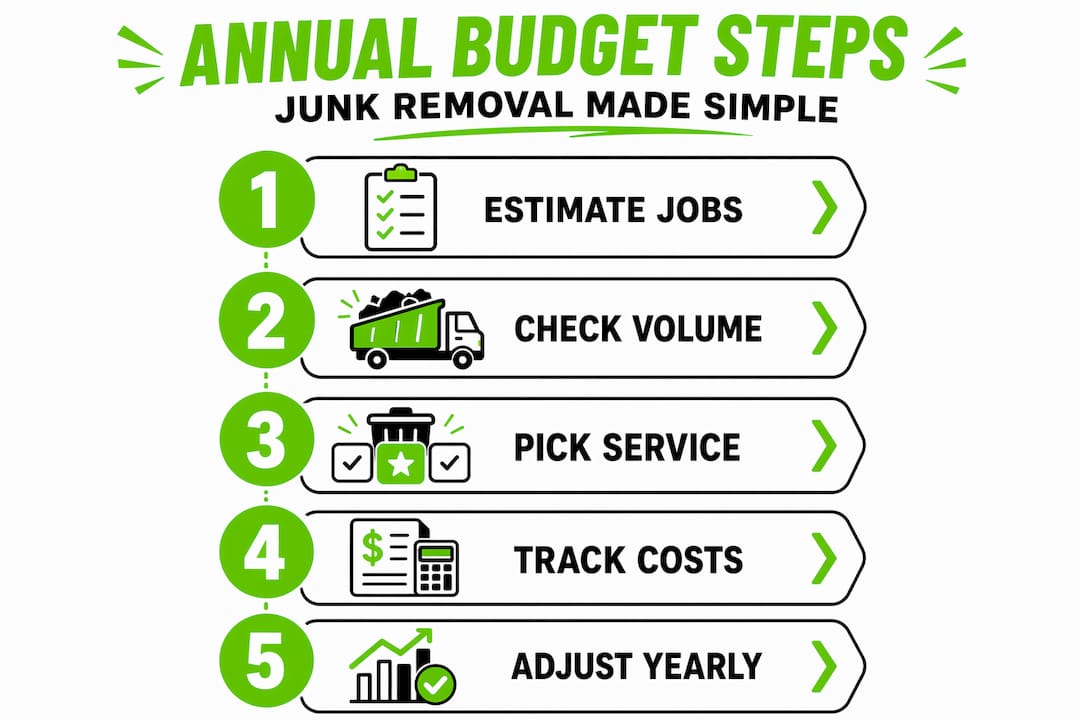
Here's a practical way to build your annual estimate:
- List every anticipated project. Think through the full year. Garage cleanout after winter storage? Tenant turnover at a rental property? Post-renovation debris from a bathroom remodel? Write each one down.
- Estimate the volume for each job. A standard garage cleanout is typically one to two cubic yards. A full estate cleanout or renovation debris haul can run 10 to 20 cubic yards. Use these ranges to assign a rough size to each project.
- Apply local price ranges to each job. For small loads under five cubic yards, budget $150 to $250. For medium loads, $250 to $400. For large loads approaching a full truckload, $400 to $600 or more.
- Add a 15% buffer for surprises. Fees for unexpected heavy items, access issues, or same-day scheduling can push costs above your estimate. Building in a cushion prevents budget overruns.
- Total it up and review quarterly. Your annual number is a living estimate, not a fixed contract. Adjust it as projects get added or canceled.
Multiplying expected cleanout frequency by per-job pricing ranges is the most reliable method for budgeting annual junk removal costs. Two small cleanups per year typically lands between $300 and $700 total.
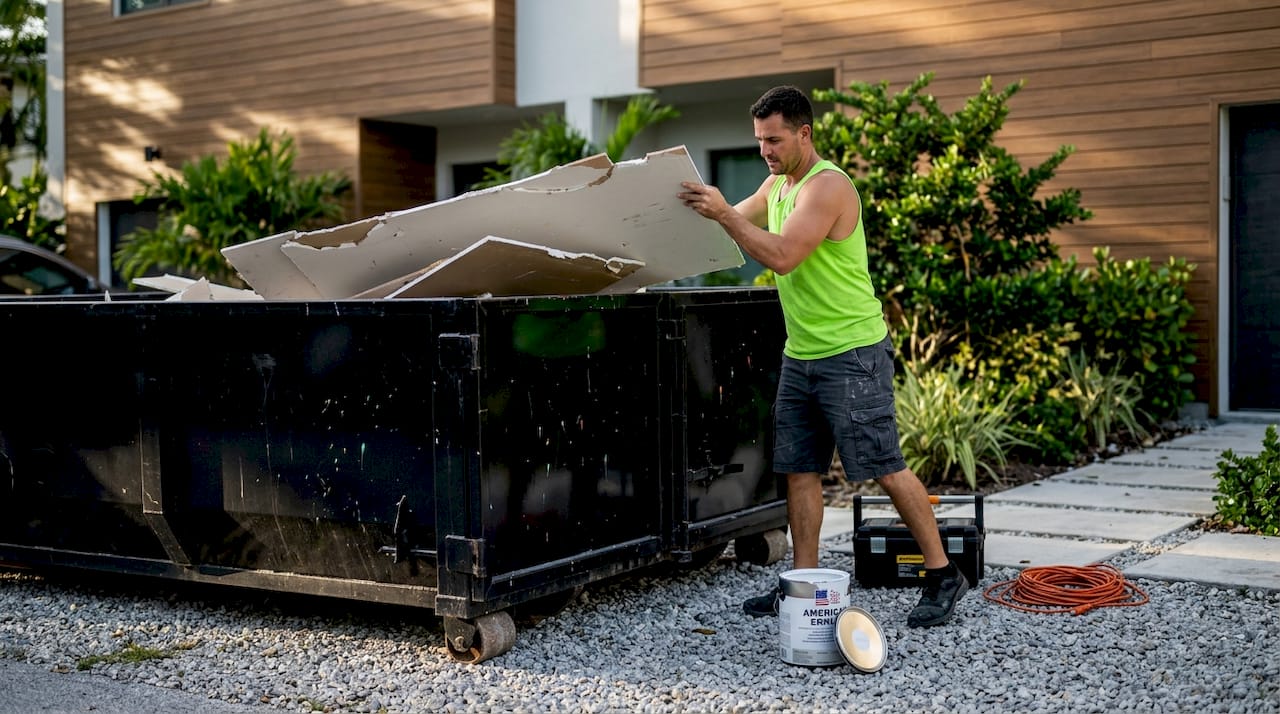
For larger renovation projects, the math changes. Dumpster rental in South Florida costs roughly $380 to $800 per week and becomes the smarter choice when you're generating more than 15 cubic yards of debris. At that volume, multiple junk removal pickups add up fast.
| Project size | Junk removal cost | Dumpster rental cost | Better option |
|---|---|---|---|
| Under 5 cubic yards | $133 to $250 | Not practical | Junk removal |
| 5 to 15 cubic yards | $250 to $500 | $380 to $500 | Depends on timeline |
| Over 15 cubic yards | $600 to $1,200+ | $380 to $800 | Dumpster rental |
Savings of $200 to $650 are common when switching to dumpster rental for waste volumes above 15 cubic yards versus booking multiple junk removal pickups.
Pro Tip: If you're a landlord with predictable tenant turnover cycles, you can often negotiate a recurring service rate with a local hauler. That kind of relationship saves money and guarantees availability during busy seasons.
With your estimated annual budget calculated, let's explore how to execute junk removal efficiently to avoid unexpected expenses.
Tips for executing junk removal projects without overspending
Knowing your budget is one thing. Protecting it during the actual job is another. Most cost overruns happen during execution, not planning.
Here's what actually controls your final bill:
- Sort before the crew arrives. Separating metal, appliances, and general junk ahead of time reduces the labor time spent on your job. Since labor costs represent 60 to 80% of your total junk removal expense, anything that cuts loading time directly cuts your bill.
- Get an itemized written quote. Verbal estimates are worth nothing. A written quote that breaks out volume, labor, disposal, and any item-specific fees protects you from surprise charges at the end.
- Consolidate your debris before booking. Avoid multiple pickups by pulling everything together before you schedule. One larger load is almost always cheaper than two smaller ones because you pay a base fee each time a truck rolls up.
- Consider a dumpster for renovation projects. If you're remodeling a kitchen or bathroom, rent a dumpster for the duration of the project rather than calling for pickups every few days. You'll load it on your schedule and pay one flat fee.
- Schedule off-peak when you can. Mid-week appointments and non-emergency scheduling often come with better rates than weekend or same-day requests. If your timeline is flexible, use that flexibility as a negotiating tool.
Efficient junk removal tips like these are the difference between a job that comes in under budget and one that blows past it.
Pro Tip: Take photos of your junk pile before calling for a quote. Many companies in South Florida now offer photo-based estimates, which means you get an accurate number without waiting for an in-person visit.
Once you have completed your junk removal efficiently, the next step is verifying costs and adjusting your budget for future projects.
Verify results and refine your junk removal budget annually
The homeowners and landlords who get the best long-term value from junk removal are the ones who treat it like any other operational expense: they track it, review it, and improve their estimates over time.
Here's a simple process to follow after each job:
- Save every invoice. Keep a digital folder with receipts from every junk removal service you use. This takes 30 seconds and saves hours of confusion later.
- Compare actual costs to your estimate. Did the job come in over or under? By how much? Note the reason.
- Flag unexpected fees. If you got charged for something you didn't anticipate, such as a stair surcharge or a special item fee, add that category to your planning checklist for next time.
- Adjust your annual budget before year-end. Use your real spending data to update your estimates for the coming year. Don't rely on guesses when you have actual numbers.
Understanding all fees including dumping permits, disposal charges, and labor surcharges is what separates homeowners who consistently hit their budget from those who are constantly surprised.
Key things to track across all your junk removal jobs:
- Total cost per job and per cubic yard
- Any fees that weren't in the original quote
- Scheduling lead time and whether off-peak pricing applied
- Whether the volume estimate was accurate or off
Tracking junk removal costs across multiple jobs builds a personal pricing database that makes every future estimate sharper and every budget more accurate.
With a good handle on budgeting and cost verification, let's share an expert perspective to help you optimize your junk removal strategy.
Why budgeting separately for regular cleanouts and renovations pays off
Here's something most cost guides won't tell you: treating all junk removal as a single budget category is one of the most reliable ways to consistently underestimate your annual spending.
Regular household cleanouts and renovation debris are fundamentally different products. A twice-yearly garage purge involves light, mixed items, simple loading, and standard disposal. A post-renovation cleanout involves heavy materials like drywall, tile, and lumber, which often require separate disposal streams, heavier trucks, and more labor. Practitioners separate regular clutter from renovation debris for budgeting precisely because renovation debris is priced higher and needs special handling.
When you lump them together, you inevitably budget for the cheaper category and get hit with the costs of the more expensive one. For landlords managing properties through tenant turnover and occasional unit upgrades, this distinction is especially important. A standard turnover cleanout might cost $200. A unit where the previous tenant left behind furniture and you're also replacing flooring could easily run $600 to $900.
Splitting your annual waste disposal budget into two buckets, one for routine removal and one for project-based debris, gives you a clearer picture of where your money actually goes. It also makes the dumpster rental versus hauling decision much easier. Routine cleanouts almost never justify a dumpster. Renovation projects often do.
Expert junk removal advice consistently points to this separation as one of the highest-impact changes property owners can make to their cost planning. It's not complicated. It just requires treating two different problems as two different line items.
Get affordable junk removal in South Florida with Junky Jan
Now that you know how to budget and manage junk removal costs, the next step is finding a provider who won't undermine your planning with hidden fees or unreliable scheduling.

Junky Jan junk removal services are built around exactly what South Florida homeowners and landlords need: transparent, upfront pricing based on load size with no surprise charges at the end, same-day and next-day availability across Miami, Hollywood, and Broward County, and professional crews who handle everything from furniture and appliances to full estate cleanouts and construction debris. Whether you're managing a single garage cleanout or coordinating debris removal across multiple rental units, Junky Jan's local knowledge of South Florida disposal regulations means you get the job done right and at a fair price.
Frequently asked questions
What is the average cost of junk removal in South Florida?
Typical junk removal costs range from about $133 to $372 per job, with an average near $241 depending on the volume of debris and the type of waste being removed.
How often should homeowners budget for junk removal annually?
A practical approach is to budget for two small cleanouts per year at $150 to $350 each, totaling roughly $300 to $700 annually before accounting for any larger renovation or estate cleanout projects.
When is dumpster rental more cost-effective than junk removal services?
Dumpster rental is usually the smarter financial choice for projects generating over 15 cubic yards of debris, with savings of $200 to $650 compared to booking multiple junk removal visits for the same volume.
What fees should I expect besides the base junk removal price?
Typical additional fees include labor surcharges for stairs or difficult access, disposal and landfill fees, dumpster permits for rentals, and special handling charges for hazardous or oversized items.
Can I reduce my junk removal costs by doing some work myself?
DIY junk removal can appear cheaper upfront, but unexpected DIY costs including landfill tipping fees, truck rentals, fuel, and your own time often make professional services the more cost-effective and convenient choice.