
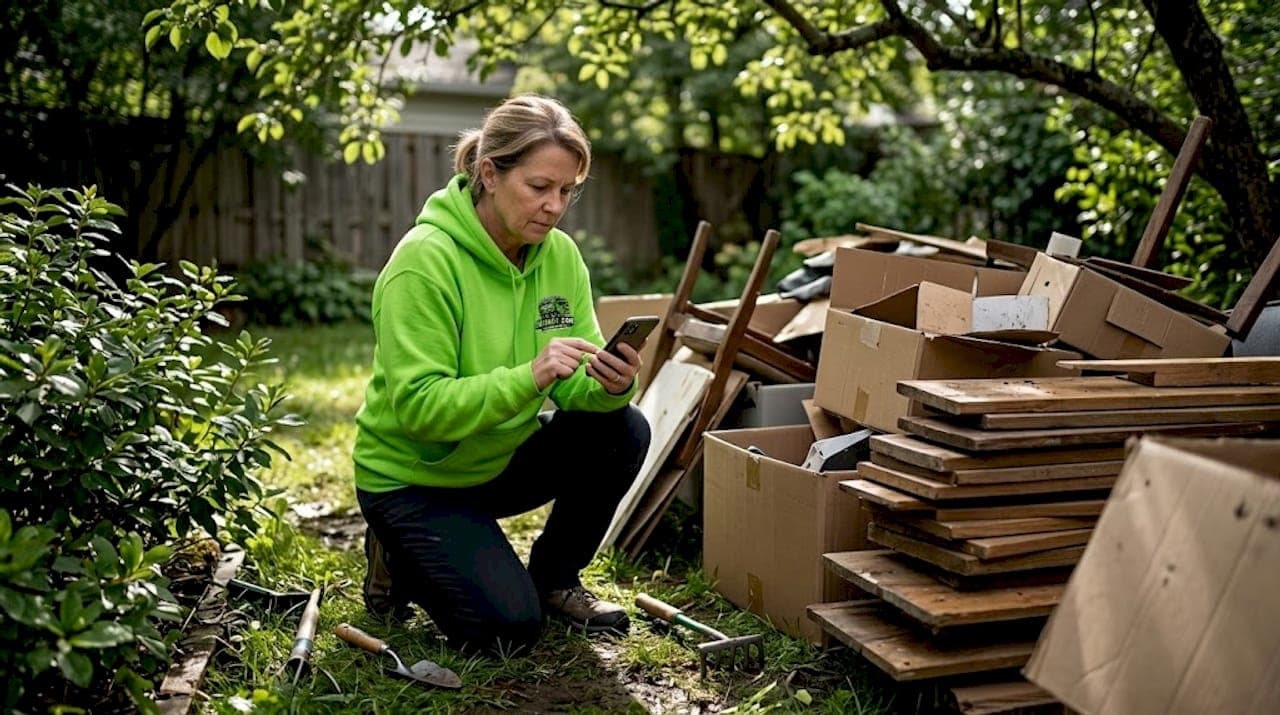
A storm rolls through, a renovation wraps up, or a tenant moves out and leaves behind a mountain of junk. Suddenly you need to coordinate same day debris pickup and you have no idea where to start. The clock is ticking, neighbors are watching, and calling the wrong service could cost you hours and money. This guide walks you through every step of the process, from sorting your debris correctly to verifying the job is done right, so you can clear your property fast and without the headaches.
Table of Contents
- Key takeaways
- How to coordinate same day debris pickup: what to prepare first
- Step-by-step process for scheduling same-day pickup
- Common mistakes that derail fast debris pickup
- What to expect on pickup day
- Comparing your debris removal options
- My take on coordinating debris removal after years in the field
- Get same-day debris pickup from Junky Jan
- FAQ
Key takeaways
| Point | Details |
|---|---|
| Prepare before you call | Know your debris type, volume, and placement requirements before contacting any provider. |
| Book before noon | Same-day slots fill fast. Calling early in the morning gives you the best chance of securing same-day service. |
| Verify licensing and insurance | Only hire crews that are licensed and insured to protect yourself from liability and property damage. |
| Proper placement is non-negotiable | Debris placed incorrectly risks being skipped entirely, whether by a municipal program or a private crew. |
| Professional crews outperform casual alternatives | Licensed teams with trained staff and real equipment consistently deliver faster, safer results than informal pickups. |
How to coordinate same day debris pickup: what to prepare first
Before you pick up the phone or fill out an online form, you need about ten minutes of preparation. Skipping this step is the single most common reason same-day pickups get delayed or partially completed.
Know what you have. Most professional services accept yard waste, construction debris, furniture, appliances, and general household junk. What they typically will not take includes hazardous materials like paint, chemicals, asbestos, or electronics containing batteries. If you have a mix of materials, separate them before booking so the crew arrives knowing exactly what to load.
Here is what you need to have ready:
- Debris type: Is it yard waste, construction scraps, furniture, or a combination?
- Estimated volume: Think in terms of truck loads or cubic yards. Even a rough estimate helps providers quote accurately.
- Location details: Gate codes, parking restrictions, or any access limitations the crew needs to know.
- Timing constraints: Are there HOA rules, permit windows, or business hours that affect access?
Placement matters more than most people realize. Debris must be placed within 3 feet of the curb in the public right-of-way for government-sponsored pickups, and municipal crews will not enter private property. Even private companies need a clear path. Keep debris away from fire hydrants, mailboxes, and storm drains. Municipal programs impose strict rules about placement near these fixtures because of safety and liability.
One more preparation step that most homeowners overlook: check your insurance. Disaster recovery experts recommend verifying your policy before scheduling removal, because storm-related debris cleanup may be covered, potentially reducing what you pay out of pocket.
Pro Tip: Take photos of your debris pile before the crew arrives. This protects you if there is any dispute about what was removed or any property damage claim.
Step-by-step process for scheduling same-day pickup
Once you are prepared, the actual scheduling process moves quickly if you follow the right sequence.
-
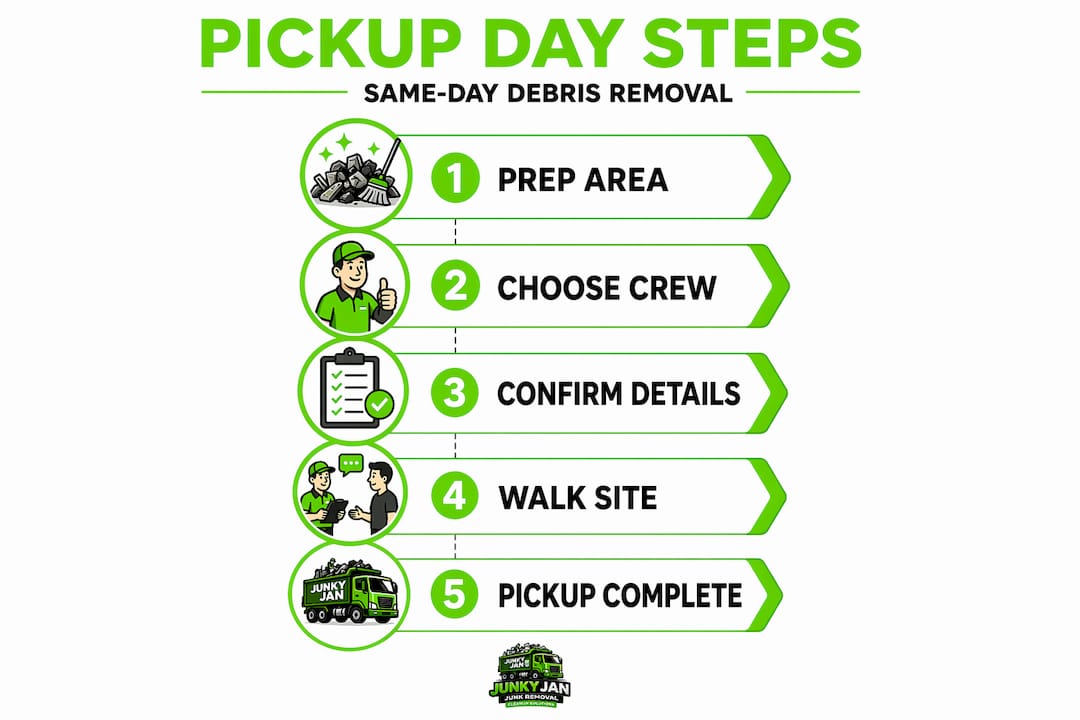
Search for local providers early. Start your search first thing in the morning. Same-day service slots require early booking, and most providers require contact before midday to honor same-day requests. A quick search for same day junk removal in your area will surface local options.
-
Verify licensing and insurance before anything else. Licensed crews use specialized equipment and trained staff to handle complex removals without property damage. Ask directly: "Are you licensed and insured?" If they hesitate or say yes without offering proof, move on.
-
Describe your job in detail. Tell the provider your debris type, approximate volume, access details, and any timing restrictions. This prevents surprise fees and ensures they bring the right truck. Services that base pricing on load size rather than hourly rates give you a cleaner estimate upfront.
-
Confirm the arrival window. Ask for a specific arrival window, not just "sometime today." Get a two-hour range. Then confirm who will call when the crew is on the way.
-
Send or share photos if possible. Most providers accept text or email photos for instant booking and accurate quotes. This speeds up the process and removes any ambiguity about scope.
-
Clear access and confirm payment. Have your payment method ready before the crew arrives. Know whether the service accepts cash, card, or app-based payment. Delays at payment time can push other jobs back and create friction with the crew.
Pro Tip: Providers with denser local service routes respond faster to same-day requests. When vetting options, ask how many jobs they run daily in your zip code. A dense local route means they are already near you.
Common mistakes that derail fast debris pickup
Knowing what goes wrong is as useful as knowing what to do right. These are the most frequent traps that turn a fast debris pickup into a half-finished mess.
-
Wrong debris placement. Debris in a ditch, blocking a hydrant, or piled inside a fence line gets skipped. Municipal crews and most private companies require debris to be accessible from the street. Always place material where a truck can reach it without leaving the road.
-
Hiring unlicensed crews. The neighbor with a pickup truck is not a junk removal service. If they damage your driveway, drop debris on a third party's property, or improperly dispose of materials, the liability comes back to you. Property managers and contractors especially face real financial exposure when using unverified crews.
-
Calling too late in the day. Most fast debris pickup services stop accepting same-day requests after noon. Calling at 3 p.m. and expecting a 5 p.m. arrival is not realistic for most providers, especially in high-demand periods after storms or holidays.
-
Underestimating volume. If you tell a provider you have "a few bags" and they arrive to find a full truckload, expect either a price adjustment or an incomplete job. Be honest about what you have.
-
Not separating debris types. Strict separation into vegetative and construction debris is required for government-sponsored pickups and strongly preferred by private companies. Mixing them can result in a non-pickup or extra charges.
Most problems with same-day debris removal are avoidable. They happen because someone rushes through the booking process or assumes the crew can figure things out on arrival. The providers who do this every day have seen it all. When you give them complete, accurate information upfront, they show up ready to work and finish fast.
What to expect on pickup day
The job day experience is straightforward when everything is in place. Here is how it typically goes and what to watch for.
-
Expect a call or text before arrival. Reputable services notify you when the crew is 15 to 30 minutes out. If you do not receive that notification, call ahead to confirm.
-
Be present or designate someone. You do not need to hover, but having someone on site ensures the crew can ask questions and confirms they remove everything agreed upon.
-
Walk the site before they start. Point out everything that needs to go. If there is anything nearby that should stay, mark it clearly or move it out of the way.
-
Verify the load before they leave. Do a quick walkthrough after loading to confirm nothing was missed.
-
Get a receipt or confirmation. Ask for written or digital confirmation of what was removed, especially for construction debris or yard debris removal that may require documentation for insurance claims.
| Verification step | Why it matters |
|---|---|
| Walk the site before loading | Prevents miscommunication about what gets removed |
| Confirm load contents | Catches missed items before the truck leaves |
| Get written confirmation | Supports insurance claims or landlord documentation |
| Inspect access areas | Checks that driveways and paths are undamaged |
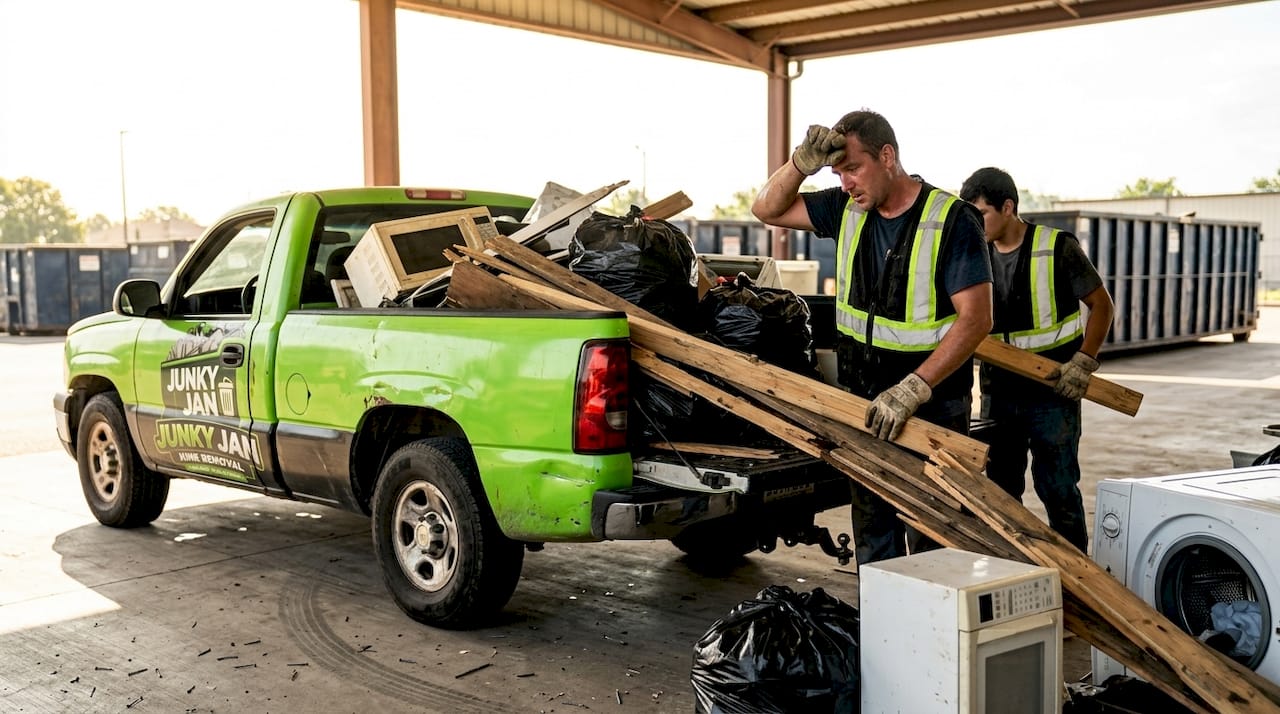
Professional crews prioritize responsible disposal. This usually means sorting materials at a transfer station to separate recyclables and donatable items from true landfill waste. If that matters to you, ask the provider about their disposal process before booking.
Comparing your debris removal options
Not every situation calls for the same solution. Here is a straight comparison of your three main options.
| Option | Speed | Cost | Risk level | Best for |
|---|---|---|---|---|
| Professional licensed crew | Same day possible | Moderate to high | Low | Complex, large, or mixed loads |
| Casual/informal pickup | Variable | Low | High | Small, simple loads only |
| Municipal debris program | Days to weeks | Free or low cost | Low | Post-storm vegetative debris |
Licensed crews with trained teams handle complex jobs, navigate tight spaces, and carry the insurance that protects you if something goes wrong. Casual pickups are cheaper but come with real reliability and liability risks. Municipal programs work well for emergency debris collection after storms but operate on their own schedule and often run multiple collection cycles across several days. They will not pick up construction debris or appliances. You can learn more about construction debris options before deciding which route fits your job.
Pro Tip: For urgent debris clearance involving mixed loads of yard waste, furniture, and construction scraps, a professional service is almost always the fastest and cleanest option, even if it costs more. The time savings alone justify the price difference.
My take on coordinating debris removal after years in the field
I have watched a lot of property managers make the same expensive mistake. They wait until mid-afternoon, call whoever answers first, and hand the job to an unlicensed crew because the price is lower. Then they spend twice as much fixing what went wrong.
In my experience, the single biggest factor in a successful same-day removal is not the price or even the provider. It is how prepared the client is when they call. The jobs that go smoothly are the ones where the person on the phone already knows what they have, where it is, and when access is available. That information cuts the booking call from fifteen minutes to three. It gets you a crew faster, a more accurate price, and a cleaner result.
The other thing I have seen consistently is that technology matters more than people expect. Providers who use same-day junk removal routing software and digital booking move faster, communicate better, and show up when they say they will. When you are vetting a service, ask if you can book or confirm online. It is a signal of how organized they are.
Balancing cost and reliability is not complicated. Pay for licensing and insurance. Everything else is negotiable.
— gam
Get same-day debris pickup from Junky Jan
When you need fast debris pickup services in Miami, Hollywood FL, or anywhere in Broward County, Junky Jan delivers. The crews are licensed, insured, and equipped to handle everything from yard debris and construction scraps to appliances and full property cleanouts. Pricing is based on load size with no hidden fees, and same-day slots are available when you book early. Whether you are a homeowner clearing storm damage, a landlord between tenants, or a contractor finishing a job site, same-day junk removal in Miami is one call or click away. Property managers can also arrange standing removal schedules for ongoing needs.
FAQ
How early should I book for same-day debris pickup?
Book before noon for the best chance of securing a same-day slot. Most providers stop accepting same-day requests in the early afternoon as routes fill up.
What debris is typically excluded from same-day pickup?
Hazardous materials including paint, chemicals, asbestos, and certain electronics are usually excluded. Always confirm what a provider accepts before booking.
Do I need to be present during debris pickup?
You do not have to be there the entire time, but someone should be present at the start to walk the site and confirm what gets removed.
What is the difference between municipal debris pickup and a private service?
Municipal programs are free or low cost but operate on set schedules, require debris in the public right-of-way, and generally only accept certain categories like vegetative waste. Private licensed services offer same-day availability, handle mixed loads, and can enter your property.
How do I verify a junk removal crew is licensed and insured?
Ask directly and request proof before confirming the booking. A legitimate provider will share their license number and insurance details without hesitation.