
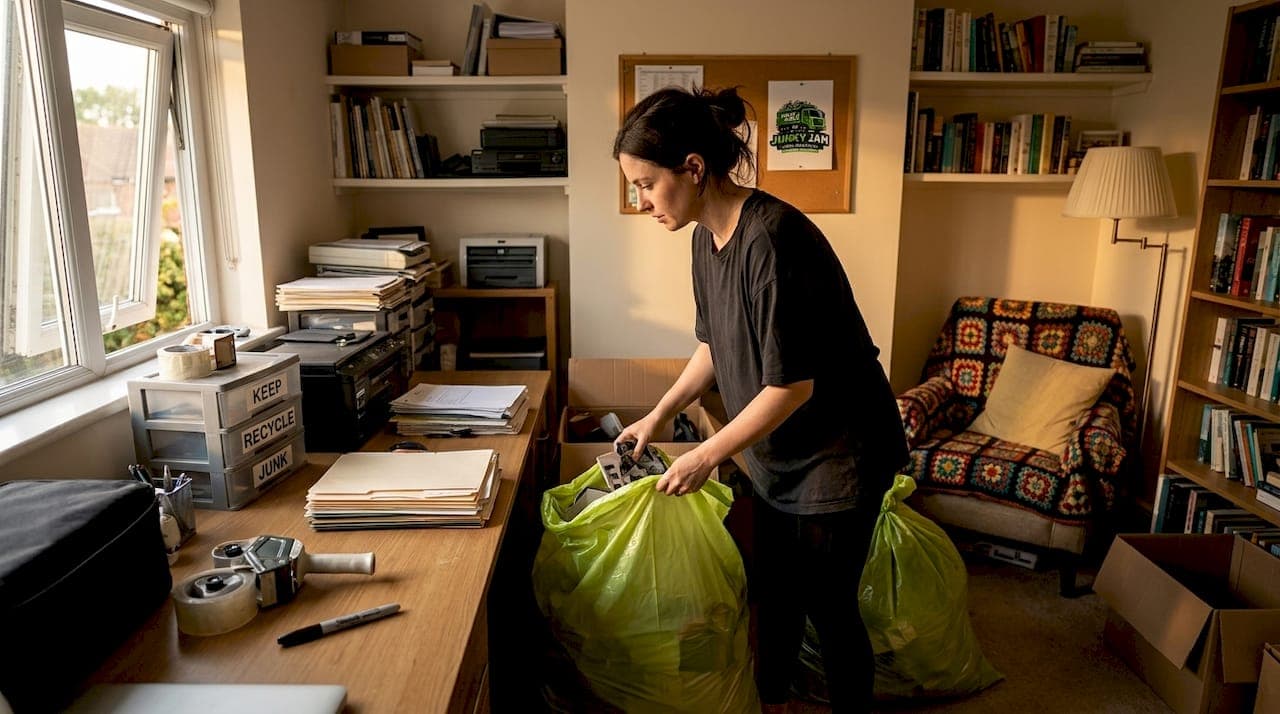
Getting ready to prepare home for junk removal sounds simple until you're standing in a garage full of broken furniture, mystery boxes, and things you forgot you owned. The good news: a little organization before the truck arrives makes the entire process faster, cheaper, and far less stressful. This guide walks you through everything from the supplies you need on day one to what to do when the crew shows up at your door. Follow these steps and you'll turn a chaotic cleanout into a smooth, satisfying experience.
Table of Contents
- Key takeaways
- How to prepare home for junk removal: what you need first
- Step-by-step guide to declutter and organize
- Common mistakes that slow everything down
- What to expect on junk removal day
- Environmental considerations worth thinking about
- What I've learned from watching people prep for junk removal
- Ready to book? Junky Jan makes it easy
- FAQ
Key takeaways
| Point | Details |
|---|---|
| Start sorting early | Begin decluttering 4–6 weeks out to avoid last-minute chaos and rushed decisions. |
| Label what stays | Clearly tag items you want to keep to prevent accidental disposal by the crew. |
| Know restricted items | Confirm with your provider what they won't haul to avoid denied pickups on removal day. |
| Clear access paths | Remove obstacles from hallways and entrances so the crew can work quickly and safely. |
| Sort before they arrive | Separating junk from donations and recyclables can reduce your load size and lower your cost. |
How to prepare home for junk removal: what you need first
Before you move a single item, set yourself up with the right tools and information. Trying to sort through years of accumulated clutter without a system is how people end up more confused than when they started.
Here's what to gather before you begin:
- Heavy-duty trash bags for loose items and soft goods
- Cardboard boxes in mixed sizes for smaller junk
- Permanent markers and labels to mark boxes and furniture
- Colored tape or sticky notes to tag items that should NOT be removed
- A notepad or phone to create a running inventory of what goes
Beyond supplies, you need information. Call or check your junk removal provider's website to confirm which items they accept and which ones they won't touch. Confirming restricted items ahead of time prevents denied pickups and potential fines. Things like certain electronics, paint cans, propane tanks, and asbestos-containing materials often require special handling outside of a standard pickup.
Schedule your appointment early, too. Junk removal pricing is typically volume-based, with residential jobs ranging from $75 to $800. Knowing your appointment date gives you a hard deadline to work toward, which makes sorting feel a lot more manageable.
| Supply | Purpose |
|---|---|
| Heavy-duty trash bags | Collect loose, small, or soft junk items |
| Permanent markers | Label boxes and tag furniture clearly |
| Colored sticky notes | Mark items to keep or donate |
| Notepad or phone | Track inventory and create removal list |
| Cardboard boxes | Group smaller items for easy loading |
Step-by-step guide to declutter and organize
This is where the real work happens. A methodical approach here saves you time, prevents headaches, and gets you better results on removal day. Experts recommend starting decluttering 4–6 weeks before a major move, with junk removal scheduled 5–7 days before moving day. Even if you're not moving, that same timeline works well for a full home cleanout.
-
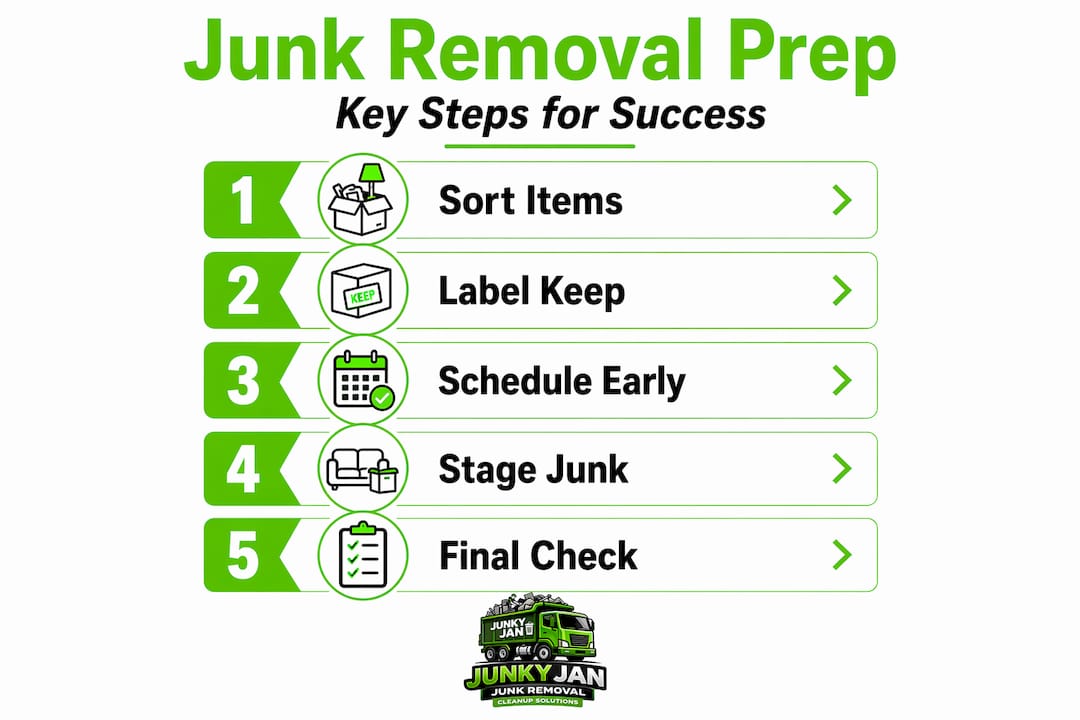
Walk every room and create a list. Go room by room and write down everything that might be removed. Don't make decisions yet. Just document.
-
Sort into four piles: keep, donate, sell, and remove. This is the most mentally demanding step, so take breaks. The donate and sell piles reduce your junk load, which can lower your total cost.
-
Label everything clearly. Use colored tape or sticky notes to mark furniture and large items. Marking "do not remove" items clearly reduces accidental disposal risks, especially in crowded spaces where crews are moving fast.
-
Handle bulky and specialty items separately. Appliances, mattresses, and electronics often require special removal. Flag these items in your list and confirm the service handles them before your appointment.
-
Move junk to a central staging area. Consolidate removal items in a garage, driveway, or single room. This gives the crew a clear target and speeds up the job significantly.
-
Create safe, clear access paths. Move furniture, rugs, and obstacles away from hallways, staircases, and doorways. This isn't just about speed. Clearing access paths is a safety requirement that prevents injuries during the removal process.
Pro Tip: If you have a garage or storage unit involved, check out this garage cleanout checklist to make sure you don't miss anything specific to those spaces.
Breaking the process into these steps prevents the overwhelming feeling that sends most people back to the couch. Start with the easiest room and build momentum from there. The living room and garage tend to accumulate the most junk, so save those for when you're already in the groove.
Common mistakes that slow everything down
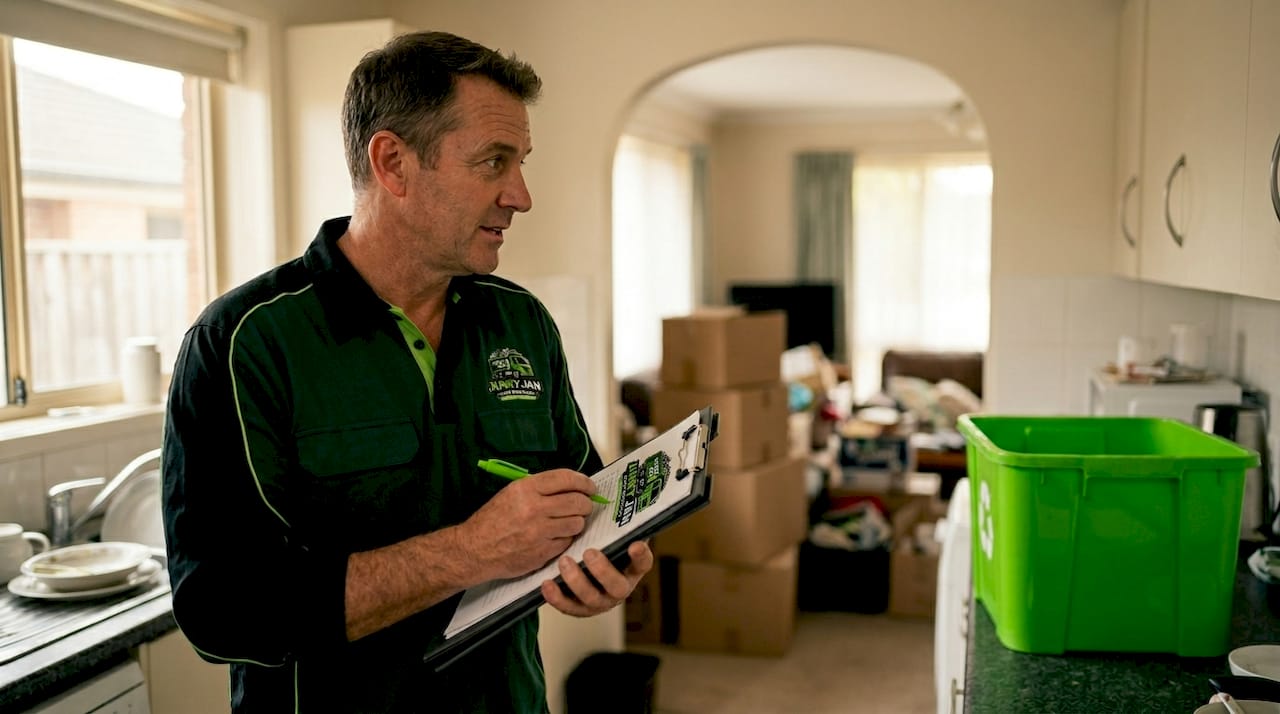
Even well-intentioned homeowners make avoidable errors that turn a simple cleanout into a frustrating ordeal. Knowing these ahead of time keeps your home cleanup for junk pickup on track.
-
Mixing junk with valuables. This is the most common costly mistake. Items like documents, jewelry, and family photos can end up in a removal pile by accident. Physically separate and secure anything you want to keep before the crew arrives.
-
Waiting until the last minute. Sorting a full home in one evening is nearly impossible. You end up making rushed decisions, missing things, and often keeping clutter you should remove or removing things you meant to keep.
-
Ignoring restricted items. If the crew arrives and finds items they can't legally haul, like certain chemicals or electronics, they may leave them behind or charge extra. Knowing the rules in advance eliminates this entirely.
-
Not clearing access paths. A crew carrying a heavy appliance through a cluttered hallway is a recipe for damaged walls, injuries, and a much slower job. Clear the route before they arrive.
-
Failing to confirm the appointment details. Miscommunication about timing, location, or the volume of items causes delays. Confirm everything the day before.
Pro Tip: Do a final walkthrough the night before your pickup and physically verify that every "do not remove" item is tagged and moved away from the junk staging area. Thirty minutes the evening before saves real headaches on pickup day.
What to expect on junk removal day
You've sorted, labeled, and staged everything. Here's how to make sure the actual pickup goes as smoothly as possible.
-
Confirm the appointment that morning. A quick call or text with your provider to verify the time window and any last-minute changes avoids wasted time waiting.
-
Do a final check of tagged items. Walk through your staging area one more time and confirm everything in the removal zone is actually supposed to go.
-
Be present or designate someone. Someone who knows the plan should be on-site when the crew arrives to answer questions and point out specific items.
-
Understand what the service includes. Professional junk removal typically includes loading, hauling, and standard disposal. You should not need to lift anything. Let the crew do their job.
-
Do a post-removal walkthrough. Once the crew is done, inspect every room against your original list. Check that nothing was left behind and that no "keep" items were accidentally removed.
Tipping is not required, but for complex or heavy jobs, tipping 10–20% of the total cost is a common courtesy that crews genuinely appreciate. A cold drink on a hot Florida day goes a long way too.
Want a deeper look at what crews actually do during the job? The breakdown of how junk removal crews work gives you a clear picture of responsibilities on both sides.
Environmental considerations worth thinking about
A junk removal day is also an opportunity to make more responsible choices with what you're discarding. Donating and recycling reduces landfill waste and supports sustainability in a real, measurable way.
Before everything goes on the removal pile, consider these options:
- Donate usable furniture and appliances to local Habitat for Humanity ReStores, shelters, or community organizations. Many will pick up large items for free.
- Recycle electronics through local e-waste drop-off programs. Computers, TVs, and phones contain materials that should not go to landfill.
- Separate scrap metal. Items like old grills, shelving units, and metal furniture can often be recycled at local scrap yards or picked up for free.
- Handle hazardous materials separately. Paint, batteries, pesticides, and motor oil require special disposal. Your county's hazardous waste facility is the right place for these.
Reducing your load through donation and recycling also has a practical benefit: a smaller load can mean a lower junk removal bill. That's a win for your wallet and the environment at the same time.
What I've learned from watching people prep for junk removal
I've seen all kinds of home cleanout situations, from organized moves where everything was sorted and staged perfectly to last-minute chaos where nobody could agree on what was trash. The pattern is always the same: the people who prepare methodically get better results and pay less.
The most common thing I'd tell anyone is this. Stop trying to do it all in one session. Sorting through years of accumulated belongings is emotionally and physically taxing. The people who start three or four weeks out, do one room at a time, and revisit their decisions once before pickup day rarely have regrets. The people who do it the night before almost always do.
The other thing that matters more than most guides acknowledge is communication with the crew. Be specific about what stays and what goes. Don't assume they'll figure it out. The clearer you are, the faster and more accurate the job. A well-prepared homeowner is genuinely the crew's best asset on any pickup day.
Think of preparation not as extra work but as the first step of your fresh start. Once the junk is gone, that space is yours again. That feeling is worth the effort.
— gam
Ready to book? Junky Jan makes it easy

If you've done the sorting and you're ready to get rid of it all, Junky Jan is built for exactly this moment. Serving Miami, Hollywood, FL, and Broward County, Junky Jan offers same-day junk pickup with professional, licensed, and insured crews who handle everything from furniture and appliances to full garage and estate cleanouts. Pricing is based on load size with no hidden fees, so what you're quoted is what you pay. Scheduling is flexible and the team is responsive. Whether you've got one bulky couch or an entire house to clear out, Junky Jan can have a crew at your door fast. Book your pickup today and let the fresh start begin.
FAQ
How far in advance should I prepare for junk removal?
Start sorting and decluttering at least 2–4 weeks before your scheduled pickup. For larger cleanouts tied to a move, experts recommend beginning 4–6 weeks out with junk removal scheduled 5–7 days before moving day.
What items do junk removal companies typically not accept?
Most junk removal providers will not haul hazardous materials like paint, propane tanks, pesticides, asbestos, or certain electronics. Always confirm your provider's restricted items list before your appointment to avoid denied pickups.
Does sorting my junk before pickup actually lower my cost?
Yes. Most residential junk removal is priced by volume, with jobs typically ranging from $75 to $800. Donating or recycling items before pickup reduces your load size, which can directly lower your bill.
How do I prevent the crew from removing things I want to keep?
Use brightly colored tape or sticky notes to clearly label any item you want to keep, and physically move those items away from the junk staging area. Marking "do not remove" items is one of the most effective ways to prevent accidental disposal.
Should I tip the junk removal crew?
Tipping is not expected but is appreciated, especially for heavy or complex jobs. A tip of 10–20% of the total is a reasonable guideline for exceptional service.