
Reducing junk removal costs per unit is achievable through three proven tactics: using free municipal bulky waste programs, batching items to minimize haul trips, and sorting junk before pickup to lower disposal fees. The industry term for this practice is "per-unit disposal cost management," and it applies whether you own a single home or manage a 20-unit apartment complex in South Florida. Private hauling jobs range from $150 to $350 on average, but that number drops significantly when you design the job around how haulers actually price their work. This guide breaks down exactly how to do that.
How to reduce junk removal costs per unit with municipal programs
Municipal bulky waste programs are the most underused cost-saving tool available to homeowners and property managers. These are free, government-funded pickup services for large items like furniture, appliances, and mattresses. The catch is that they run on fixed schedules with strict item limits, so you need to plan around them rather than treat them as on-demand service.
Bridgeport, Connecticut runs a district-specific bulk pickup program with defined windows for each neighborhood. Miss your district's window and you wait until the next cycle. Hamilton Township, New Jersey allows four bulk items per scheduled trash day during the first full week of each month, with scheduling required by 4pm the prior Friday. Pico Rivera, California takes a different approach: residents get 10 free bulky item collections per year, with one allocation per unit for multifamily complexes.
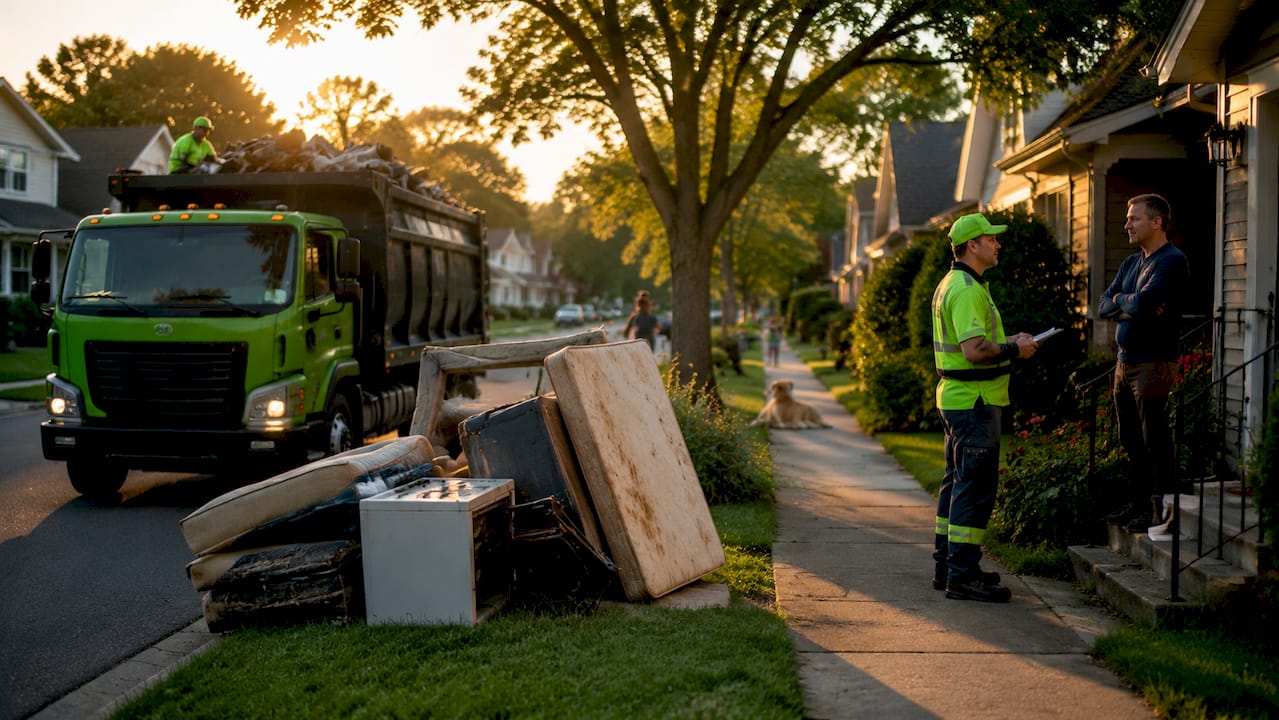
For property managers, that Pico Rivera model is particularly instructive. Each unit's annual allocation functions as a budget line. If you treat those free collections as a scheduling resource rather than a convenience, you can coordinate tenant turnover cleanouts to fall within free limits and avoid paid hauls entirely.
Key rules to check before setting items out:
- Accepted items: Most programs cover furniture, mattresses, and non-hazardous appliances. White goods like refrigerators and washers are often accepted but may require separate scheduling.
- Prohibited items: Hazardous waste, tires, electronics, and construction debris are almost universally excluded. Setting these out risks a skipped pickup and a paid haul anyway.
- Item counts: Exceeding the per-pickup limit (like Hamilton Township's four-item cap) means the excess stays on the curb and you pay for a second trip.
- Scheduling deadlines: Most programs require advance notice of 24 to 72 hours. Same-day requests are rarely accommodated.
Pro Tip: Call your municipality's public works department directly rather than relying on the website. Program rules change seasonally, and staff can confirm current item eligibility before you haul anything to the curb.
| Municipality | Program type | Free limit | Key constraint |
|---|---|---|---|
| Bridgeport, CT | District-scheduled bulk pickup | Not specified | District-specific windows |
| Hamilton Township, NJ | Monthly scheduled bulk day | 4 items per pickup | Must schedule by prior Friday 4pm |
| Pico Rivera, CA | On-request bulky collection | 10 per year per unit | One allocation per unit in multifamily |
What drives private junk removal pricing?
Private junk removal quotes are not arbitrary. Every quote covers labor, fuel, disposal fees, vehicle operation, overhead, and profit. Understanding which of those components you can influence is where the real savings come from.
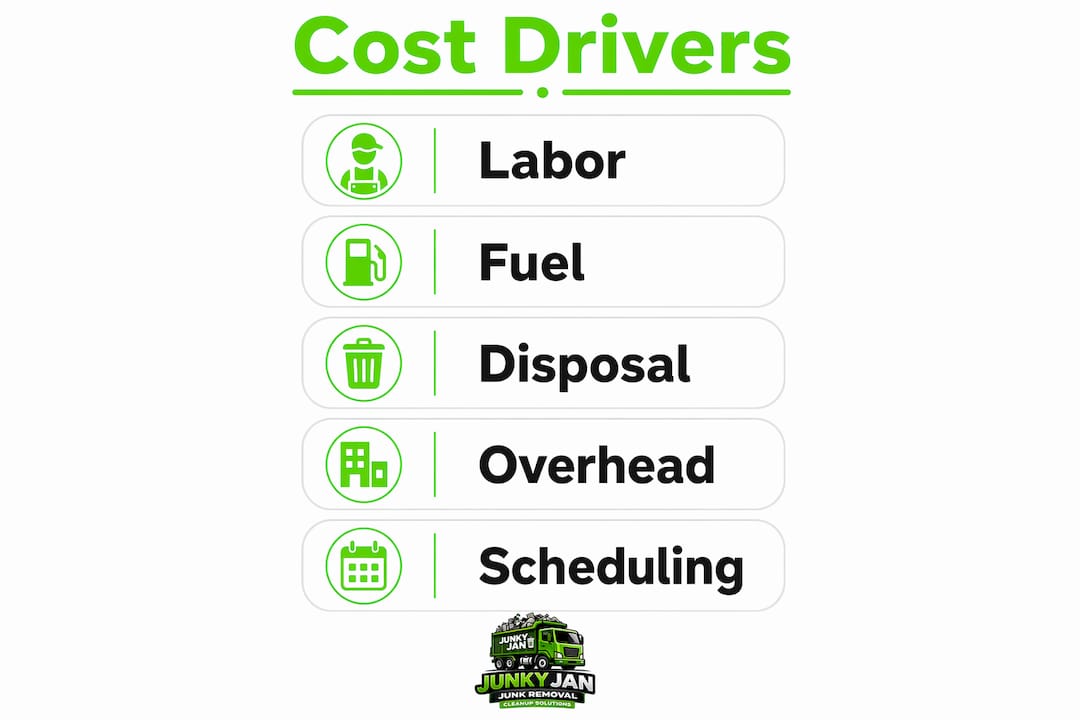
Labor is typically the largest variable. A job that takes two crew members 90 minutes costs more than one that takes 45 minutes, even if the volume of junk is identical. Items that are disassembled, staged near the door, and separated by type move faster. That directly reduces the labor portion of your bill.
Disposal fees, also called tipping fees, are the amount haulers pay at the landfill or transfer station. Landfill tipping fees rose 10% nationally from 2023 to 2024, and that increase passes directly to customers. Mixed loads cost more to tip than sorted loads because facilities charge premium rates for unsorted waste. A load that contains metals, clean wood, and general trash all mixed together will cost more to dispose of than three separate sorted loads.
Nonbillable drive time is a cost component most customers never think about. Drive time adds to quotes even when it is not itemized, because haulers build it into their pricing model. A job that requires a truck to drive 30 minutes each way costs more per cubic yard than one on a tight local route.
The levers you control as a customer:
- Staging: Move items to one accessible location before the crew arrives. Crews that spend time navigating through a cluttered garage charge for that time.
- Disassembly: Break down large furniture where possible. Flat items load faster and take less truck space, which can drop you to a smaller load tier.
- Sorting: Separate metals, appliances, and clean recyclables from general waste. Some haulers discount jobs with high recyclable content because it lowers their tipping fees.
- Timing: Avoid peak windows like weekends and end-of-month dates when crews are in highest demand and less flexible on price.
Pro Tip: Ask any private hauler to itemize their quote before you accept it. A quote that breaks out labor, disposal, and fuel separately gives you specific negotiation points. A flat quote gives you none.
How does batching and scheduling cut haul costs?
Batching is the practice of consolidating multiple items or multiple units into a single pickup event. It is the single most effective scheduling tactic for multi-property junk hauling because it reduces the number of trips, which cuts both fuel costs and per-unit labor charges.
Here is how to apply it systematically:
- Audit accumulation points. Before scheduling any pickup, walk every unit or storage area and catalog what needs removal. Scheduling two trips when one would have covered everything is a direct cost failure.
- Align with municipal schedules. If your municipality runs bulk pickup on the first Monday of the month, plan tenant turnover cleanouts to finish by the prior Thursday. That gives you time to stage items and meet the scheduling deadline.
- Fill the truck. Private haulers price by load size, typically quarter-load, half-load, and full-load tiers. A half-load that could have been a full load with better planning costs the same per-trip fee but delivers less value. Coordinate across units to fill each haul.
- Cluster by geography. For property managers with multiple buildings, schedule pickups at nearby properties on the same day. Route optimization cuts fuel costs by 10 to 20% and lets haulers fit more loads into a single day, which they often reward with lower per-load pricing.
- Track free allocation use. If your municipality offers annual free collections per unit, maintain a simple spreadsheet logging which units have used their allocation. This prevents accidental overuse and keeps you within the free tier.
Pro Tip: For apartment complexes, schedule bulk cleanouts around lease renewal cycles rather than reacting to individual tenant move-outs. Batching four or five unit cleanouts into a single haul event can cut your per-unit cost by a third compared to scheduling each one separately.
The math on batching is straightforward. A private hauler charging $250 for a half-load serves one unit. That same $250 split across four units in a single full-load haul brings the per-unit cost to $62.50. The scheduling and preparation guide from Junky jan covers the staging steps that make batching work in practice.
How does sorting junk before pickup lower your disposal fees?
Sorting junk before a hauler arrives is the most direct way to reduce the disposal fee component of your bill. Haulers pay different tipping rates depending on what they bring to the facility. A sorted load of metal appliances costs less to tip than a mixed load of furniture, debris, and electronics.
The categories worth separating before any haul:
- Metals and white goods: Refrigerators, washers, dryers, and metal furniture often have zero or negative tipping costs because scrap metal has resale value. Some haulers will discount jobs that include significant metal volume.
- Clean wood and cardboard: Many transfer stations accept clean wood and cardboard at lower rates than mixed waste. Breaking down wood furniture and flattening cardboard boxes takes 10 minutes and can meaningfully reduce the disposal tier.
- Electronics: Televisions, computers, and monitors are banned from standard landfills in most states. Including them in a mixed load does not make them disappear. It creates a liability for the hauler and often triggers surcharges.
- Hazardous materials: Paint, batteries, and chemicals require separate disposal through municipal hazardous waste programs. Including them in a standard haul is both illegal and expensive.
The comparison below shows how sorting affects disposal costs at the facility level:
| Load type | Typical tipping rate | Notes |
|---|---|---|
| Mixed unsorted waste | Highest rate | No recycling credit, full landfill fee |
| Clean recyclables (metal, cardboard) | Low or zero | Scrap value offsets or eliminates tipping fee |
| Electronics only | Separate fee or surcharge | Regulated waste, requires certified disposal |
| Hazardous materials | Not accepted or premium fee | Must use municipal HHW programs |
Sorting recyclables to minimize costs is a practice Hamilton Township explicitly recommends in its bulk waste guidance. The logic applies equally to private hauls. A hauler who receives a pre-sorted load spends less time at the facility and pays lower tipping fees. That savings has a direct path back to your quote if you negotiate it upfront.
Key takeaways
The fastest way to reduce junk removal costs per unit is to design each job around how haulers price their work, using municipal programs, batching, and sorting to hit the lowest cost tier at every step.
| Point | Details |
|---|---|
| Use municipal programs first | Free bulky waste pickups eliminate per-trip hauling fees entirely when scheduled correctly. |
| Batch items across units | Consolidating multiple units into one haul can cut per-unit cost by a third or more. |
| Sort before the hauler arrives | Separating metals, clean wood, and electronics lowers tipping fees and can earn recycling discounts. |
| Understand what drives quotes | Labor, fuel, drive time, and disposal fees are all negotiable when you know what to ask. |
| Track free collection allocations | Municipal free limits are a budget resource. Manage them like one to avoid unnecessary paid hauls. |
What I've learned about cutting junk removal costs that most guides skip
Most cost-saving advice stops at "use your city's bulk pickup program." That is the right starting point, but it misses the more important lesson: the biggest savings come from understanding how haulers build their quotes and then designing your job to hit the cheapest pricing tier.
I have seen property managers pay $300 per unit for cleanouts that could have cost $80 per unit with better batching. The difference was not the hauler. It was the scheduling. They called for pickups reactively, one unit at a time, instead of holding items for two weeks and consolidating. That reactive habit is the most expensive pattern in residential junk removal.
The other mistake I see constantly is setting out items without checking the municipal program's current eligibility list. A mattress that was accepted last year may now require a separate fee or a special pickup request. One skipped pickup because of an ineligible item forces a paid haul and costs more than the original free pickup would have saved.
Negotiating with private haulers is also more viable than most people realize. A quote that includes nonbillable drive time, a mixed-waste disposal fee, and a full crew for a job you could have staged in 30 minutes is a quote with three negotiation points. Ask for the itemized breakdown. Offer to stage items, sort recyclables, and schedule during off-peak hours. Most haulers will adjust. The ones who will not are telling you something useful about how they operate.
— gam
Get affordable junk removal in South Florida with Junky jan
If you are ready to put these strategies to work, Junky jan serves homeowners and property managers across Miami, Hollywood FL, and Broward County with transparent, load-based pricing and no hidden fees.
Junky jan's crews are licensed, insured, and available for same-day and next-day pickups. Whether you need a single appliance removed or a full apartment complex cleanout coordinated across multiple units, the pricing is straightforward and the scheduling is flexible. Get a quote at junky-jan.com and see exactly what your load will cost before the truck arrives.
FAQ
What is the average cost of junk removal per load?
Private junk removal jobs typically cost between $150 and $350 for standard pickups, with full-service jobs reaching up to $570 depending on volume and item complexity. Staging items and sorting recyclables before the crew arrives are the most direct ways to reduce that number.
How many free bulk item pickups can I get from my city?
It depends on your municipality. Pico Rivera offers 10 free collections per year with one allocation per unit in multifamily properties, while Hamilton Township limits pickups to four items per scheduled monthly bulk day. Check your city's public works department for current limits and scheduling requirements.
Does sorting junk before pickup actually lower my bill?
Sorting metals, clean wood, and electronics away from mixed waste lowers the tipping fees haulers pay at disposal facilities, and many haulers pass that savings back in the form of discounts or lower quotes. Mixed unsorted loads always cost more to dispose of than pre-sorted loads.
How do property managers reduce junk removal costs across multiple units?
The most effective tactic is batching: coordinating cleanouts across multiple units into a single haul event rather than scheduling each unit separately. Consolidating four units into one full-load haul can cut the per-unit cost by a third compared to four individual half-load trips.
What items are typically excluded from municipal bulk pickup programs?
Hazardous materials, electronics, tires, and construction debris are excluded from most municipal bulk pickup programs. Setting out ineligible items risks a skipped pickup, which forces a paid private haul and eliminates the cost savings the program was meant to provide.