

Kitchen renovation junk removal is the professional process of collecting, hauling, and disposing of demolition debris, old appliances, cabinetry, countertops, and flooring generated during a kitchen remodel. This is not the same as standard curbside trash pickup. The volume and material types involved require specialized handling, proper equipment, and often legal permits. Services like Junky jan, Junkluggers, and Action Junk Hauling handle this work, and dumpster rental companies offer a self-managed alternative. Understanding your options before demolition starts saves you time, money, and serious headaches.
What is kitchen renovation junk removal and why it matters
Kitchen renovation junk removal, known in the industry as construction and demolition (C&D) debris removal, covers every material that leaves your kitchen during a remodel. That includes upper and lower cabinets, granite or laminate countertops, tile backsplashes, vinyl or hardwood flooring, drywall sections, sinks, faucets, and major appliances like refrigerators, dishwashers, and ranges. Each of these materials has a different weight, disposal method, and sometimes a different legal requirement.
The reason this matters beyond simple tidiness is liability and project flow. A renovation site cluttered with old cabinets and broken tile slows your contractor down, creates fall hazards, and can push your project timeline by days. Knowing what a junk removal service actually covers helps you decide whether to rent a dumpster, hire a full-service crew, or combine both approaches.

How much waste does a kitchen renovation actually produce?
The numbers surprise most homeowners. A full kitchen gut renovation produces between 2,000 and 4,000 pounds of waste. That figure exceeds what most city sanitation programs will accept at the curb, which means standard trash pickup is not a realistic option for anything beyond a minor cosmetic refresh.
Here is a breakdown of the most common material categories and their typical characteristics:
- Cabinetry: Lightweight but bulky. A full set of upper and lower cabinets can fill a 10-yard dumpster on its own.
- Countertops: Dense and heavy. Granite slabs weigh 18 to 20 pounds per square foot, which adds up fast.
- Flooring: Tile and stone are extremely heavy. Hardwood and vinyl are lighter but still voluminous.
- Drywall: Moderate weight, but damaged sections can contain mold or, in older homes, asbestos.
- Appliances: Refrigerators contain refrigerants that require certified disposal. Most landfills will not accept them without prior draining.
- Fixtures and plumbing: Sinks, faucets, and pipes are often metal and recyclable.
Construction and demolition waste accounts for roughly 38% of all waste generated nationally. That statistic means your kitchen remodel is not a minor waste event. It is a significant disposal project that deserves the same planning attention as the renovation itself.
Hazardous materials deserve special attention. Homes built before 1978 may contain lead paint in cabinet finishes or walls, and asbestos in floor tiles, drywall compound, or pipe insulation. These materials cannot go into a standard roll-off dumpster. They require licensed abatement contractors and specialized disposal facilities.
How to choose the right removal method and dumpster size
The right removal method depends on your project scope, your timeline, and how hands-on you want to be. The two main options are roll-off dumpster rental and full-service junk removal. Each has a distinct use case.
| Method | Best for | Typical cost | Key consideration |
|---|---|---|---|
| Roll-off dumpster rental | Large gut remodels with extended demo phases | $275 to $700 | You load it yourself; weight limits apply |
| Full-service junk removal | Targeted cleanouts, appliance removal, post-demo cleanup | Varies by load size | Crew does the lifting; faster for specific items |
| Combined approach | Full gut remodels with hazardous or specialty items | Varies | Most flexible for complex projects |
Dumpster rental costs range from $275 to $700 depending on container size and project scope, with rental durations typically running 7 to 14 days. That range gives you a workable budget target, but the final number shifts based on your material mix.
For dumpster sizing, the general rule is straightforward. A cosmetic kitchen refresh involving only cabinet doors, hardware, and light fixtures fits a 10-yard container. A full gut remodel stripping everything down to the studs needs a 20-yard container or larger. Granite countertops and tile floors add significant weight, and overage fees for heavy materials run $40 to $75 per ton beyond the flat-rate quote. Underestimating weight is one of the most common and avoidable cost mistakes homeowners make.
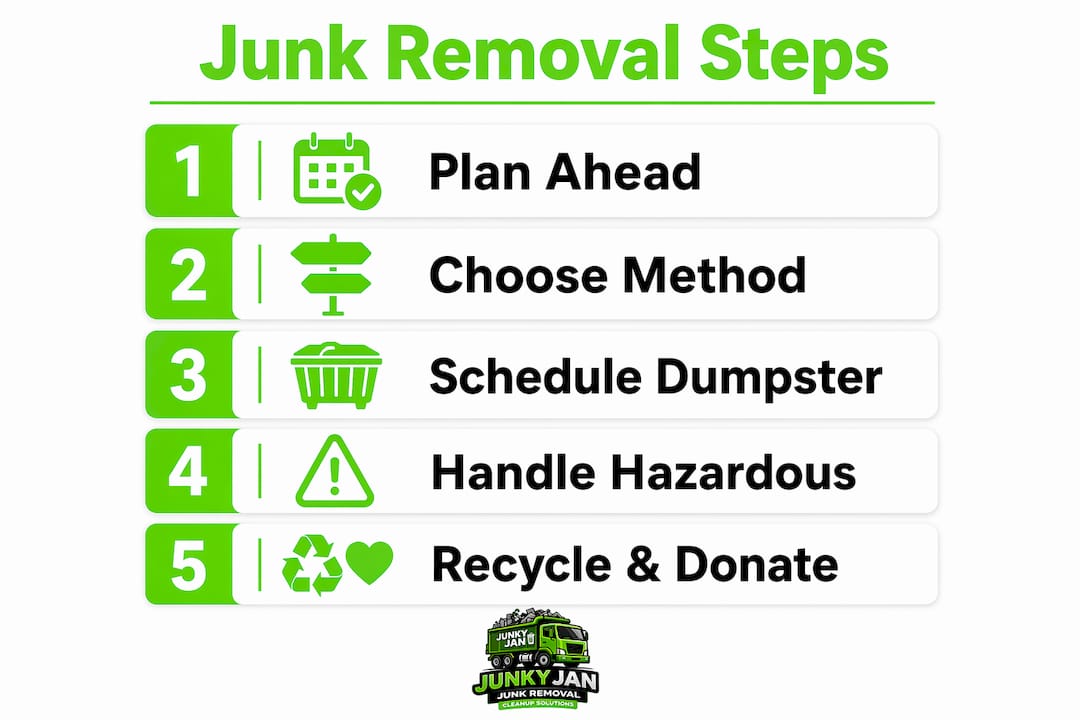
Pro Tip: Schedule your dumpster delivery 1 to 2 days before demolition begins. Having the container on-site and ready prevents the common scenario where demo crews finish a day of work and have nowhere to put the debris, stalling the entire project.
For appliance removal specifically, full-service crews like Junky jan handle refrigerant-containing units and haul them to certified recycling facilities, which removes a significant compliance burden from you.
Legal, safety, and environmental rules you need to know
Most homeowners focus entirely on the physical work of a renovation and treat junk removal as an afterthought. That approach creates real legal exposure. Here is what you need to get right before the first cabinet comes down.
Permits for dumpster placement are required in most municipalities when the container sits on a public street, sidewalk, or nature strip. Homeowners must secure these permits before the dumpster arrives, and the fines for skipping this step fall on the property owner, not the rental company. Call your local city or county office to confirm requirements before you book.
Hazardous material handling is non-negotiable. The key categories for kitchen renovations are:
- Lead paint in pre-1978 homes requires certified lead abatement before demolition.
- Asbestos in floor tiles, drywall compound, or insulation requires licensed testing and removal.
- Refrigerants in old refrigerators and air conditioning units require EPA-certified technicians for extraction.
- Fluorescent light fixtures may contain mercury and cannot go into standard waste streams.
Contractor dumping liability is a risk many homeowners do not consider. If your contractor illegally dumps debris, the liability can trace back to you as the property owner. Verifying that your removal service holds a valid waste transport license is the single most important vetting step you can take. Ask for the license number before signing any agreement.
"Planning waste removal as carefully as you plan the renovation itself is what separates a smooth project from a costly, stressful one." Responsible disposal starts with knowing what you have, who is handling it, and whether they are legally authorized to do so.
Recycling and donation options reduce both your disposal costs and your environmental footprint. Solid wood cabinets in good condition can go to Habitat for Humanity ReStores. Metal fixtures and copper pipe have scrap value. Intact appliances can be donated or sold. Separating these items before demo day means less weight in your dumpster and potentially money back in your pocket. For a deeper look at compliant disposal practices, the guide on responsible junk disposal covers the full framework.
Practical steps for managing your kitchen renovation cleanup
Efficient kitchen renovation cleanup does not happen by accident. It requires a specific sequence of actions that most homeowners skip because they seem like extra work. They are not. They are the work that keeps everything else on schedule.
-
Conduct a waste audit before demolition. Walk through your kitchen and categorize every item: resale, donation, standard disposal, or hazardous disposal. A pre-demo waste audit can save thousands in disposal fees by diverting items that do not need to go to a landfill.
-
Set up sorting zones. Designate physical areas in your garage or driveway for each category. Mixing materials together forces you to sort later under pressure, which rarely happens cleanly.
-
Remove fixtures in sequence. Work top down and back to front. Upper cabinets come out before lower cabinets. Appliances come out before flooring. This removal sequence reduces double handling and protects items you want to donate or resell from damage during demo.
-
Coordinate dumpster timing with your demo phases. If your renovation has multiple phases, schedule a mid-project pickup so the container does not overflow before the second phase begins.
-
Use proper lifting technique and personal protective equipment. Granite slabs and cast iron sinks are back injuries waiting to happen. Gloves, steel-toed boots, and a second person on heavy lifts are not optional.
Pro Tip: Before your contractor starts demo, photograph every item you plan to donate or resell. This protects you if a piece gets damaged and gives you documentation for any tax deduction on donated goods.
For a full walkthrough of how to get your space ready before a crew arrives, the guide on preparing your home for junk removal covers the logistics in detail.
Key takeaways
Kitchen renovation junk removal requires advance planning, correct container sizing, hazardous material identification, and licensed service providers to stay on schedule and within budget.
| Point | Details |
|---|---|
| Waste volume is larger than expected | A full gut remodel generates 2,000 to 4,000 lbs of debris, far beyond curbside pickup limits. |
| Dumpster size and cost vary by scope | Cosmetic jobs need a 10-yard container; full gut remodels need 20 yards or more, costing $275 to $700. |
| Hazardous materials require licensed handling | Lead paint, asbestos, and refrigerants cannot go into standard dumpsters and require certified disposal. |
| Permits protect you from fines | Placing a dumpster on public property without a permit creates fines charged to the homeowner, not the rental company. |
| Pre-demo sorting saves money | A waste audit before demolition diverts resalable and donatable items, reducing your total disposal cost. |
What I have learned from watching homeowners manage renovation debris
The single most consistent mistake I see is treating junk removal as the last item on the renovation checklist. Homeowners spend weeks selecting cabinet styles and countertop materials, then call a removal service the day before demo starts. That gap in planning is where projects fall apart.
The second mistake is assuming all junk removal services are equivalent. A crew without a valid waste transport license is not just a legal risk. It is a sign that their disposal practices are not being audited by anyone. I have seen homeowners receive fines months after a renovation because debris was traced back to illegal dumping by an unlicensed contractor they hired.
What actually works is treating junk removal as a parallel planning track to the renovation itself. Book your dumpster or service at the same time you finalize your contractor. Identify hazardous materials during your pre-renovation inspection, not during demolition. And sort before you swing the first sledgehammer. The homeowners who do this finish faster, spend less on disposal, and avoid the compliance problems that derail timelines.
The environmental angle is also worth taking seriously. Diverting cabinets to a Habitat for Humanity ReStore or selling intact appliances through Facebook Marketplace is not just feel-good behavior. It directly reduces your dumpster weight, which reduces your cost. Sustainability and budget efficiency point in the same direction here.
— gam
Ready to clear your kitchen renovation debris fast?
Junky jan handles kitchen remodel trash removal across Miami, Hollywood FL, and Broward County with same-day and next-day scheduling, licensed and insured crews, and transparent pricing based on load size with no hidden fees.

Whether you need a full post-renovation junk cleanup or targeted appliance and cabinet removal, Junky jan's crews do the heavy lifting and handle disposal responsibly. You can also explore the full range of household junk removal options to match the right service to your project scope. Contact Junky jan at junky-jan.com for a free, no-obligation quote and get your renovation back on track.
FAQ
What does kitchen renovation junk removal include?
Kitchen renovation junk removal covers the hauling and disposal of cabinets, countertops, flooring, drywall, appliances, fixtures, and other demolition debris generated during a kitchen remodel. It differs from standard trash pickup because of the volume, weight, and material complexity involved.
How much does kitchen remodel trash removal cost?
Dumpster rental for a kitchen remodel typically costs between $275 and $700 depending on container size and project scope, with rental periods running 7 to 14 days. Full-service junk removal pricing varies by load size, with no flat rate that applies universally.
Do I need a permit for a dumpster during my kitchen renovation?
Most municipalities require a permit when a dumpster is placed on a public street or sidewalk. The permit responsibility and any resulting fines fall on the homeowner, so confirm local requirements with your city or county before scheduling delivery.
Can I put old appliances in a renovation dumpster?
Refrigerators, freezers, and air conditioners contain refrigerants that require EPA-certified extraction before disposal. Most dumpster rental companies prohibit these items without prior draining, so hiring a full-service crew certified to handle appliances is the safer and legally compliant option.
When should I schedule junk removal for a kitchen renovation?
Schedule your dumpster delivery or service crew 1 to 2 days before demolition begins. This timing prevents debris from accumulating without a disposal destination and keeps your contractor's workflow moving without interruption.