
Household junk removal is defined as the professional or self-managed process of collecting, hauling, and disposing of unwanted items from a residence, covering everything from old sofas to construction debris. The eight main service categories in 2026 include full-service cleanouts, curbside bulky pickup, dumpster rentals, construction hauling, e-waste removal, appliance pickup, yard waste collection, and hazardous waste programs. Choosing the wrong type wastes money and can result in rejected pickups or legal violations. This guide breaks down every major type of household junk removal so you can match the right service to your specific situation.
1. Types of household junk removal at a glance
Before diving into each category, it helps to understand what is considered household junk in the first place. Household junk covers furniture, appliances, electronics, yard debris, construction materials from renovations, and hazardous items like paint or batteries. The industry term for managing all of this is residential waste removal, though most homeowners and renters simply call it junk removal. The critical point is that not all junk is treated equally. Each category has its own disposal rules, accepted items, and cost structure, which is exactly why knowing your options before you start clearing a room saves you real time and money.
2. Full-service residential junk removal
Full-service residential junk removal is the most convenient home junk removal service available. A licensed crew arrives, loads everything, and hauls it away without you lifting a finger. This is the right call when you have a mix of items, limited time, or no truck access.
Common items handled by full-service crews include:
- Sofas, sectionals, and mattresses
- Refrigerators, washers, dryers, and dishwashers
- Televisions, computers, and other electronics
- General furniture like desks, dressers, and bed frames
- Bagged household debris and miscellaneous clutter
Typical full-service pricing runs $150 to $400 per job for average loads, with per-item rates of $50 to $150 for furniture and $75 to $200 for appliances. Construction debris jobs can reach $600 or more depending on volume and weight. Pricing is almost always volume-based, meaning the more truck space your junk occupies, the more you pay.
Pro Tip: Stage all your items in one area before the crew arrives. Volume-based pricing rewards consolidation, and a tightly grouped pile is easier for crews to assess accurately, which means fewer surprises on your final bill.
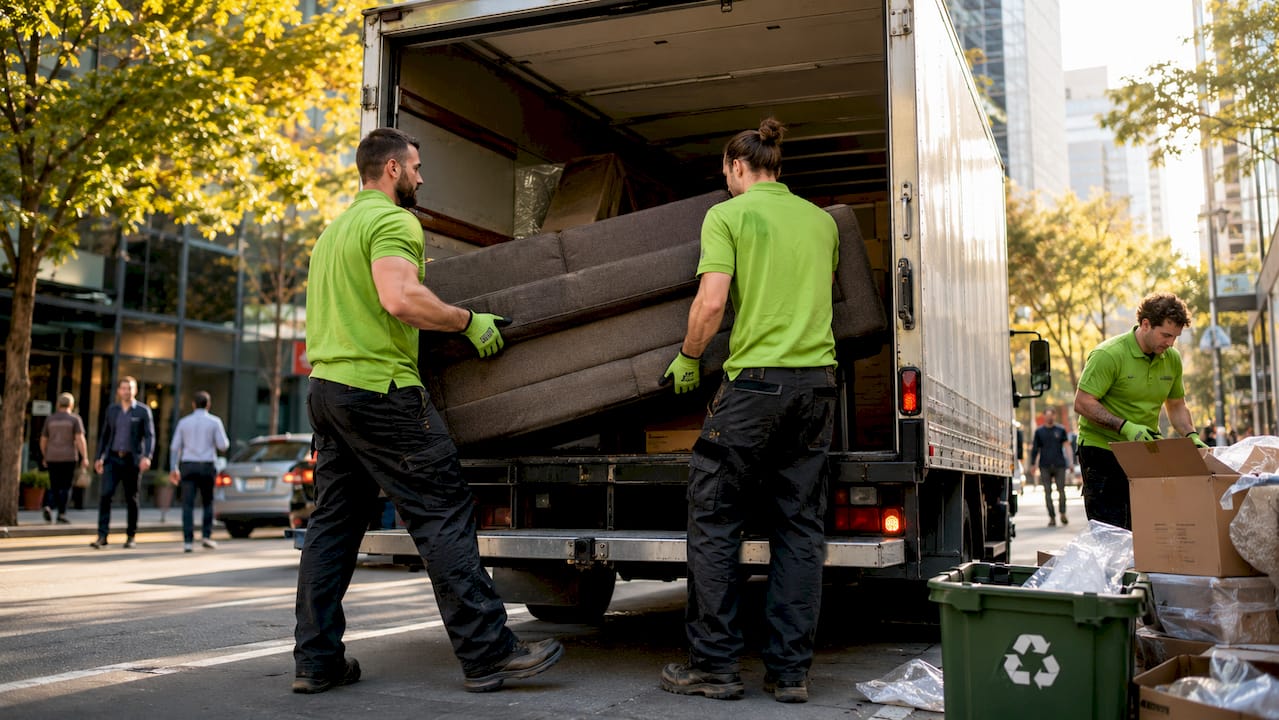
Most full-service companies accept furniture, appliances, electronics, yard waste, and general debris, but commonly exclude paint, chemicals, propane tanks, asbestos, tires, and medical waste. Always confirm the exclusion list before booking.
3. Municipal bulky item curbside pickup
Curbside bulky item pickup is a free or low-cost residential clutter clearance program offered by most U.S. cities. You schedule a pickup date, place approved items at the curb, and the city collects them. The catch is that these programs come with strict rules that many homeowners overlook until their pile gets rejected.
Cities set firm item limits and scheduling requirements. For example, Tacoma's Call-2-Haul program limits residents to 3 large items plus 15 small boxes or bags per pickup. Exceeding that limit counts as a double usage of your annual allowance or triggers extra fees. Improperly staged or overloaded piles may be rejected outright under municipal code placement rules.
Items typically excluded from bulky pickup programs include:
- Construction and demolition debris (wood, brick, cement)
- Hazardous materials (paint, chemicals, batteries)
- Tires and automotive parts
- Appliances containing refrigerants
- Loose dirt, gravel, or landscaping fill
The Roswell large item program is a clear example: it explicitly excludes chemicals and construction debris, and charges fees for special items. This pattern repeats across most U.S. municipalities.
Pro Tip: Count and group your bulky items before scheduling. Experienced homeowners stage items into the exact allowable quantities to preserve their annual pickup allowance and avoid paying for overages.
4. Dumpster and roll-off rentals for DIY projects
Dumpster rental, also called roll-off rental, is the go-to option for large DIY cleanouts, renovation projects, or situations where you need several days to sort and load debris at your own pace. A container is dropped at your property, you fill it over a set rental period, and the company hauls it away.
| Factor | Dumpster Rental | Full-Service Hauling |
|---|---|---|
| Labor | You load it yourself | Crew does all loading |
| Flexibility | Fill over multiple days | Single scheduled visit |
| Best for | Large DIY cleanouts, renovations | Mixed loads, limited mobility |
| Cost driver | Volume and weight limits | Truck space used |
| Hazardous waste | Generally excluded | Generally excluded |
Accepted waste categories typically include municipal solid waste, construction debris, and yard waste, though heavy materials like concrete and dirt often carry weight surcharges. Dumpster pricing is driven primarily by volume and weight. Boxing loose items and consolidating debris before loading reduces the container size you need, which directly lowers your cost.
The main drawback of dumpster rental is that it requires physical labor on your end. If you have mobility limitations, a large mixed load, or items that need sorting for recycling, full-service hauling is the more practical choice.
5. Construction and renovation debris removal
Construction debris is excluded from nearly every municipal bulky pickup program and most standard junk removal loads. Materials like drywall, lumber, concrete, tile, and roofing shingles require separate professional hauling or a dedicated dumpster rental. This is one of the most common mistakes homeowners make after a renovation: assuming their regular trash service or bulky pickup will cover it.
For a detailed breakdown of what qualifies and how to handle it, the construction debris removal guide from Junky Jan covers the full range of materials and service options.
6. Specialized removal: e-waste, appliances, yard waste, and hazardous materials
Specialized removal categories require separate handling because of legal restrictions, environmental regulations, or physical complexity. Treating these items as standard junk is the fastest way to get a pickup rejected or face a fine.
E-waste removal covers televisions, computers, monitors, printers, and phones. These items contain lead, mercury, and cadmium, which makes landfill disposal illegal in many states. Certified e-waste recyclers dismantle and process components safely. Many municipalities offer free e-waste drop-off events, and retailers like Best Buy accept certain electronics for recycling.
Appliance removal adds another layer of complexity. Refrigerators, air conditioners, and dehumidifiers contain refrigerants regulated under EPA Section 608. Disconnecting and disposing of these units requires certified technicians. For guidance on safe handling before removal, cleaning rental appliances professionally is a useful reference for landlords and property managers preparing units for cleanout.
Yard and green waste includes grass clippings, branches, shrubs, and landscaping debris. Many cities offer separate green waste bins or seasonal curbside collection. Private yard waste removal services handle larger volumes from tree trimming or full landscape overhauls. The yard waste removal guide from Junky Jan covers rental property scenarios in detail.
Household hazardous waste (HHW) is the category most homeowners underestimate. The EPA recommends disposing of batteries, paint, cleaning chemicals, pesticides, and e-cigarettes at dedicated HHW collection sites, not through standard junk removal. Skipping proper packaging and separation delays disposal and often requires multiple trips to collection sites.
| Specialized Category | Key Restriction | Proper Disposal Method |
|---|---|---|
| E-waste | Landfill ban in many states | Certified recycler or retailer drop-off |
| Appliances with refrigerants | EPA Section 608 certification required | Licensed appliance removal service |
| Yard and green waste | Separate from solid waste streams | Green waste bin or private hauler |
| Household hazardous waste | Cannot mix with regular junk | Dedicated HHW collection site |
7. How to choose the right junk removal option
Selecting the best junk removal option starts with a clear assessment of what you have, how much of it there is, and what your timeline looks like. No single service covers every situation, and the most cost-effective cleanouts usually combine two or three methods.
Work through these questions before booking anything:
- What type of junk do you have? Hazardous items, e-waste, and construction debris each require specialized handling and cannot go into a standard full-service load.
- How much volume are you dealing with? A single room's worth of furniture suits full-service removal. A full garage cleanout or post-renovation haul may justify a dumpster rental.
- What is your timeline? Same-day or next-day full-service removal is faster than waiting for a municipal pickup date, which can be weeks out.
- What is your budget? Municipal curbside pickup is free or low-cost but limited. Full-service removal costs more but handles everything in one visit.
- Do you have physical limitations? If loading a dumpster yourself is not realistic, full-service is the clear answer.
For a single cleanout involving multiple junk types, a practical approach is to separate hazardous waste and e-waste for dedicated programs, schedule curbside pickup for standard bulky items within your city's limits, and book a full-service crew for the remainder. This combination minimizes total cost while keeping every item in the right disposal channel. The home junk removal preparation guide from Junky Jan walks through exactly how to stage and sort before a crew arrives.
Key takeaways
Effective household junk removal requires matching each waste category to its correct service type, because no single method handles everything legally or cost-efficiently.
| Point | Details |
|---|---|
| Eight removal categories exist | Full-service, curbside pickup, dumpster rental, construction hauling, e-waste, appliance, yard waste, and HHW programs each serve distinct needs. |
| Municipal pickup has hard limits | Programs like Tacoma's Call-2-Haul cap items per visit; exceeding limits costs money or burns your annual allowance. |
| Hazardous waste needs separate handling | Batteries, paint, and chemicals must go to dedicated HHW sites, not standard junk removal loads. |
| Volume-based pricing rewards preparation | Staging and consolidating items before a full-service or dumpster pickup directly reduces your final cost. |
| Combining methods saves the most | Splitting a cleanout across curbside pickup, full-service hauling, and HHW drop-off minimizes total expense and keeps disposal legal. |
What I've learned from watching homeowners get this wrong
Most people treat junk removal as a single task when it is actually a sorting problem. The homeowners who struggle most are the ones who call a hauler, get a quote, and then discover half their load cannot be taken because it includes paint cans, a refrigerator with refrigerant, or a pile of drywall from a bathroom remodel. That discovery costs time, a rescheduled pickup, and sometimes a second service fee.
The fix is simple but requires discipline upfront. Walk through your space before you book anything and sort into four piles: standard junk for full-service or curbside, construction debris for a separate haul or dumpster, e-waste and appliances for specialized pickup, and hazardous materials for your local HHW program. That 20 minutes of sorting can cut your total removal cost by a third and eliminates the frustration of a rejected load.
Volume-based pricing also changes how you should prepare. Most people leave items scattered across a garage or basement and let the crew figure it out. Consolidating everything into one area, boxing loose items, and removing obvious exclusions before the crew arrives means a faster job and a lower quote. Junky Jan's crews in Miami and Broward County see this difference on every job. The prepared clients pay less and finish faster, every time.
— gam
Ready to clear your space? Junky Jan makes it simple.
When you have sorted your junk and know what needs to go, the next step is booking a crew that shows up on time and handles the heavy lifting without hidden fees. Junky Jan serves Miami, Hollywood FL, and Broward County with same-day junk pickup for furniture, appliances, construction debris, yard waste, and full property cleanouts. Pricing is based on load size with no surprises at the end.
Whether you are clearing a single room or doing a full estate cleanout, Junky Jan's licensed and insured crews handle the work from start to finish. Scheduling takes minutes, and you only pay for the truck space you actually use.
FAQ
What is considered household junk?
Household junk includes furniture, appliances, electronics, yard debris, construction materials from home renovations, and hazardous items like paint or batteries. The specific items a removal service accepts depend on the service type and local regulations.
What types of household junk removal are available?
The eight main categories are full-service cleanouts, curbside bulky pickup, dumpster rentals, construction debris hauling, e-waste removal, appliance pickup, yard waste collection, and household hazardous waste programs. Each category handles a specific type of waste.
Can I put construction debris in a regular junk removal load?
No. Construction and demolition debris is excluded from most bulky pickup programs and many standard junk removal loads. It requires a dedicated dumpster rental or a specialized construction hauling service.
How much does full-service junk removal cost?
Full-service removal typically costs $150 to $400 for average loads, with furniture priced at $50 to $150 per piece and appliances at $75 to $200. Construction debris jobs can exceed $600 depending on volume and weight.
Where do I dispose of household hazardous waste?
Batteries, paint, cleaning chemicals, and similar items must go to a dedicated HHW collection site, not a standard junk removal load. Most counties run scheduled drop-off events or permanent collection facilities.