
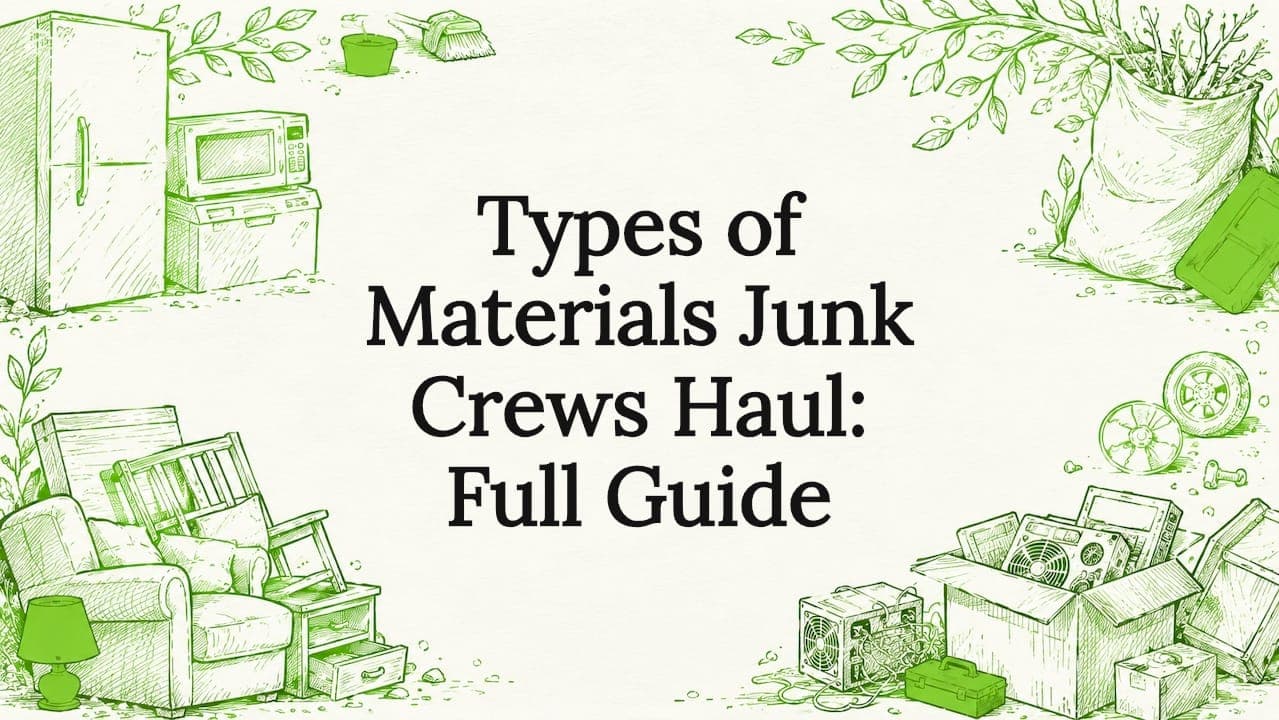
Junk removal is defined as the professional collection and disposal of non-hazardous bulk materials that standard trash services will not pick up. The types of materials junk crews haul span six major categories: household furniture, appliances, electronics, yard debris, construction waste, and general clutter. Knowing which category your items fall into tells you what to expect on pickup day, how crews will handle each piece, and whether recycling or donation is an option. This guide breaks down every category with real examples, disposal notes, and prep tips so you can schedule your next junk removal pickup with confidence.
1. types of materials junk crews haul: the core categories
Junk removal crews primarily take non-hazardous items they can safely load, transport, and dispose of under standard operating licenses. That single rule shapes every hauling policy you will encounter. If an item requires specialized protective equipment, a hazmat license, or a certified disposal facility, it falls outside the scope of a standard junk crew.
The six core categories are furniture, appliances, electronics, yard debris, construction and renovation waste, and general household clutter. Each category has its own handling requirements, disposal pathways, and occasional exceptions. The sections below cover each one in detail.
2. residential and commercial furniture
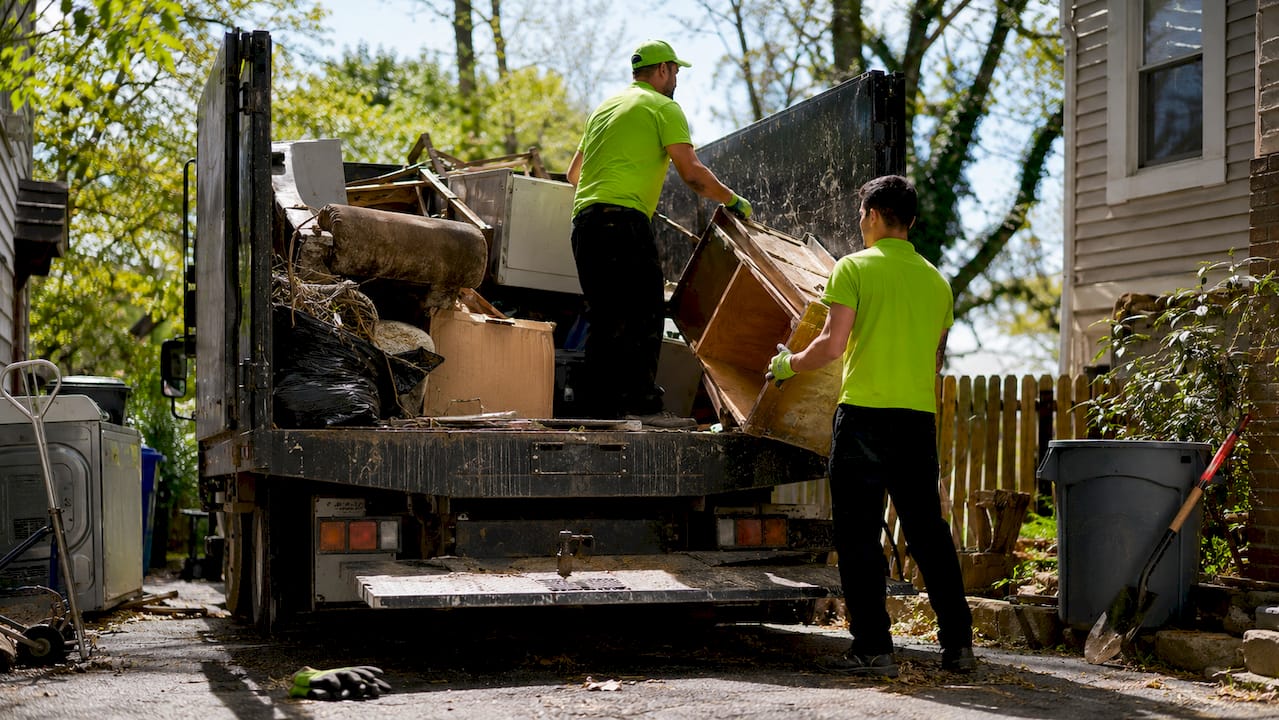
Bulky furniture like sofas, beds, and dressers is the most common material hauled by junk crews. Professionals carry the dollies, straps, and manpower to move heavy pieces without damaging walls or floors. That is the core value of the service for most homeowners and landlords.
Common furniture types accepted include:
- Sofas, sectionals, and loveseats
- Bed frames, mattresses, and box springs
- Dressers, armoires, and wardrobes
- Dining tables, chairs, and buffets
- Patio furniture, umbrellas, and outdoor cushions
- Office desks, filing cabinets, and cubicle panels
Condition matters less than you might expect. Crews take worn, stained, or broken pieces that donation centers refuse. However, furniture soaked with mold or infested with pests may be declined because of health risks to the crew. If you have a piece in questionable condition, mention it when you book so the crew can prepare.
Usable furniture often gets redirected to local charities, Habitat for Humanity ReStores, or resale shops before it reaches a landfill. That diversion is good for the environment and sometimes reduces your hauling cost. For more on how abandoned furniture gets removed from properties, that guide covers landlord-specific scenarios in detail.
Pro Tip: Disassemble bed frames and large shelving units before the crew arrives. Smaller pieces load faster, which can reduce your total haul time and cost.
3. appliances and special disposal regulations
Appliances are standard junk removal materials, but some carry regulatory requirements that affect how crews handle them. Refrigerators, freezers, window AC units, and central air handlers all contain refrigerants. EPA Section 608 mandates refrigerant recovery before any of these units can be scrapped or disposed of. That means a certified technician must vacuum out the refrigerant before the appliance goes to a scrap yard.
Common appliances junk crews accept include:
- Refrigerators and chest freezers
- Washing machines and dryers
- Dishwashers and ranges
- Microwaves and small kitchen appliances
- Window and portable AC units
- Water heaters
Appliances containing refrigerants require EPA-certified recovery before disposal. Confirm your junk removal provider uses certified technicians or partners with a certified scrap facility to stay compliant.
Small appliances like toasters, blenders, and coffee makers are accepted without special handling. They go into the general load and are sorted at the transfer facility. Large appliances are often separated for metal recycling, which recovers steel, copper, and aluminum.
Pro Tip: Defrost refrigerators and freezers at least 24 hours before pickup. A dry unit is lighter, easier to move, and avoids water damage to your floors during loading.
4. electronic waste and certified recycling
E-waste is the fastest-growing category of junk removal materials, and it carries the most regulatory complexity. Electronics like TVs, computers, and printers require certified recycling channels because they contain lead, mercury, cadmium, and other hazardous components. Dropping them in a standard landfill is illegal in most states.
Items junk crews typically accept as e-waste include:
- CRT and flat-screen televisions
- Desktop computers, laptops, and monitors
- Printers, scanners, and fax machines
- Smartphones, tablets, and gaming consoles
- Stereo equipment and DVD players
- Cables, chargers, and peripheral devices
Reputable crews request item lists or photos before pickup when a load contains significant e-waste. That upfront disclosure lets them plan certified processing and avoid sorting delays at the facility. Mixed loads with undisclosed electronics slow down the entire disposal chain.
One item that surprises most people: e-cigarettes and vape devices are classified as household hazardous waste by the EPA because of lithium batteries and nicotine residue. Standard junk crews cannot haul them. Take those to a designated hazardous waste collection site instead.
Stat callout: California requires all e-waste to be processed through certified facilities. That standard reflects the direction most states are moving, so verifying your crew's recycling partnerships is worth the 60-second phone call.
5. yard debris and outdoor item removal
Yard debris hauled by junk crews includes branches, leaves, grass clippings, stumps, fencing, and landscaping materials like dirt and rocks. Storm cleanup and seasonal landscaping projects generate the bulk of these calls. In South Florida, post-hurricane debris removal is one of the most requested services after a major storm.
Common yard and outdoor items accepted include:
- Tree branches, limbs, and brush piles
- Bagged leaves and grass clippings
- Old wood fencing and chain-link sections
- Broken concrete pavers and stepping stones
- Dirt, mulch, and gravel in manageable quantities
- Sheds, playsets, and swing sets
- Hot tubs and above-ground pools
Weight is the key variable for outdoor materials. Concrete, dirt, and rock are priced by weight or volume because they are significantly heavier than standard household junk. A small pile of concrete chunks can weigh as much as a full truckload of furniture. Communicate the volume of heavy materials when you book so the crew brings the right equipment.
Oversized structures like sheds and hot tubs require partial disassembly on-site. Most crews handle that as part of the service, but confirming in advance prevents scheduling surprises. For rental property owners managing yard waste removal between tenants, that guide covers the full process.
6. construction and renovation debris
Construction debris is one of the most common types of commercial waste junk crews handle, and it is also the category with the most weight-based pricing. Drywall, lumber, tile, flooring, roofing shingles, and concrete all qualify as standard construction junk. A crew that handles residential cleanouts can typically manage light renovation debris from DIY projects or contractor work.
| Material Type | Accepted | Notes |
|---|---|---|
| Drywall and plaster | Yes | Separate from other debris when possible |
| Lumber and wood scraps | Yes | Remove nails and hardware first |
| Ceramic and porcelain tile | Yes | Heavy; priced by weight |
| Concrete and masonry | Yes | Heavy; confirm volume upfront |
| Roofing shingles | Yes | Weight-based pricing applies |
| Asbestos-containing materials | No | Requires licensed abatement contractor |
| Lead paint debris | No | Requires certified hazmat handling |
Hazardous materials are excluded from standard junk removal regardless of the job type. Asbestos tile, lead paint chips, and chemical-soaked materials require licensed abatement contractors. Mixing those items into a standard load creates legal liability for the crew and the property owner. For a deeper look at construction debris categories, that resource covers the full range of accepted and excluded materials.
Pro Tip: Sort construction debris by material type before the crew arrives. Separating wood from concrete and tile speeds up loading and may reduce your cost if the crew charges by time or load complexity.
7. general household clutter and miscellaneous items
General clutter covers everything that does not fit neatly into the five categories above. Garage cleanouts, estate cleanouts, and storage unit purges generate mixed loads that include clothing, toys, books, kitchenware, tools, and random accumulated items. Junk crews screen items by safety and handling category, accepting almost all non-hazardous bulk items in this group.
The one consistent exclusion across all categories is hazardous household waste. Paints, chemicals, batteries, pesticides, and motor oil require specialized disposal programs and cannot go into a standard junk load. Most counties operate household hazardous waste drop-off events or permanent collection sites for these materials. Isolating and labeling hazardous items before the crew arrives prevents service delays and protects everyone involved.
Pre-sorting hazardous items before pickup is the single most effective thing you can do to keep your removal on schedule. Drivers cannot legally haul those materials under a standard junk removal license, and discovering them mid-load can halt the entire job.
Key takeaways
Junk removal crews accept nearly all non-hazardous bulk materials, including furniture, appliances, electronics, yard debris, and construction waste, but hazardous items require separate disposal programs.
| Point | Details |
|---|---|
| Non-hazardous rule | Crews accept items they can safely load without specialized hazmat licensing. |
| Appliance compliance | Refrigerant-containing units need EPA-certified recovery before scrapping. |
| E-waste requires certification | TVs, computers, and phones must go through certified recycling facilities. |
| Hazardous waste is excluded | Paints, chemicals, and batteries require county HHW programs, not junk crews. |
| Pre-sorting saves time | Separating heavy materials and hazardous items before pickup prevents delays and reduces cost. |
What i've learned after watching hundreds of pickups
Most people assume junk removal is simple: a truck shows up, the crew loads everything, and it disappears. The reality is more layered than that, and the surprises almost always come from the same two sources.
The first is refrigerant-containing appliances. Homeowners routinely expect a crew to haul a refrigerator the same way they haul a sofa. The EPA compliance requirement for refrigerant recovery catches people off guard every time. A crew that skips that step is cutting corners legally, not just operationally. Always ask whether your provider uses certified technicians or partners with a certified scrap facility.
The second surprise is hazardous waste buried in mixed loads. I have seen estate cleanouts where old pesticides, automotive fluids, and paint cans were mixed in with furniture and boxes. The crew cannot legally take those items, and discovering them mid-job stalls everything. The fix is simple: walk through your space before booking and pull out anything with a warning label. Set it aside for a county HHW event. That 20-minute step protects you, the crew, and the environment.
The broader point is that responsible disposal is not just a marketing phrase. Certified e-waste recycling, refrigerant recovery, and HHW diversion are legal requirements with real consequences for non-compliance. Choosing a licensed, insured crew is not about paying more. It is about making sure the materials you hand off are handled correctly all the way to their final destination.
— gam
Ready to clear it out? junky jan has you covered
Junky jan handles the full range of junk removal materials across Miami, Hollywood FL, and Broward County, including furniture, appliances, e-waste, yard debris, and construction cleanup. Every crew is licensed and insured, and disposal follows proper recycling and compliance pathways for regulated items like refrigerant-containing appliances and electronics.
Pricing is based on load size with no hidden fees, and same-day and next-day scheduling is available for most jobs. Whether you are clearing a single room or managing a full property cleanout, Junky jan makes the process straightforward. Book your pickup today and get a free, no-obligation quote based on what you have.
FAQ
What items do junk crews typically not haul?
Junk crews do not haul hazardous materials including paints, chemicals, pesticides, motor oil, and batteries. These items require household hazardous waste programs operated by local counties.
Can junk crews take old refrigerators and AC units?
Yes, but appliances containing refrigerants must have those refrigerants recovered by an EPA-certified technician before disposal. Confirm your provider complies with EPA Section 608 before booking.
Do junk removal services recycle electronics?
Reputable junk removal services route e-waste like TVs, computers, and printers through certified recycling facilities. Dumping electronics in a standard landfill is illegal in most states.
How is construction debris priced differently from household junk?
Heavy materials like concrete, tile, and roofing shingles are typically priced by weight or volume rather than a flat load rate. Disclose the type and quantity of heavy materials when you book to get an accurate quote.
What should i do with hazardous items before a junk crew arrives?
Separate and label all hazardous items, including paint cans, automotive fluids, and pesticides, and set them aside from your main junk pile. Take those items to a county hazardous waste collection site to keep your pickup on schedule.