
Removed junk follows a structured process involving onsite sorting, donation, recycling, and landfill disposal, with the final destination shaped by item condition, contamination levels, and local processing infrastructure. Most people assume their discarded sofa or broken appliance simply disappears after a crew loads it onto a truck. The reality is far more layered. Services like Junky Jan and national operators sort loads at the point of collection, directing usable goods toward charities, recyclables toward Materials Recovery Facilities (MRFs), and true waste toward regulated landfills. Understanding what happens to removed junk gives you real leverage over the environmental impact of your next cleanout.
What happens to removed junk: the first step is sorting
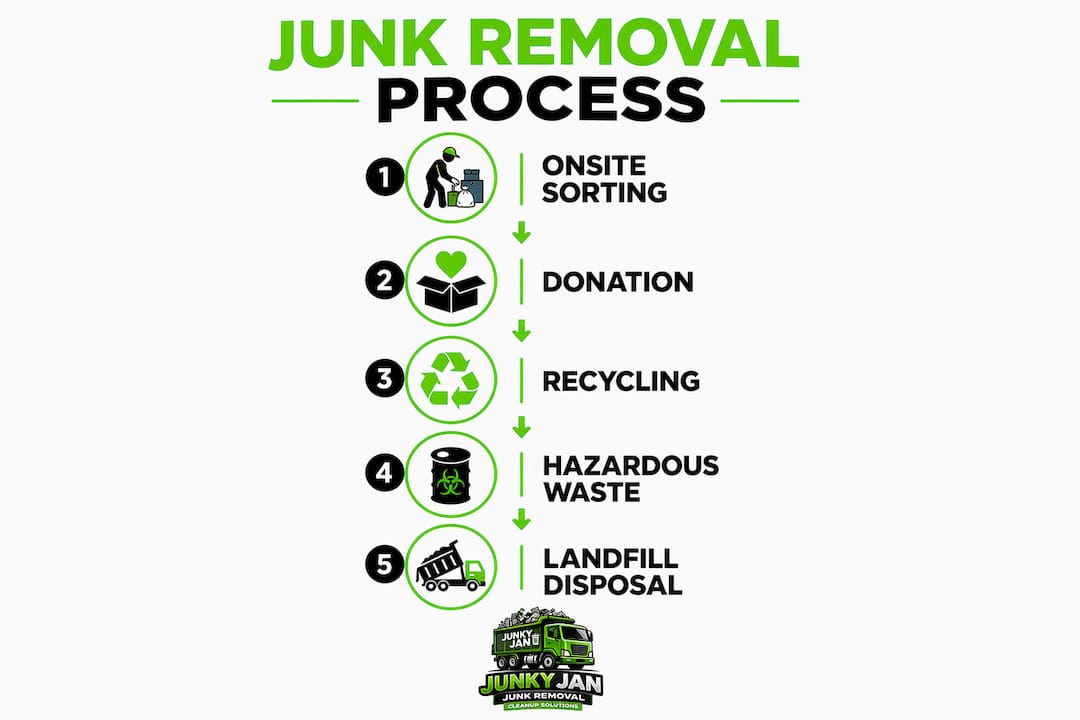
The junk removal process begins before anything reaches a facility. Trained crews evaluate and separate items directly at your property, grouping materials into four broad categories: donations, recyclables, hazardous waste, and general trash. This onsite sorting step is the single most important factor in determining where your junk ends up, because mixed loads are far harder to process downstream and often default to landfill.
Bulky or complex items, such as refrigerators, mattresses, and old televisions, require special handling and are flagged immediately. A refrigerator contains refrigerants that must be recovered by certified technicians before the unit can be scrapped. A mattress cannot go into a standard baler. Identifying these items early prevents contamination of cleaner material streams and keeps processing costs manageable.
Local facility acceptance criteria also drive sorting decisions. A Miami transfer station may accept certain plastics that a Broward County facility rejects, so experienced crews working in South Florida know the regional rules. This local knowledge is what separates a professional junk removal crew from a simple haul-away operation.
- Donations: furniture, appliances, and clothing in working condition
- Recyclables: metals, cardboard, clean plastics, and glass
- Hazardous waste: batteries, e-waste, refrigerants, and asbestos-containing materials
- General trash: contaminated, broken, or mixed materials with no viable secondary market
Pro Tip: Wipe down appliances, separate electronics from furniture, and bag loose items before your crew arrives. Clean, pre-sorted loads increase the share of material that gets recycled or donated rather than landfilled, and some providers charge less for loads that require minimal sorting labor.
How recyclable items are processed after collection
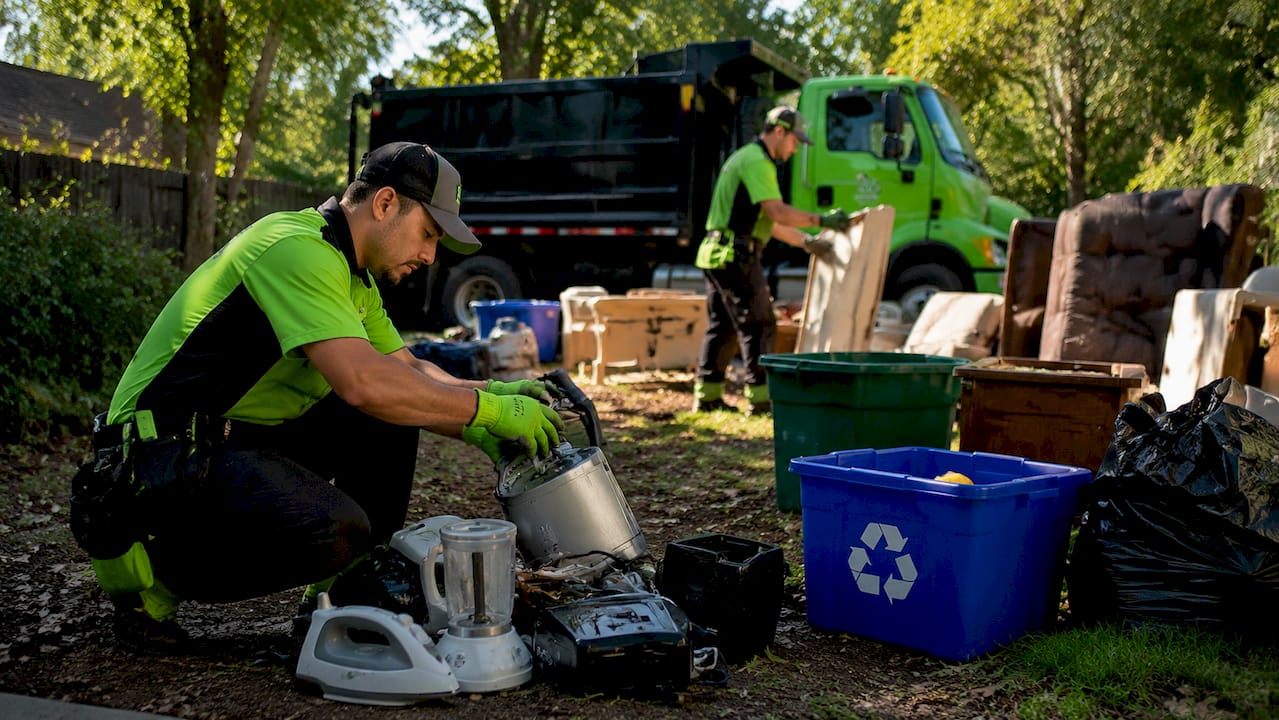
Recyclables collected during a junk removal job travel to a transfer station first, then move to a Materials Recovery Facility. At an MRF, sorting uses conveyors, magnets, screens, and human workers to separate multiple material types simultaneously. The tipping floor is where trucks unload, and the material then rides a series of conveyor belts past optical sorters, eddy current separators for aluminum, and overhead magnets for steel.
Human sorters work alongside the machinery to catch items the automated systems miss, particularly glass fragments and film plastics. This combination of labor and technology is what makes modern MRF operations capable of processing thousands of tons per day while still achieving meaningful material purity. Once sorted, materials go through baling. Balers compress sorted recyclables into dense, standardized bricks that are easier and cheaper to transport to commodity processors.
The table below shows the most common recyclable streams and what happens to each one after sorting.
| Material | Processing method | End product |
|---|---|---|
| Steel and iron | Magnetic separation, shredding, electric arc furnace | New steel products |
| Aluminum | Eddy current separation, shredding, melting | New cans, automotive parts |
| Cardboard and paper | Baling, pulping, de-inking | Recycled paper and packaging |
| Hard plastics (PET, HDPE) | Optical sorting, shredding, pelletizing | New plastic containers and fibers |
| Glass | Color sorting, crushing, melting | New bottles and fiberglass |
Single-stream recycling, where all recyclables go into one bin, makes collection easier but increases contamination risk at the MRF. Multi-stream systems, where paper, glass, and containers are separated at the source, produce cleaner loads and higher commodity values. Most residential junk removal in South Florida operates closer to single-stream, which is why onsite pre-sorting by the crew matters so much.
Donation and reuse pathways for removed junk
Reuse beats recycling on every environmental metric because it skips the energy-intensive step of breaking a material down and reforming it. Usable goods get donated to partner charities, inspected by staff, and either resold through thrift stores or distributed directly to families in need. A gently used couch that would take roughly 80 years to decompose in a landfill instead furnishes a living room for another decade.
Donation eligibility comes down to three criteria: condition, usability, and safety. A dresser with a broken drawer can still be donated. A sofa with mold cannot. Appliances must power on and function. Charities like Habitat for Humanity ReStores accept building materials, cabinets, and large appliances, while organizations like the Salvation Army focus on furniture and household goods. Knowing which partner accepts which item is part of what a responsible junk removal service brings to the table.
- Furniture: sofas, tables, chairs, and dressers in structurally sound condition
- Appliances: refrigerators, washers, and dryers that are clean and operational
- Clothing and textiles: bagged separately and directed to textile recyclers or clothing banks
- Electronics: functional devices sent to certified refurbishers rather than e-waste processors
Pro Tip: Ask your junk removal provider for a donation receipt. Charitable contributions of household goods are tax-deductible under IRS guidelines, and a documented receipt from a 501(c)(3) partner can offset the cost of your removal service at tax time.
Disposal of non-recyclable and contaminated junk
Not everything can be saved. Items that arrive at transfer stations contaminated, made of mixed materials, or lacking any commodity market go to permitted landfills. Modern landfills are engineered systems, not open dumps. Landfill liners and leachate collection systems prevent groundwater contamination, and the leachate that does form, a liquid produced as water moves through decomposing waste, is collected and treated through advanced processes before discharge.
Hazardous materials follow a completely separate track. Certified e-waste processors dismantle devices, perform data sanitization, and recycle hazardous materials separately from standard recyclables. A laptop, for example, contains lead solder, lithium, and mercury-containing components that cannot enter a standard MRF. Regulated hazardous materials mandate specialized handling under federal and state compliance frameworks, which adds cost and paperwork to the disposal process.
The table below compares common junk types and their appropriate disposal routes.
| Junk type | Reason for route | Disposal method |
|---|---|---|
| Clean cardboard and metal | Recyclable commodity | MRF processing and baling |
| Gently used furniture | Functional and safe | Charity donation or resale |
| Mixed construction debris | Contaminated or non-sortable | Permitted C&D landfill |
| Refrigerators and AC units | Contains regulated refrigerants | Certified appliance recycler |
| Laptops, phones, TVs | Contains hazardous components | Certified e-waste facility |
| Asbestos-containing materials | Regulated carcinogen | Licensed hazardous waste disposal |
The environmental cost of landfill disposal extends beyond the gate fee. Decomposing organic material in landfills generates methane, a greenhouse gas roughly 28 times more potent than carbon dioxide over a 100-year period. Responsible junk disposal practices that maximize diversion from landfill directly reduce these emissions.
How contamination affects recycling outcomes
Contamination is the single biggest threat to recycling efficacy, and it starts at the point of collection. Contamination thresholds around 25% cause entire recycling loads to be rejected, sending material that could have been processed into raw feedstock straight to a landfill instead. That number is lower than most people expect, which means even a small share of contaminated items in a load can undo the effort of sorting everything else correctly.
Plastic bags jam machinery at MRFs, causing equipment downtime and forcing workers to manually clear tanglers from conveyor systems. Food residue on cardboard or plastic containers introduces organic contamination that degrades the quality of the recovered material. A single greasy pizza box mixed into a bale of clean cardboard can reduce the value of the entire bale.
Common contamination sources to avoid:
- Plastic bags and film plastics placed in recycling bins
- Food-soiled paper and cardboard
- Broken glass mixed with other materials
- Hoses, cords, and wire tanglers
- Liquids left inside bottles and containers
Small contamination mistakes at the curb can divert entire batches away from recycling. The practical fix is simple: rinse containers, remove lids, and never bag recyclables in plastic. When you schedule a junk removal pickup, separating clean recyclables from dirty or mixed items before the crew arrives gives those materials the best chance of reaching an MRF rather than a landfill.
Key takeaways
Removed junk travels through a defined chain of sorting, donation, recycling, and regulated disposal, with contamination and item condition determining which path each material takes.
| Point | Details |
|---|---|
| Onsite sorting is the critical first step | Crews separate donations, recyclables, hazardous waste, and trash before anything leaves your property. |
| MRFs process recyclables using machines and labor | Conveyors, magnets, optical sorters, and human workers separate materials into commodity streams for baling and resale. |
| Reuse outperforms recycling environmentally | Donating functional furniture and appliances skips energy-intensive reprocessing and extends product lifecycles. |
| Contamination can reject entire loads | A contamination rate above roughly 25% causes MRFs to send full recycling loads to landfill instead. |
| Hazardous waste requires certified handling | E-waste, refrigerants, and regulated materials must go through licensed facilities with specific compliance requirements. |
What I've learned watching junk move through the system
Most people picture junk removal as a simple transaction: stuff goes in the truck, stuff disappears. After watching how the process actually works, I find that picture frustrating because it lets both consumers and providers off the hook too easily.
The part that surprises people most is how much the outcome depends on decisions made before the truck even arrives. A homeowner who separates a working lamp from a broken one, or rinses out an old paint can, directly changes where those items end up. That is not a small thing. The difference between a load that is 60% diverted from landfill and one that is 20% diverted often comes down to ten minutes of preparation.
I also think the industry needs to be more transparent about downstream partners. Asking a provider which MRF they use, which charities they partner with, and how they handle e-waste is not an unreasonable question. Providers who cannot answer it are probably not sorting at all. The household junk removal guide from Junky Jan's blog is a good starting point for understanding what questions to ask before you book.
The environmental impact of junk removal is real and measurable, but it is also highly controllable. The system works when consumers prepare, crews sort, and providers choose certified partners. When any one of those three fails, the default is landfill.
— gam
How Junky Jan handles your junk responsibly
When you book a pickup with Junky Jan in Miami, Hollywood FL, or Broward County, your load does not go to one place. The crew sorts on site, separating items that can be donated to local charity partners from materials headed to certified recycling facilities. Appliances with refrigerants are flagged for proper recovery. Electronics go to certified processors, not the general waste stream.
Junky Jan's pricing is based on load size with no hidden fees, and the team is licensed and insured. If you want to know exactly where your items are going before you book, the crew can walk you through it. For same-day or next-day service across South Florida, book your pickup with Junky Jan and get a clear, upfront quote with no surprises.
FAQ
What happens to removed junk after it leaves my property?
Removed junk is transported to a transfer station where it is sorted into recyclables, donations, hazardous waste, and general trash. Each category then moves to a specific facility: MRFs for recyclables, charity partners for usable goods, certified processors for hazardous materials, and permitted landfills for the rest.
Does all junk end up in a landfill?
No. Responsible junk removal services divert a significant share of collected material through donation and recycling before anything reaches a landfill. The exact diversion rate depends on item condition, contamination levels, and the provider's downstream partnerships.
What items can be donated during a junk removal pickup?
Furniture, functional appliances, clothing, and household goods in clean, working condition are typically eligible for donation. Items with mold, structural damage, or safety hazards do not meet charity acceptance criteria and are redirected to recycling or disposal.
How does e-waste get handled after junk removal?
Certified e-waste processors dismantle devices, perform secure data destruction, and separate hazardous components like lead and lithium before recovering usable materials. Standard recycling facilities cannot handle these materials safely.
Why does contamination matter so much in recycling?
Contamination above roughly 25% causes MRFs to reject entire loads, sending material that could have been recycled directly to a landfill. Keeping plastic bags, food residue, and liquids out of recyclable loads is the most effective way to protect recycling outcomes.