

A full property cleanout is the complete removal of all contents, debris, furniture, and unwanted materials from a residential or commercial property to prepare it for sale, renovation, or new occupancy. This process goes far beyond tossing a few bags of trash. It covers every room, every closet, and often the yard, leaving the space fully cleared and accessible. Whether you are a homeowner preparing to sell, a landlord turning over a rental unit, or a property manager dealing with an estate, understanding what a full property cleanout actually involves saves you time, money, and serious headaches.
What does a full property cleanout involve?
A full property cleanout covers the systematic removal of every item inside a property, from furniture and appliances to personal belongings, construction debris, and accumulated junk. The process is structured and deliberate, not a free-for-all haul.
The typical scope includes:
- Room-by-room removal of furniture, mattresses, appliances, clothing, and personal items
- Sorting into three categories: discard, donate, and hold for owner decision
- Hazardous material handling for items like old paint, chemicals, or biohazard waste that require special disposal
- Dumpster or hauling coordination to manage debris volume without creating secondary messes
- Staging and containment to prevent clutter from spreading into already-cleared areas
- Documentation of removed items, particularly in estate or hoarding situations, to protect all parties
Careful planning before a cleanout reduces disorder and prevents clutter creep beyond the intended project scope. Setting up sorting zones and containment rules before the first item moves is the single most overlooked step in the full house cleanout process.
Pro Tip: Match your dumpster size to the job. A 10-yard dumpster fits a single room, a 20-yard handles multiple rooms, a 30-yard covers a whole house, and a 40-yard is right for large estates or properties with construction waste. Oversizing wastes money; undersizing stalls the entire project.

Professional cleanout crews work room by room, setting aside items flagged by the client and documenting all removals to reduce post-cleanout disputes. This structured approach is what separates a true full cleanout from a rushed haul-away job.
How is a full property cleanout different from restoration and junk removal?
These three terms get used interchangeably, but they describe distinct phases of property work. Confusing them leads to incomplete scopes, budget overruns, and contractors showing up to a space they cannot safely access.
| Service | Primary purpose | Scope | When it's used |
|---|---|---|---|
| Full property cleanout | Remove all contents and debris | Entire property, room by room | Before sale, renovation, or re-occupancy |
| Property restoration | Return building to safe, usable condition | Structural repairs, drying, mold remediation | After fire, flood, or long-term neglect |
| Junk removal | Remove specific unwanted items | Targeted areas or single items | Ongoing maintenance or partial decluttering |
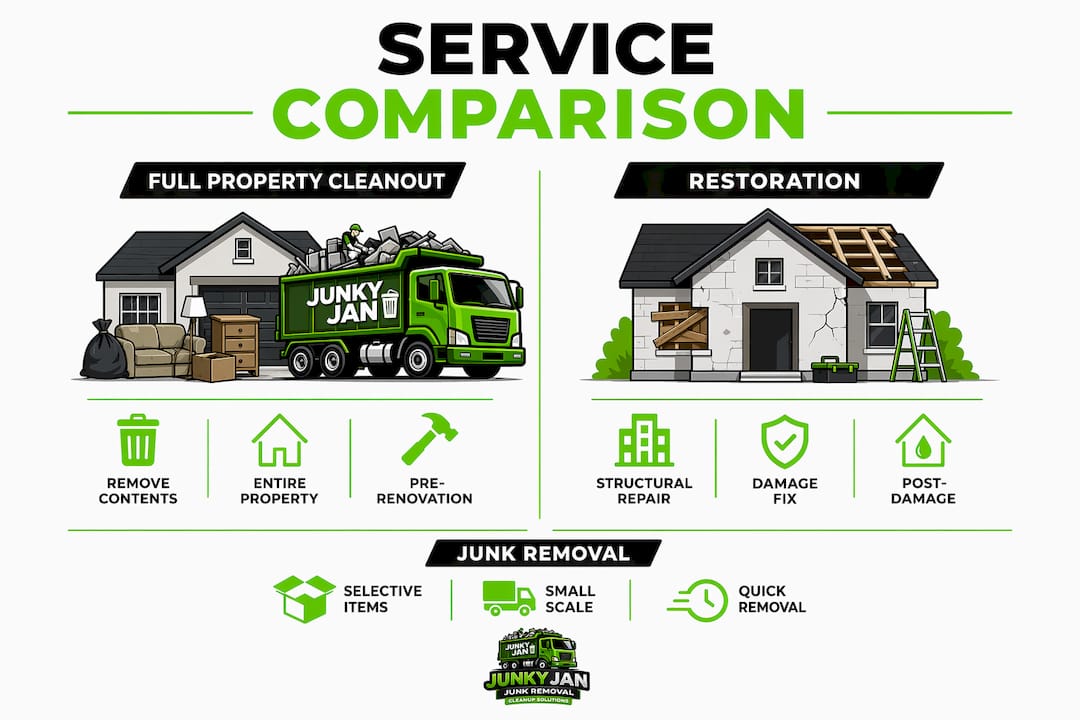
Cleanout is contents clearing; restoration returns the building itself to a safe, usable state after damage. A cleanout does not confirm that surfaces are structurally sound or free of mold. That is restoration territory, which includes drying, deodorization, and repairs.
Cleaning out an estate, for example, exposes hidden issues like mold, moisture damage, and odor problems that were buried under years of accumulated belongings. The cleanout creates access for inspectors and restoration crews. Without it, those problems stay hidden until they become far more expensive. A rental property cleanout follows the same logic: clear the space first, then assess what repairs the unit actually needs.
Junk removal, by contrast, is narrower. You call a junk removal service to take a broken couch or clear a garage. A full cleanout is the whole property, top to bottom, with sorting, documentation, and disposal built into the workflow.
What are the benefits of a full property cleanout?
For homeowners and property managers, a complete cleanout is an investment that pays off at every stage of a property transaction or renovation.
The core benefits include:
- Accurate property assessment. Contractors, inspectors, and buyers cannot evaluate what they cannot see. A cleared space reveals the true condition of floors, walls, and ceilings.
- Improved safety and access. Cluttered properties create fall hazards and block contractor access, which delays timelines and raises labor costs.
- Faster property turnover. For landlords, a thorough rental property cleanout between tenants reduces vacancy time and prevents disputes over what was left behind.
- Identification of salvageable items. Sorting during a cleanout often uncovers furniture, appliances, or fixtures worth donating or reselling, which offsets disposal costs.
- Prevention of clutter creep. A structured cleanout with clear sorting rules stops the common problem of moving junk from room to room without actually removing it.
- Legal and insurance protection. In estate situations, a documented cleanout protects executors from claims that valuables were discarded without consent.
Pro Tip: Before any cleanout begins, photograph every room and create a written inventory of high-value items. This takes 30 minutes and protects you from disputes that can take months to resolve. Structured review and documentation with family members or executors is the standard practice in professional estate and hoarding cleanouts.
For property managers handling apartment complexes, the apartment complex cleanout process follows the same principles but at scale, with unit-by-unit documentation and coordinated hauling schedules.
How to plan and execute a full property cleanout
Execution is where most cleanouts succeed or fail. A clear plan prevents the two most common outcomes: a half-finished job that delays renovation, or a rushed clearance that discards items the owner wanted to keep.
Follow these steps to manage the process effectively:
- Assess the property before you start. Walk every room and estimate the volume of contents. Note any hazardous materials, heavy appliances, or items requiring special handling. This determines your dumpster size, crew size, and timeline.
- Set up sorting stations. Designate physical areas for trash, donations, and items held for owner decision. Label them clearly. Without physical separation, sorted items get mixed back together within hours.
- Schedule your hauling service before you start sorting. Booking a dumpster or a service like Junky Jan after the cleanout begins means debris sits in staging areas longer than planned, which creates the clutter creep you were trying to avoid.
- Communicate deadlines for undecided items. In estate or family cleanouts, "I'll decide later" is the phrase that stalls projects. Set a firm date. Items not claimed by that date go to donation or disposal.
- Handle hazardous materials separately. Old paint, batteries, chemicals, and biohazard materials cannot go into a standard dumpster. Identify these early and arrange compliant disposal through your local municipality or a licensed hauler.
- Integrate with your renovation or restoration timeline. If contractors are scheduled to start work, the cleanout must be fully complete before they arrive. A partial cleanout forces contractors to work around debris, which raises costs and creates liability.
- Use a full cleanout checklist. Room-by-room checklists prevent the common oversight of forgotten storage areas like attics, crawl spaces, and under-stair closets.
For rental properties, pairing the cleanout with a rental property cleaning checklist gives you a complete record of the unit's condition before and after the process. This protects landlords in security deposit disputes and speeds up the re-leasing process.
If you are preparing for the cleanout itself, reviewing how to prepare your home for junk removal gives you a practical pre-cleanout checklist that reduces the time crews spend on-site.
Common challenges and how to avoid them
Even well-planned cleanouts run into problems. Knowing the most common pitfalls in advance is the difference between a project that finishes on schedule and one that drags on for weeks.
- Clutter creep. Items moved from one room to another without being removed create the illusion of progress. Fix this by establishing a one-direction rule: items move out of the property, not between rooms.
- Sentimental and disputed items. Estate cleanouts and hoarding situations involve items with emotional weight. A structured review stage with family members or executors, where items are set aside and documented before disposal, prevents post-cleanout conflicts that can turn legal.
- Underestimating hazardous materials. Properties that have been vacant for years or were used for hoarding often contain biohazard materials requiring remediation, including mold-contaminated items, rodent waste, and chemical storage. Treating these as standard junk creates health and legal risks.
- Incomplete cleanouts that delay renovation. Contractors arriving to a partially cleared property either reschedule or charge waiting fees. Confirm the cleanout is 100% complete before any renovation crew sets foot on the property.
- Working with crews who lack documentation practices. Professional cleanout services document what is removed and photograph the space before and after. If a crew does not offer this, ask for it explicitly. It protects both parties.
- Ignoring exterior areas. A full property cleanout includes yard debris, detached garages, sheds, and any outbuildings. Leaving these creates incomplete assessments and additional costs later.
Key takeaways
A full property cleanout is the non-negotiable first step before any sale, renovation, or re-occupancy because it exposes the true condition of the property and creates safe access for every professional who follows.
| Point | Details |
|---|---|
| Cleanout precedes restoration | Clearing contents exposes hidden damage like mold and moisture before repairs begin. |
| Sorting is built into the process | Separate trash, donations, and held items from the start to prevent clutter creep. |
| Dumpster size determines workflow | Match container size to project scope: 10-yard for one room, 30-yard for a full house. |
| Documentation prevents disputes | Photograph and inventory items before removal, especially in estate or hoarding cleanouts. |
| Cleanout and junk removal are not the same | Junk removal is targeted; a full cleanout covers every room, closet, and outbuilding. |
Why most people underestimate a full property cleanout
Most homeowners I have seen walk into a full property cleanout thinking it will take a weekend. It rarely does. The physical volume of a lifetime of accumulated belongings in a three-bedroom house consistently surprises people who have never done this before. The sorting alone, done properly, takes longer than the hauling.
What I have observed across many projects is that the emotional weight of the process is the real bottleneck, not the labor. In estate cleanouts especially, the decision fatigue of sorting through someone else's belongings slows everything down. The families that move fastest are the ones who set firm rules before they start: a specific date by which undecided items are donated, a clear list of who has authority over what, and a professional crew handling the physical removal so family members can focus on decisions.
The other thing people consistently underestimate is the scope. A full house cleanout is not just the living areas. It is the attic with 20 years of stored boxes, the crawl space with old tools, the detached garage with furniture from three moves ago. I have seen renovation timelines pushed back by two weeks because a contractor arrived and the garage had not been touched.
Hiring professional property cleanout services for large or complex jobs is not a luxury. It is the faster, cheaper option when you factor in the time, equipment rental, and disposal fees of doing it yourself. For properties in South Florida, same-day services like Junky Jan remove the logistics problem entirely.
View the cleanout as the foundation of every project that follows. A property you can fully see and access is a property you can accurately price, repair, and sell.
— gam
Ready to clear your property the right way?
Junky Jan handles full property cleanouts across Miami, Hollywood FL, and Broward County with same-day and next-day availability. Licensed, insured crews manage the heavy lifting, sorting, and hauling so you can focus on what comes next.

Whether you are turning over a rental unit, preparing an estate, or clearing a property before renovation, Junky Jan's same-day junk removal in Miami covers furniture, appliances, debris, and full-room clearances with transparent, load-based pricing and no hidden fees. Book online or call for a free estimate and get your property cleared on your schedule.
FAQ
What is a full property cleanout?
A full property cleanout is the complete removal of all contents, furniture, appliances, debris, and unwanted materials from a property to prepare it for sale, renovation, or new occupancy. It covers every room and outbuilding, not just selected areas.
How long does a full house cleanout take?
A single-room cleanout can take a few hours, while a full house cleanout for a three-bedroom property typically takes one to three days depending on volume, sorting complexity, and crew size. Properties with hoarding situations or hazardous materials take longer.
What is the difference between a cleanout and property restoration?
A cleanout removes all contents from a property; restoration addresses structural damage including drying, mold remediation, deodorization, and repairs. Cleanout almost always comes first because it exposes the damage that restoration then fixes.
What items are removed during a rental property cleanout?
A rental property cleanout removes furniture, appliances, personal belongings left by tenants, trash, yard debris, and any items in storage areas like garages or sheds. Hazardous materials are handled separately through compliant disposal channels.
Do I need a professional service for a full property cleanout?
For small, straightforward properties, a DIY approach works if you have the labor, equipment, and disposal access. For large homes, estate situations, hoarding cleanouts, or properties with hazardous materials, professional property cleanout services save time, reduce risk, and typically cost less than renting equipment and managing disposal independently.