
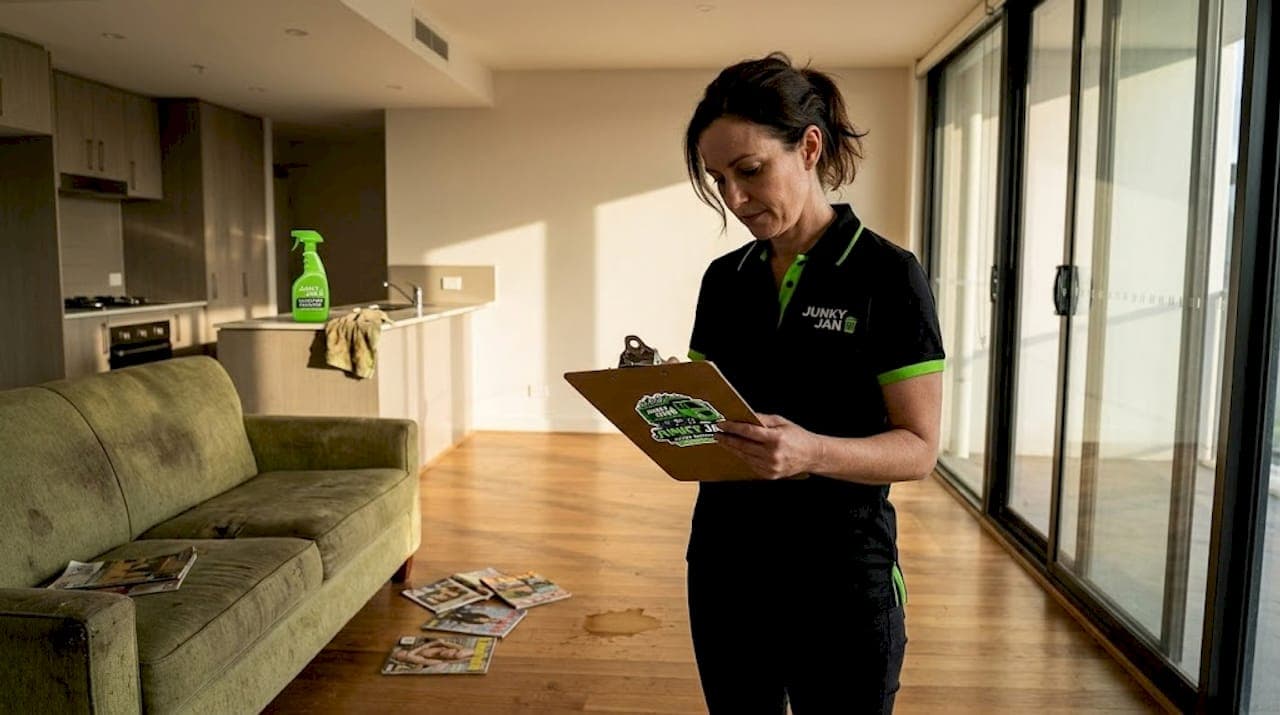
Every day a unit sits vacant after turnover, you lose money. What most landlords underestimate is how much a disorganized approach to apartment complex cleanout adds to that loss. A 21-day vacancy on an $1,800 per month unit can cost you $1,260 in lost rent before you spend a single dollar on repairs or cleaning. Understanding what a cleanout actually involves, how much it costs, and how to run one efficiently is one of the highest-leverage skills you can build as a property manager or investor.
Table of Contents
- Key takeaways
- What is apartment complex cleanout and why it matters
- Costs and operational factors to plan for
- Legal and compliance considerations
- Best practices to speed up your cleanout workflow
- What I've learned about apartment cleanouts after years in the field
- Ready to clear units faster? Junky Jan can help.
- FAQ
Key takeaways
| Point | Details |
|---|---|
| Cleanout scope is wide | An apartment complex cleanout covers junk removal, deep cleaning, repairs, and inspections before re-listing. |
| Speed reduces real losses | Cutting vacancy days from 21 to 5 can save over $900 in lost rent per unit per turn. |
| Legal compliance is non-negotiable | Abandoned property laws require written notice and waiting periods before you discard any tenant belongings. |
| Junk removal drives the timeline | Delays in trash-out push back every other task, making same-day removal a smart investment. |
| Documentation protects your deposit claims | Photographing units within 24 hours of move-out is your best defense against tenant disputes. |
What is apartment complex cleanout and why it matters
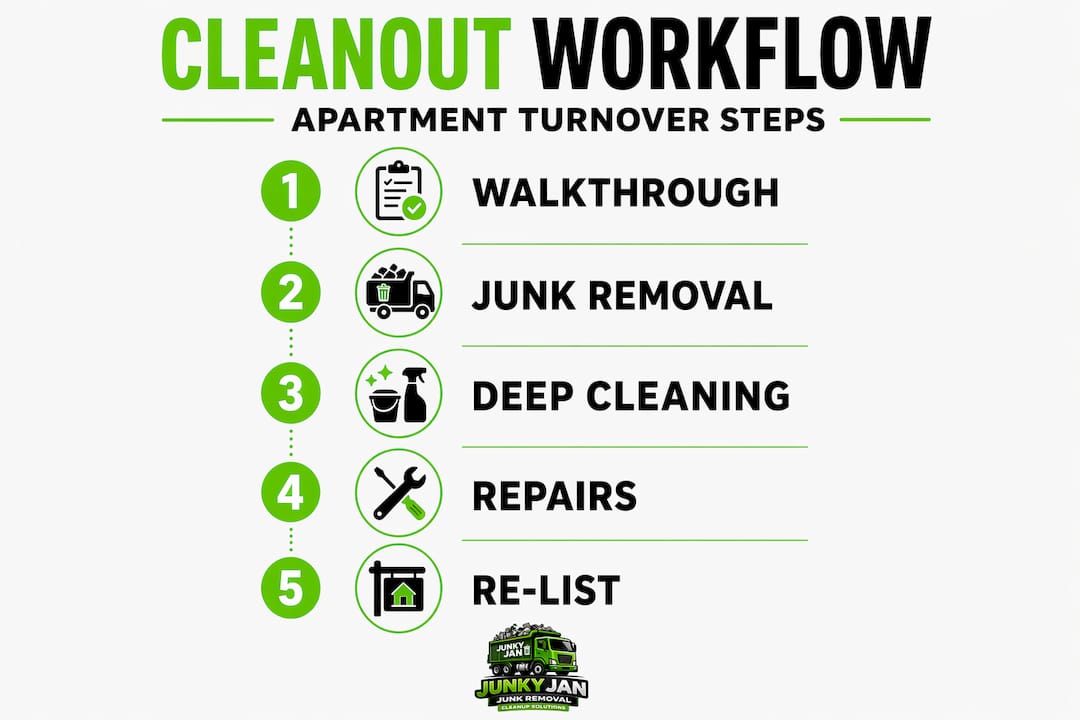
An apartment complex cleanout is the full process of clearing, cleaning, repairing, and preparing a unit for the next tenant after the previous one has vacated. This is not just wiping down countertops and running a vacuum. The residential cleanout process involves removing all leftover belongings and trash, deep cleaning every surface, addressing maintenance and repair issues, and completing a condition inspection before the unit is listed again.
The sequence typically looks like this:
- Trash-out and junk removal: Clear all abandoned furniture, appliances, and debris left behind by the departing tenant.
- Deep cleaning: Scrub the unit from top to bottom, including appliances, floors, windows, cabinets, vents, and bathrooms.
- Repairs and repainting: Patch walls, fix broken fixtures, replace damaged flooring, and repaint where needed.
- Final inspection: Walk through with a checklist and compare unit condition to the move-in report.
- Make-ready sign-off: Confirm the unit is rent-ready and list it for showings.
The make-ready process costs between $1,000 and $5,000 per unit and takes 5 to 10 days on average. That range is wide because unit condition varies enormously. A tenant who maintained the apartment well leaves behind a simple cleaning job. A tenant who did not can leave behind furniture, appliances, trash, and damage that adds days and hundreds of dollars to the process.
Pro Tip: Schedule your move-out walkthrough before the lease actually ends. Doing a pre-move-out inspection 7 to 10 days early gives you a realistic read on cleanout scope and lets you book vendors before the unit even turns.
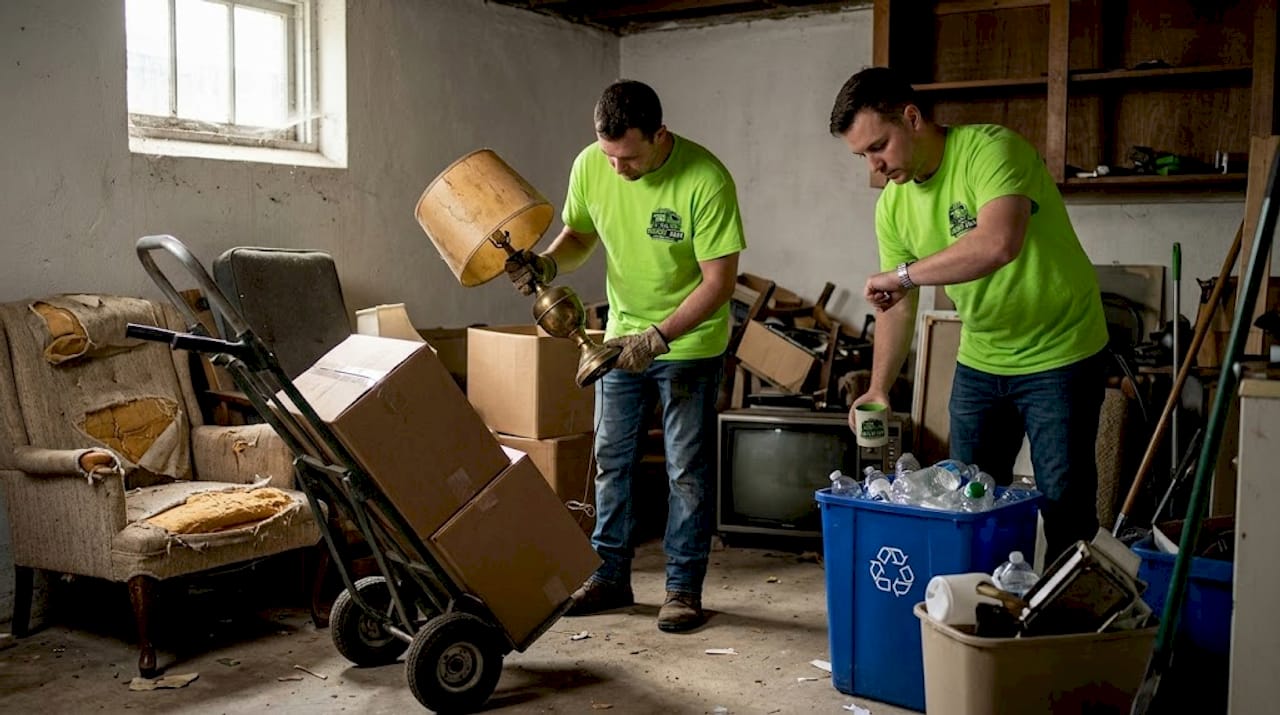
The single biggest bottleneck in any cleanout for rental properties is junk removal. Until the unit is physically clear, no cleaner, painter, or repair crew can start their work. That sequencing problem is why junk removal dictates the critical path in every turnover. Fix that first, and everything else moves faster.
Costs and operational factors to plan for
Understanding the financial scope of an apartment complex cleanout helps you budget accurately and avoid surprises. Costs vary based on unit size, tenant behavior, and how much leftover junk needs to go.
Here is a realistic breakdown of what each phase typically costs:
| Cleanout phase | Typical cost range | Key variables |
|---|---|---|
| Junk removal (full service) | $200 to $600+ per unit | Volume of items, access, floor level |
| Deep cleaning | $150 to $400 per unit | Unit size, condition at move-out |
| Repainting | $300 to $800 per unit | Square footage, damage extent |
| Carpet cleaning or replacement | $100 to $600+ | Age of carpet, damage level |
| Minor repairs | $100 to $500+ | Type and number of deficiencies |
Professional cleaning costs $150 to $400 per unit but prevents costly deposit disputes and reduces time to re-list. The math favors spending on professional services when you factor in what each additional vacant day costs you in lost rent.
The DIY versus professional question comes up often. DIY cleanouts look cheaper on paper, but property managers who try to self-perform junk removal especially run into real problems. You need a truck, crew labor, dump fees, and multiple trips for heavy items. When you add that up, same-day junk removal at $200 to $600 per unit often costs less than the labor hours a self-managed effort requires, and it takes 4 to 6 hours instead of a full day or more.
A cost-saving strategy that many experienced operators use is curbside hauling. Curbside pickup costs $79 per load versus $200 to $600 for a full-service crew entering the unit. If tenants leave items staged near the door or your maintenance team can move lightweight items out themselves, curbside is a legitimate way to cut the junk removal bill without sacrificing speed.
Pro Tip: Get your junk removal vendor on-site the same day the tenant moves out. Even a one-day delay in clearing the unit pushes your cleaner and painter schedules back, compounding your vacancy time fast.
When budgeting for a portfolio of units, consider learning more about annual junk removal costs so you can forecast cleanout expenses across multiple turnovers rather than treating each one as a surprise.
Legal and compliance considerations
This part of the apartment cleanout process is where property managers take on the most risk, usually because they do not know what they do not know. There are real legal obligations around how you handle what tenants leave behind, and getting it wrong can cost you far more than the cleanout itself.
- Send written notice for abandoned property. Abandoned property laws require formal written notice, typically by certified mail, before you can legally dispose of anything a tenant left behind. Most states require a waiting period of 15 to 30 days depending on the item's estimated value.
- Document everything before touching it. Photograph and inventory all belongings left in the unit. This record protects you if a former tenant later claims their property was wrongfully discarded.
- Follow appliance disposal regulations. Appliances containing Freon, such as refrigerators and air conditioners, require certified handling under EPA guidelines. You cannot simply toss them in a dumpster. Work with a licensed junk removal service that handles regulated appliance disposal.
- Clarify what "broom clean" actually means. Many lease agreements use this term without defining it, and that vagueness creates legal exposure. Courts typically side with tenants when lease language is ambiguous. Update your leases to specify exactly what cleaning standard is expected at move-out.
- Document unit condition within 24 hours of move-out. Photographing each room and comparing those photos to the move-in condition report is your most defensible position if a tenant disputes security deposit deductions.
"Providing tenants with a detailed move-out cleaning checklist before they leave reduces your post-move-out cleanout workload and substantially cuts down on disputes over deposit deductions." — Rental Real Estate
One concept worth emphasizing: lease language around cleaning obligations should never be vague. If your lease says "broom clean," a tenant who swept the floor once technically complied. If your lease says "professionally cleaned to move-in condition," you have a defensible standard. Update this before your next lease cycle.
Best practices to speed up your cleanout workflow
The difference between a 5-day turnover and a 15-day turnover is almost never about how hard anyone worked. It is about whether tasks were sequenced correctly, vendors were booked in advance, and decisions were made before the unit was even vacated. Top property managers start turnover preparations 30 days before move-out precisely for this reason.
Here is what an optimized residential cleanout process looks like in practice:
- Start vendor scheduling before the lease ends. Line up your junk removal, cleaning, and paint crews for the day after move-out. Do not wait until the unit is vacant to start making calls.
- Overlap phases where possible. Once junk removal is done, cleaners can work while your maintenance team assesses repairs. These tasks do not need to be fully sequential.
- Use the same materials and finishes across your units. Standardizing paint colors, flooring types, and cabinet hardware means your crews move faster and you never wait on special orders.
- Give tenants a move-out checklist 30 days out. Clear expectations reduce the amount of work tenants leave behind. Providing tenants with a cleaning checklist upfront has been shown to reduce post-move-out cleanout workload and disputes.
- Book same-day junk removal when the timeline is tight. Curbside hauling saving 5 days versus in-unit crew service is real. For a standard unit with limited leftover items, curbside moves faster and costs less.
- Run your final inspection with a written checklist. Compare directly to move-in photos. Sign off only when every item is addressed.
Pro Tip: Build a preferred vendor list for each cleanout phase and lock in standing agreements with those vendors. When turnovers hit, you skip the sourcing step entirely and go straight to scheduling.
Vendor coordination and consistency beat improvisation every time. Property managers who treat each turnover as a fresh problem spend more time, more money, and deal with more vacancy days than those who have a documented system.
What I've learned about apartment cleanouts after years in the field
I've watched property managers underestimate the cleanout step more times than I can count. The assumption is usually that cleaning is the straightforward part and repairs are where the real work happens. In my experience, that gets it exactly backward. Junk removal is where the whole timeline stalls. A cleaner can't start until the unit is empty. A painter can't start until the walls are accessible. Every hour that furniture or debris sits in a unit costs you more than the removal itself.
The other thing I've learned is that landlords frequently over-invest in cosmetic repairs and under-invest in speed. Spending an extra $500 to repaint with premium paint is irrelevant if a slow cleanout costs you 8 extra vacant days on a $2,000 unit. That's $533 in lost rent for a choice that added zero perceived value for the next tenant.
My contrarian take: stop treating the cleanout as a cost to minimize and start treating it as a process to accelerate. The faster you clear, clean, and re-list, the higher your annual effective rent. The money you spend on fast, professional apartment cleanout services is almost always recovered in reduced vacancy. The money you try to save by dragging out DIY cleanouts almost always costs more than you saved.
— gam
Ready to clear units faster? Junky Jan can help.
If you manage properties in Miami, Hollywood, or Broward County, Junky Jan makes the junk removal step of your cleanout process simple. Same-day and next-day pickup, licensed and insured crews, and transparent pricing based on load size mean no surprises and no waiting.

Whether you are dealing with one unit or an entire complex turnover, Junky Jan handles furniture, appliances, and debris removal so your cleaners and repair crews can start immediately. For property managers who need fast junk removal in Miami or affordable service in Fort Lauderdale, Junky Jan delivers the speed that keeps your vacancy numbers low and your turnovers on schedule.
FAQ
What does an apartment complex cleanout include?
An apartment complex cleanout includes removing all tenant belongings and trash, deep cleaning the unit, completing repairs and repainting, and conducting a final inspection before the unit is re-listed for rent.
How much does an apartment cleanout cost?
The full make-ready process typically costs between $1,000 and $5,000 per unit, with junk removal alone running $200 to $600 and professional cleaning adding another $150 to $400 depending on unit size and condition.
Can a landlord throw away a tenant's belongings after move-out?
No. Landlords must comply with abandoned property laws, which require formal written notice by certified mail and a mandatory waiting period before any tenant possessions can be legally discarded.
What does "broom clean" mean in a lease?
"Broom clean" is a legally ambiguous term that courts typically interpret loosely in favor of tenants. Landlords should replace this language in their leases with specific, measurable cleaning standards to avoid disputes.
How long does an apartment cleanout take?
A standard apartment cleanout takes 5 to 10 days when all phases run sequentially, but property managers who pre-schedule vendors and use same-day junk removal services can reduce that timeline to under 5 days.