
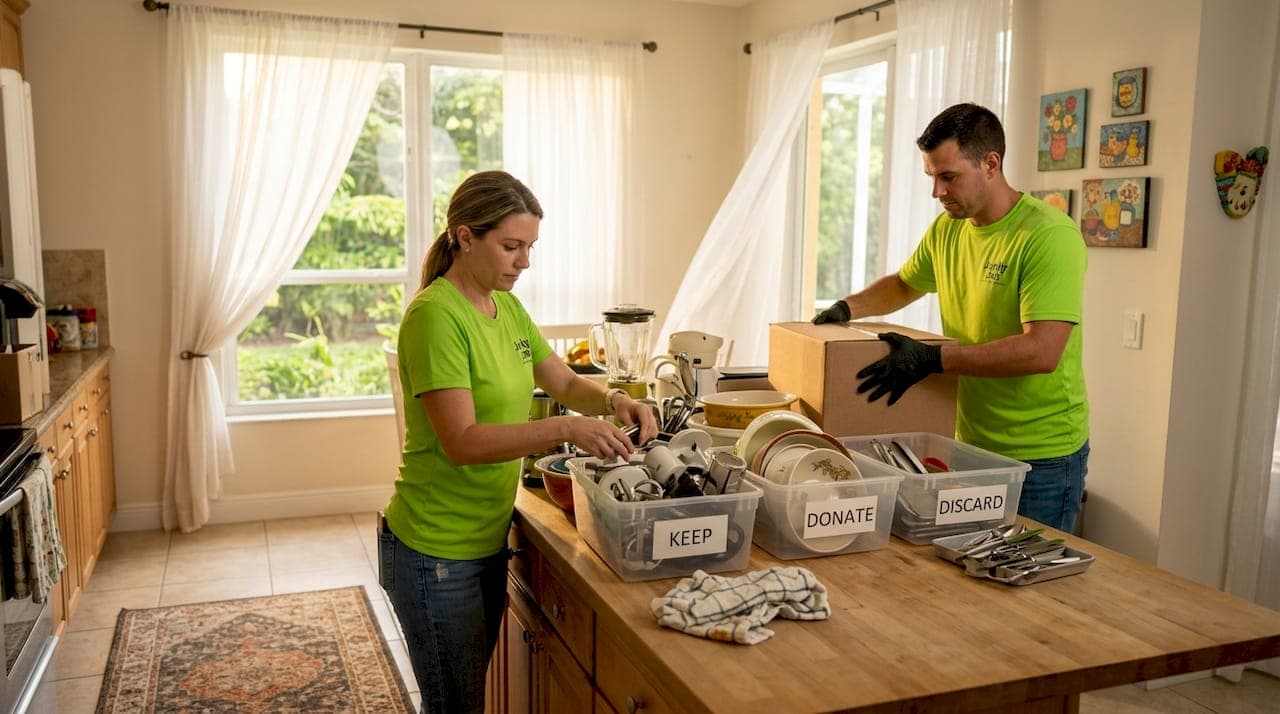
Hoarding disorder affects roughly 2.5% of the population, a rate higher than schizophrenia, yet most people only recognize it when a property becomes unlivable. If you are a homeowner or property manager in South Florida dealing with extreme clutter, you need to understand what is hoarding cleanout service before you call just anyone with a truck. This is not standard junk removal. A true hoarding cleanout addresses biohazards, structural damage, and the emotional weight of decades of accumulated belongings. Getting it wrong costs more than money.
Table of Contents
- Understanding hoarding cleanout services
- The hoarding cleanout process: step by step
- Cost factors and timeline expectations in South Florida
- Choosing a reliable hoarding cleanout service in South Florida
- Why conventional junk removal fails for hoarding cleanouts
- Get trusted hoarding cleanout services in South Florida
- Frequently asked questions
Key Takeaways
| Point | Details |
|---|---|
| Hoarding disorder prevalence | Hoarding affects about 2.5% of people, requiring specialized cleanup services for safety. |
| Multi-level cleanup process | Professional cleanouts follow multi-step processes tailored to clutter severity and hazards. |
| South Florida costs | Cleanout costs vary from $1,500 to $6,000 based on property size and hazards in the region. |
| Choosing providers | Verify licensing, insurance, and experience, with on-site assessments for accurate estimates. |
| Junk removal limits | Standard junk removal cannot address biohazards and legal needs of hoarding cleanouts. |
Understanding hoarding cleanout services
A hoarding cleanout service is a specialized form of property remediation designed to restore a home or unit that has become hazardous due to chronic accumulation of belongings. Unlike standard cleaning or even basic junk removal, it requires trained crews, proper protective equipment, legal compliance, and often multi-phase project management. The goal is not just to empty a space but to make it safe again.
The industry uses the ICD Clutter-Hoarding Scale to classify severity across five levels. Level I through Level V ranges from minimal clutter blocking no exits at Level I, all the way to structural damage, rodent infestation, and completely blocked egress at Level V, which requires multi-phase remediation involving licensed contractors, pest control, and sometimes code enforcement. Most South Florida properties that call for professional help fall somewhere between Level III and Level V, especially in older homes in Broward County and Miami-Dade where deferred maintenance compounds the problem.
Here is how a hoarding cleanout compares to the alternatives:
| Criteria | Standard cleaning | Junk removal | Hoarding cleanout |
|---|---|---|---|
| Biohazard handling | No | No | Yes |
| PPE required | Minimal | Minimal | Full protective gear |
| Sorting and categorizing | No | No | Yes |
| Deep cleaning and disinfection | Basic | No | Full |
| Multi-phase project management | No | No | Yes |
| Licensed and insured crew required | Sometimes | Sometimes | Always |
| Mold and pest remediation | No | No | Often included |
A full hoarding cleanup service typically includes sorting items into keep, donate, and discard categories, safe removal and disposal of debris, deep cleaning and disinfection of all surfaces, odor treatment, and sometimes minor restoration work. The hoarding cleanout vs junk removal distinction matters because sending an unqualified crew into a Level IV property puts workers and residents at legal and physical risk.
The hoarding cleanout process: step by step
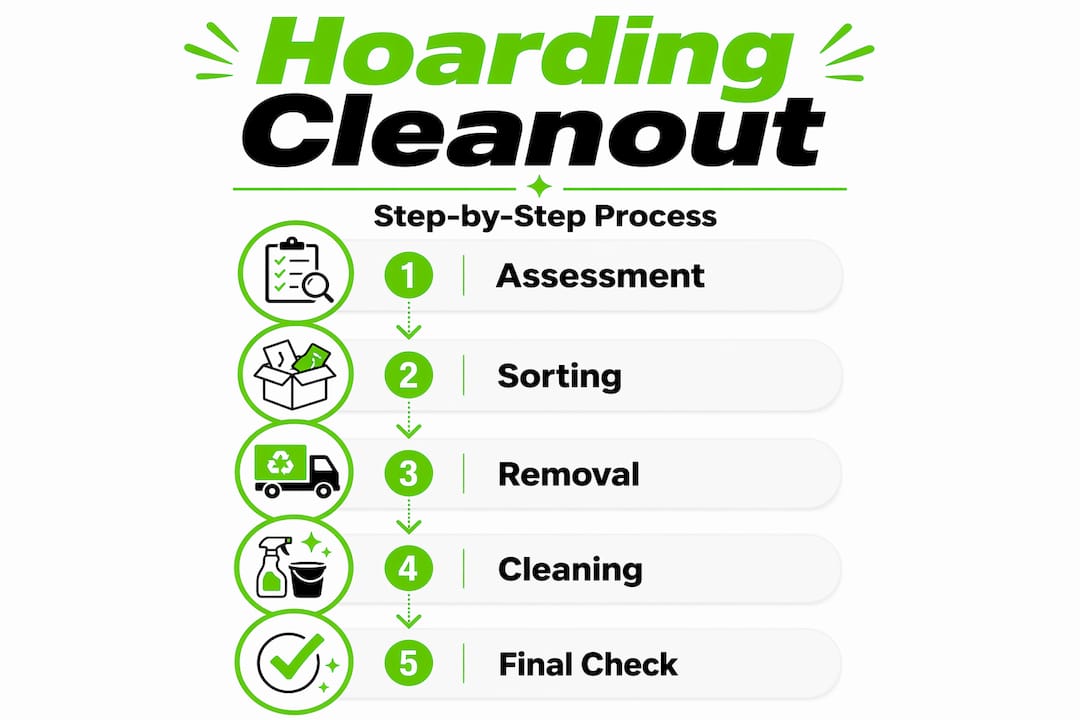
Professional hoarding cleanouts follow a structured sequence. A 9-step process is standard in the industry, covering assessment, plan creation, safety setup, room-by-room sorting, debris removal, deep cleaning, restoration, organization, and aftercare, with total timelines ranging from one to four weeks depending on severity.
Here is what each phase looks like in practice:
- Initial assessment — A crew supervisor walks the property to identify hazards, estimate volume, and classify the hoarding level.
- Customized plan creation — A detailed scope of work is written, including safety protocols, disposal methods, and client preferences.
- Safety setup — Crews put on appropriate PPE, establish containment zones, and secure utilities if needed.
- Room-by-room sorting — Items are categorized with the client or their representative present. This phase is the most time-intensive.
- Debris removal — Discarded items are loaded and hauled to appropriate disposal or recycling facilities.
- Deep cleaning — All surfaces, including walls, floors, and ceilings, are cleaned and disinfected.
- Restoration — Minor repairs, mold treatment, or pest remediation happen here if needed.
- Organization — Remaining items the client wants to keep are organized and returned to functional spaces.
- Aftercare planning — Crews connect clients with support resources to reduce relapse risk.
Timelines vary considerably. Level 1 to 2 cases typically take one to two days, Level 3 takes three to five days, and Level 5 properties with biohazards can take one to three weeks. For South Florida landlords managing tenant turnover, this timeline affects your re-leasing schedule directly, so building buffer time into your plan is essential.
The sorting phase deserves special attention. Rushing it causes two problems: clients feel violated and are more likely to re-accumulate, and valuable items get discarded accidentally. The professional hoarding cleanout process works best when the client or a trusted family member is present and involved in decisions, even if only for a few hours each day.
Pro Tip: Schedule your initial assessment before committing to any timeline or budget. A walkthrough catches hidden hazards like mold behind stacked furniture or structural damage under debris that photos will never reveal.
Cost factors and timeline expectations in South Florida
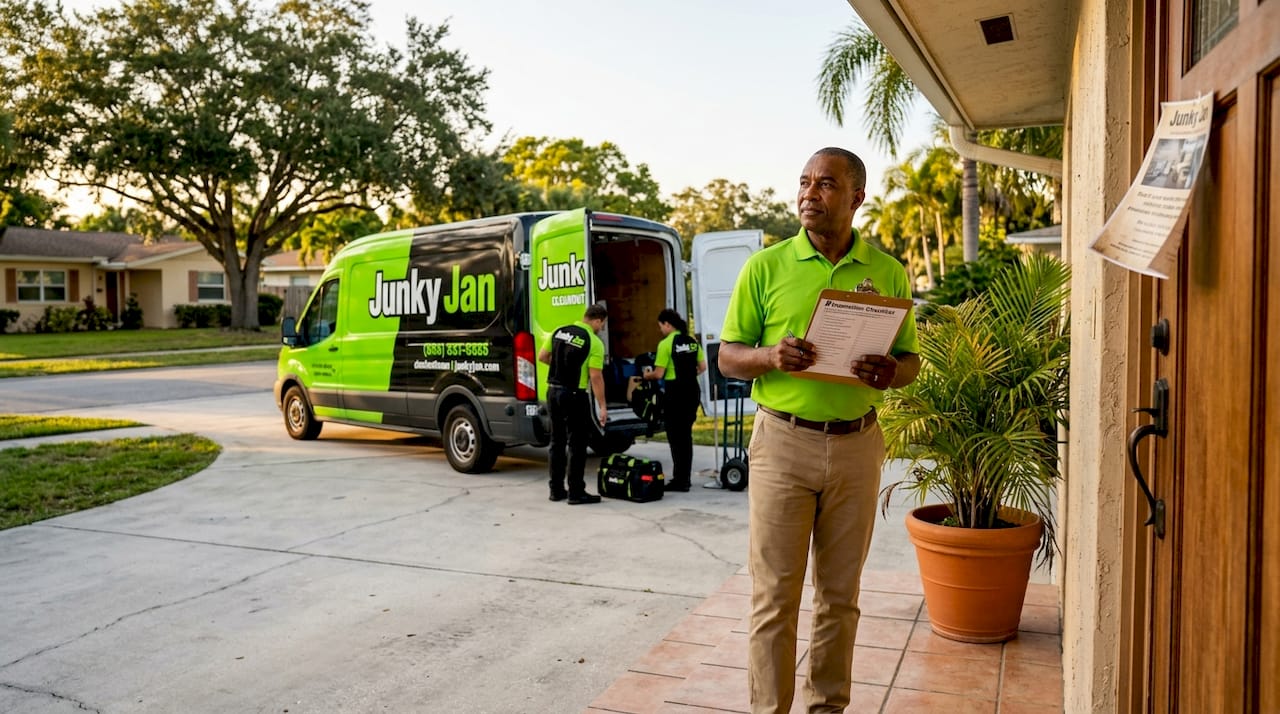
South Florida has its own cost profile for hoarding cleanouts, and it differs from national averages in ways that matter. Cleanup costs in South Florida typically range from $1,500 to $6,000 based on clutter volume and hazards present, and on-site estimates are strongly recommended before any work begins because volume and hazard complexity are nearly impossible to assess remotely.
Here is a breakdown by hoarding severity level:
| Hoarding level | Estimated cost range | Typical cleanup time |
|---|---|---|
| Level I | $300 to $800 | 1 day |
| Level II | $800 to $2,000 | 1 to 2 days |
| Level III | $2,000 to $4,000 | 3 to 5 days |
| Level IV | $4,000 to $7,500 | 5 to 10 days |
| Level V | $7,500 and up | 1 to 3 weeks |
Several factors push costs higher in South Florida specifically:
- Mold and moisture damage from humidity. South Florida's climate accelerates mold growth behind stacked items, often requiring professional remediation that adds cost.
- Pest infestations including cockroaches, rats, and in some cases iguanas or raccoons accessing properties through compromised structures.
- HVAC contamination from years of blocked airflow and debris near vents.
- Volume of organic material including rotting food, which requires biohazard handling and disposal.
- Property size since larger homes in areas like Weston or Coral Springs naturally take more crew hours.
Cleanup timelines of 3 to 10 days are standard professionally, but South Florida properties with mold or pest issues routinely exceed that range. Factor in remediation contractor scheduling, which can add days to your project.
Pro Tip: Catching a hoarding situation at Level II rather than Level IV cuts your cost by 60% or more and reduces cleanup time from weeks to days. If you manage rental properties, quarterly walkthroughs are worth every minute.
Choosing a reliable hoarding cleanout service in South Florida
Not every junk removal company is equipped for hoarding work. Knowing how to hire hoarding service correctly protects you from liability, property damage, and incomplete remediation. Here is what to verify before signing anything:
- State contractor license for any restoration or structural work involved
- General liability insurance with coverage for property damage during cleanup
- Biohazard certification for Level III and above, where human or animal waste may be present
- Documented experience with Level IV and V cases specifically, not just general cleanouts
- References or reviews from property managers or homeowners with similar situations
- Written, line-item estimates rather than verbal quotes
On-site assessment is non-negotiable. Photos miss hazards that a walkthrough catches immediately, including structural instability, hidden mold, and biohazard zones. Any company that quotes you based on photos alone is not equipped for serious hoarding work.
Documentation matters more than most people realize. Insurance may cover cleanup costs when the damage is linked to a covered event like fire or water intrusion, but it typically excludes long-term neglect. Getting a detailed line-item estimate helps you build a paper trail if you need to submit a partial claim.
South Florida's humidity creates one more consideration most people overlook. A company that does not specifically address mold assessment and odor treatment in their scope of work is leaving you with a property that will smell and degrade again within months. Ask directly: "Do you include mold inspection and odor treatment in your process?" If they hesitate, keep looking.
Pro Tip: Choose a service that involves the client in sorting decisions rather than making all calls themselves. Compassionate, client-centered cleanup reduces the emotional trauma of the process and lowers the chance of relapse.
Why conventional junk removal fails for hoarding cleanouts
Here is the uncomfortable truth most junk removal companies will not tell you: sending a standard crew into a serious hoarding situation is not just ineffective, it can be illegal. Standard junk removal is built for Level I and II situations where there are no biohazards, no structural concerns, and no emotional complexity. It is a volume business. Load the truck, drive to the dump, done.
Hoarding is fundamentally different. The multi-phase management required for chronic accumulation, including biohazards and mold, carries legal safety obligations that standard junk removal crews are not trained or licensed to fulfill. In Florida, improper disposal of biohazardous material carries real penalties.
"Hoarding cleanup differs from standard junk removal by requiring multi-phase management for chronic accumulation including biohazards and mold, with legal safety obligations that unlicensed crews cannot meet."
There is also the relapse problem. A crew that hauls everything out in one day without involving the client or addressing the psychological dimension of hoarding disorder often triggers a stress response that leads to re-accumulation within months. We have seen this pattern repeatedly. The property looks clean for 90 days, then the cycle restarts. That is not a cleanout. That is an expensive delay.
The emotional complexity is real and it affects the physical work. Sorting through decades of belongings requires patience, judgment, and genuine care for the person living there. Rushing that process, or skipping it entirely, leads to discarded items of real value, damaged relationships with the client, and a property that never fully recovers. The differences between hoarding cleanout and junk removal come down to this: one solves the problem, the other moves it temporarily.
For South Florida property managers specifically, the stakes are higher. A mishandled hoarding cleanout can expose you to tenant disputes, code violations, and liability claims. Doing it right the first time, with a licensed and insured crew that follows a documented process, is the only approach that holds up.
Get trusted hoarding cleanout services in South Florida
If you are dealing with a hoarding situation on your property, right now is the right time to act. Every week of delay means more mold, more structural wear, and higher remediation costs when you finally do call someone.
At Junky Jan, we serve Miami, Hollywood, and Broward County with same-day and next-day availability, licensed and insured crews, and transparent pricing based on load size with no hidden fees. We understand South Florida's climate challenges and bring the right equipment for mold, odor, and biohazard situations. Our team works with respect for the emotional weight these cleanouts carry, keeping clients involved in the sorting process whenever possible. Contact us for a free on-site estimate and a personalized cleanup plan. The sooner you reach out, the more manageable and affordable the process becomes. Explore our trusted hoarding cleanout services and take the first step toward a safe, restored property.
Frequently asked questions
What kinds of hazards do hoarding cleanout services address?
They manage biohazards including mold, animal waste, pest infestations, human waste, and structural debris that standard cleaning crews are not equipped or licensed to handle.
How long does a typical hoarding cleanout take in South Florida?
Cleanouts take 3 to 10 days for most severity levels, with Level V properties involving biohazards or mold remediation extending to three weeks or more.
How can I verify a hoarding cleanup service is qualified?
Confirm licensing, biohazard certification, general liability insurance, and documented experience with severe hoarding cases, and always require an in-person assessment before any work starts.
Does insurance cover hoarding cleanup costs?
Insurance covers cleanup when damage is tied to a covered event like water or fire damage, but long-term neglect is typically excluded. Detailed line-item estimates from your contractor support any partial claim you submit.