
Responsible junk disposal is the practice of managing and removing unwanted materials in ways that protect environmental health, comply with federal and local regulations, and prioritize reduction, reuse, and recycling over landfill dumping. The EPA defines this approach through a waste hierarchy that ranks disposal methods from most to least preferred, placing source reduction at the top and landfill disposal at the bottom. Both individuals and businesses share legal and ethical obligations under this framework. Whether you are clearing out a garage in Miami or managing a commercial cleanout in Broward County, understanding what is responsible junk disposal is the first step toward doing it correctly.
What is responsible junk disposal, and why does it matter?
Responsible junk disposal, also called responsible waste management in regulatory and industry contexts, is a structured approach to removing unwanted materials that minimizes harm to people, soil, water, and air. The EPA's waste hierarchy provides the organizing framework: reduce first, then reuse, then recycle, then recover energy, and only then dispose in a landfill. This hierarchy is not just a suggestion. It shapes federal regulations, local ordinances, and the standards that licensed haulers must follow.
The stakes are real. Improper disposal contaminates groundwater, releases toxins into the air, and degrades community health. Illegal dumping, one of the most visible failures of irresponsible disposal, harms public health and property values while creating costly cleanup burdens for municipalities. For businesses, non-compliance with disposal regulations can trigger fines, permit revocations, and reputational damage.
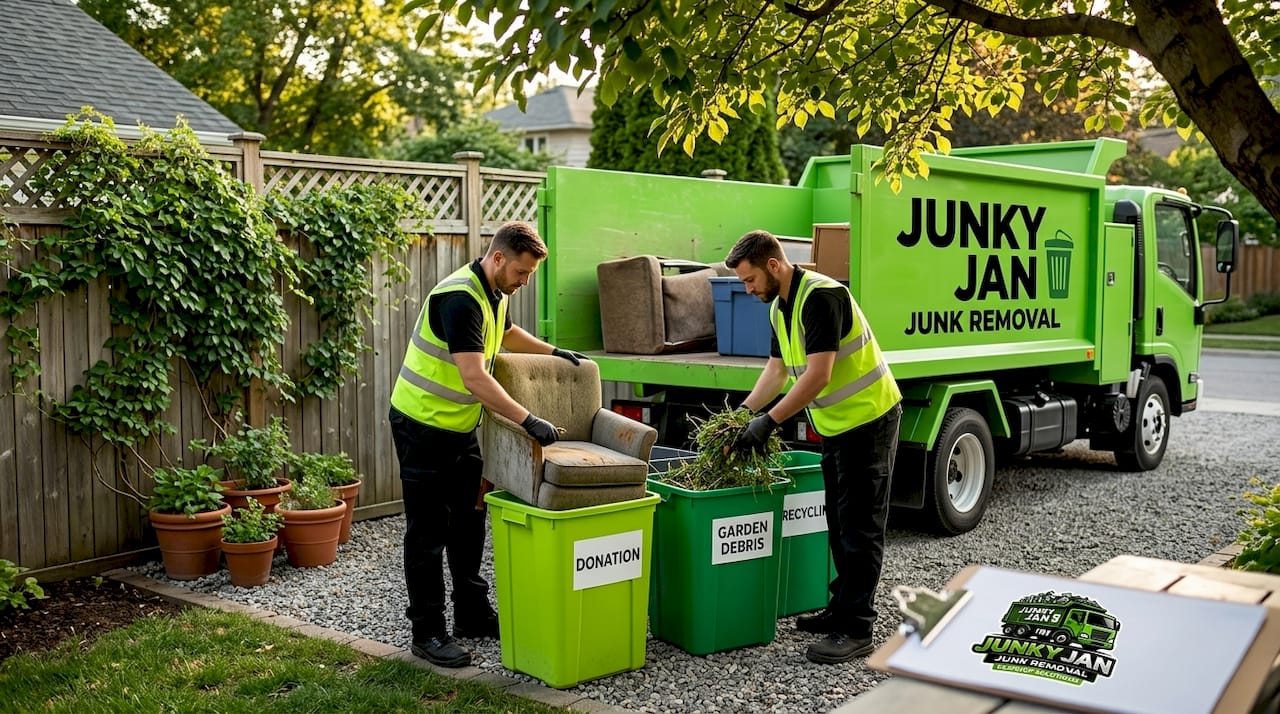
Sustainable junk disposal methods are not complicated in principle. The challenge is execution, especially when waste streams include hazardous components, regulated appliances, or mixed materials that require different handling routes. That is exactly what this guide addresses.
Core principles and steps of responsible junk disposal
Responsible disposal begins before a single item leaves your property. Pre-sorting is the most critical first step because different materials require different disposal routes, and mixing them together can eliminate regulatory exemptions and create unsafe conditions.
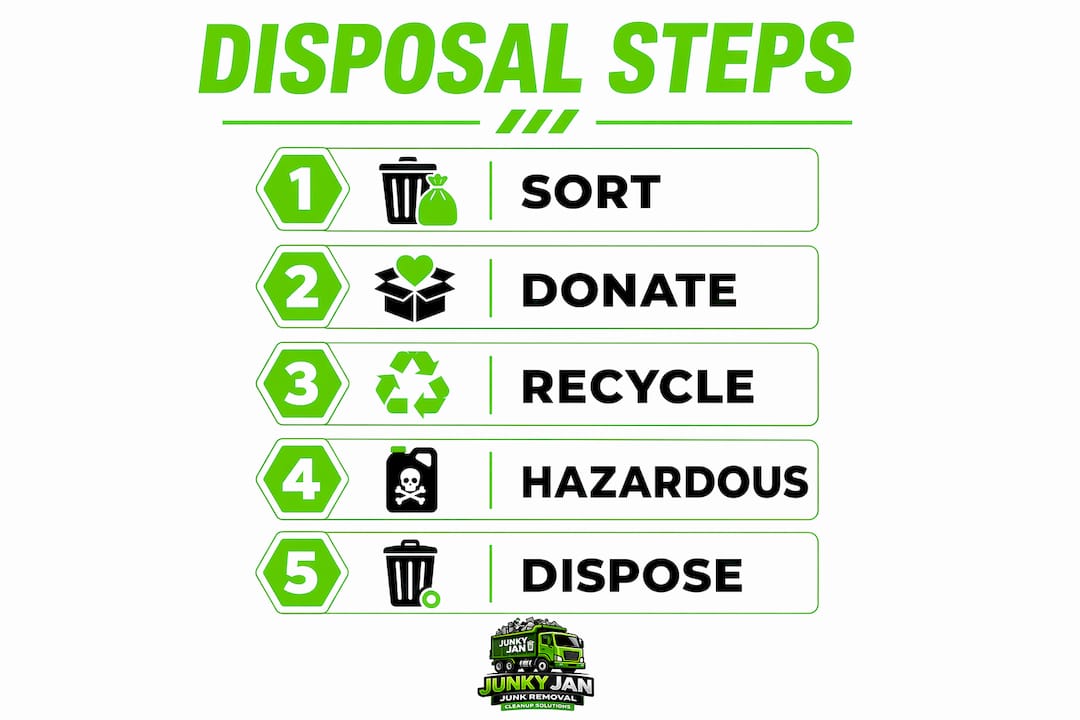
Here is how the process breaks down in practice:
- Sort by material type. Separate metals, wood, electronics, appliances, and general debris before scheduling pickup. Knowing what items junk removal takes in advance prevents last-minute surprises.
- Identify hazardous components. Refrigerators, air conditioners, batteries, fluorescent bulbs, and certain paints require specialized handling. These cannot go into a standard debris load.
- Prioritize donation and reuse. Furniture, appliances in working condition, and building materials can often be donated to organizations like Habitat for Humanity ReStores or local thrift programs, keeping usable goods out of landfills entirely.
- Recycle what cannot be reused. Metal, cardboard, glass, and many plastics have established recycling streams. Certified recycling facilities process these materials in ways that reduce raw material consumption.
- Use proper disposal routes for what remains. Residual waste that cannot be reused or recycled should go to permitted landfills or transfer stations, not to vacant lots or roadside areas.
The EPA's guidance on proper separation of hazardous components makes clear that mixed waste can lose regulatory exemptions and face stricter compliance burdens. Sorting is not just good practice. It is a legal safeguard.
Pro Tip: Before scheduling any junk removal, walk through your space and group items into four categories: donate, recycle, hazardous, and general debris. This 15-minute step prevents costly sorting errors and speeds up the entire removal process.
How hazardous waste and regulated items affect your disposal plan
Hazardous waste is any material that poses a substantial threat to human health or the environment due to its ignitability, corrosivity, reactivity, or toxicity. Common examples found in residential and commercial junk include refrigerant-containing appliances, lithium batteries, e-cigarettes, fluorescent lamps, and certain cleaning chemicals.
The EPA regulates hazardous waste under a cradle-to-grave framework, meaning safe management is required from the moment waste is generated through its final disposal. Transporters must comply with both DOT and EPA regulations. This is not a process where you can hand materials to an unlicensed hauler and consider the job done.
For appliances specifically, the rules are precise:
- Refrigerant must be removed by EPA-certified technicians before any appliance is transported or disposed of. This applies to refrigerators, window AC units, dehumidifiers, and similar equipment.
- Appliances must comply with 40 CFR requirements for hazardous components, which govern how refrigerants, oils, and other regulated substances are handled.
- Local municipalities may require appointment-based appliance collection or transport to designated transfer stations rather than curbside pickup.
- Businesses generating hazardous waste must segregate it from household waste and follow RCRA requirements for transportation and final disposal.
"Improper handling of e-cigarettes and lithium batteries in junk contributes to fire risk and toxicity. Designated collection and transport with appropriate PPE is not optional. It is the minimum standard for safe handling." — EPA Battery Collection Guidance
The scale of what proper handling prevents is significant. The EPA's RAD program, which partners with retailers and recyclers, processed 9 million appliances from 2006 to 2025, safely removing hazardous internal parts and preventing greenhouse gas emissions equivalent to powering millions of homes annually. That result comes directly from following the process correctly.
Common misconceptions and pitfalls in junk disposal
The most expensive mistake in junk disposal is assuming that getting rid of something is the same as disposing of it responsibly. These two things are not the same, and the gap between them carries real consequences.
Several misconceptions consistently lead homeowners and businesses into trouble:
- "Leaving it at the curb is fine." Curbside dumping of bulky items or hazardous materials is illegal in most jurisdictions and often results in waste being picked up by unlicensed haulers who dump it illegally. The EPA recommends scheduled collections with authorized parties over curbside abandonment for appliances.
- "All waste is treated the same." It is not. A refrigerator, a bag of drywall dust, and a box of old batteries each require a different disposal pathway. Treating them identically creates liability.
- "The cheapest hauler is fine." Unlicensed contractors frequently cut costs by dumping waste illegally. Vetting disposal contractors means confirming permit status and requiring written disposal documentation before any work begins.
- "Mixing waste saves time." Mixing hazardous materials with general debris can cause a load to lose its regulatory exemption status, triggering stricter compliance requirements and potential fines.
Responsible disposal starts at generation, not at the point of pickup. That means segregation, documentation, and authorized handling are built into the process from the beginning, not added as an afterthought.
Pro Tip: When hiring a junk removal company, ask two questions before booking: Are you licensed and insured? Can you provide disposal documentation? Any reputable hauler answers both immediately. Hesitation on either is a red flag.
You can also learn how to coordinate same-day debris pickup in ways that avoid unsafe curbside situations entirely.
How individuals and businesses can implement responsible disposal
Putting eco-friendly junk removal into practice requires a short planning phase before the actual removal. The steps below apply whether you are a homeowner clearing a garage or a property manager handling a full estate cleanout.
- Audit your junk before scheduling. Walk the space, list what you have, and flag anything that might be hazardous or regulated. This audit shapes every decision that follows.
- Research local programs. Many South Florida municipalities offer free or low-cost drop-off events for electronics, batteries, and hazardous household waste. Miami-Dade County and Broward County both run periodic collection programs.
- Use rebate and retailer programs for appliances. The EPA recommends working with Department of Public Works offices, retailers, and rebate programs for appliance disposal. Some retailers offer haul-away services when you purchase a replacement.
- Book a certified hauler for general and bulky junk. For furniture, construction debris, and mixed household items, a licensed junk removal service handles sorting, recycling partnerships, and donation drop-offs as part of the job.
- Request and keep disposal documentation. Businesses especially need written records confirming where waste went and how it was processed. This documentation protects against liability if questions arise later.
The benefits of proper junk disposal extend beyond compliance. Businesses that document responsible disposal practices build credibility with clients and avoid the reputational damage that comes from association with illegal dumping incidents. For homeowners, responsible disposal often costs less than expected, particularly when recycling and donation offset hauling fees.
| Waste type | Recommended disposal method |
|---|---|
| Furniture in good condition | Donate to Habitat for Humanity ReStore or local thrift organizations |
| Appliances with refrigerants | Certified technician refrigerant removal, then authorized hauler or retailer program |
| Electronics and batteries | Municipal collection events or certified e-waste recyclers |
| Construction debris | Licensed debris removal service with transfer station documentation |
| General household junk | Licensed hauler with recycling and donation sorting |
Preparing your space in advance also makes the process faster and cheaper. A guide on how to prepare your home for junk removal covers the practical steps in detail.
How responsible disposal compares to informal or landfill-only methods
The difference between responsible disposal and informal methods is not just environmental. It is financial, legal, and reputational.
| Factor | Responsible disposal | Illegal dumping or informal methods |
|---|---|---|
| Environmental impact | Minimized through recycling, donation, and regulated treatment | Soil, water, and air contamination risk |
| Legal exposure | Compliant with EPA, DOT, and local regulations | Fines, cleanup liability, permit revocation |
| Cost over time | Predictable, often offset by recycling and rebate programs | Short-term savings followed by potential enforcement costs |
| Documentation | Written records of disposal routes and facilities | None, creating liability gaps |
| Community impact | Supports local recycling infrastructure and public health | Degrades property values and public safety |
Illegal dumping is more than an environmental issue. It threatens public safety and economic vitality, which is why EPA-backed prevention programs focus on making legal disposal accessible and affordable rather than simply penalizing violators. The logic is straightforward: when responsible disposal is easy and affordable, the incentive to cut corners disappears.
For construction debris specifically, the distinction between methods matters even more because regulated materials like treated wood, drywall, and concrete each have specific handling requirements. Understanding types of construction debris removal helps property managers and contractors stay on the right side of those requirements.
Key takeaways
Responsible junk disposal requires sorting waste by type, using certified haulers, following EPA guidelines for hazardous materials, and maintaining documentation to protect both the environment and your legal standing.
| Point | Details |
|---|---|
| Sort before disposal | Separate hazardous, recyclable, and general waste before any pickup to protect regulatory exemptions. |
| Hazardous items need certified handling | Refrigerants, batteries, and e-waste require licensed technicians and authorized disposal routes. |
| Vetting haulers is non-negotiable | Confirm permit status and require written disposal documentation before booking any removal service. |
| Documentation protects businesses | Written records of disposal routes shield businesses from liability and demonstrate regulatory compliance. |
| Legal disposal is often affordable | Municipal programs, retailer rebates, and recycling offsets make responsible disposal cost-competitive with informal methods. |
What I've learned from watching disposal go wrong
Working in and around South Florida's junk removal sector, the pattern I see most often is not malice. It is ignorance combined with cost pressure. A homeowner hires the cheapest person with a truck, that person dumps the load in a vacant lot, and six months later the homeowner gets a letter from the county because their name was on a discarded piece of mail in that pile. That is a real scenario, and it happens more than people realize.
The thing that frustrates me about how disposal is discussed publicly is that it gets framed as a burden. Sorting, documentation, certified haulers. It sounds like homework. But in practice, when you work with a legitimate service, most of that work is done for you. The sorting happens at the facility. The documentation is generated automatically. The recycling and donation partnerships are already in place.
What I think gets underemphasized in most guides is the community dimension. Illegal dumping does not just harm the person who dumped. It degrades the neighborhood, reduces property values for everyone nearby, and strains municipal budgets that could be spent on better things. Responsible disposal is a form of civic participation, not just regulatory compliance.
My honest recommendation: stop treating disposal as a cost to minimize and start treating it as a process to do correctly once. The difference in actual dollars between a licensed hauler and a guy with a truck is often smaller than people assume, and the difference in risk is enormous.
— gam
Junky Jan makes responsible junk removal simple in South Florida
Junky Jan provides same-day and next-day junk removal across Miami, Hollywood FL, and Broward County with licensed, insured crews trained to sort, recycle, and donate materials before anything goes to a landfill. Every load is handled with transparent, load-based pricing and no hidden fees, so you know exactly what you are paying for. Junky Jan's team manages the sorting, coordinates with local recycling and donation partners, and provides documentation on request for commercial clients. If you are ready to dispose of junk the right way without the guesswork, book your Miami pickup and get a same-day quote.
FAQ
What is the definition of responsible junk disposal?
Responsible junk disposal is the structured removal and management of unwanted materials that prioritizes reduction, reuse, recycling, and regulated treatment over landfill dumping, in compliance with EPA and local regulations.
What items require special handling during junk disposal?
Refrigerant-containing appliances, lithium batteries, e-cigarettes, fluorescent bulbs, and certain chemicals are classified as hazardous waste and require certified technicians or designated collection programs for safe disposal.
Is curbside dumping of old appliances legal?
In most jurisdictions, leaving appliances curbside is prohibited. The EPA recommends scheduled pickups with authorized haulers, Department of Public Works programs, or retailer haul-away services for appliance disposal.
How do businesses stay compliant with junk disposal regulations?
Businesses must segregate hazardous waste from general debris, use licensed transporters, follow RCRA requirements, and maintain written documentation of disposal routes and facilities to remain compliant.
What are the benefits of proper junk disposal for homeowners?
Proper disposal protects homeowners from legal liability, prevents environmental harm, and often costs less than expected when recycling credits and municipal collection programs offset hauling fees.