
Outsourcing debris hauling is the primary method contractors use to keep construction projects on schedule, control disposal costs, and meet OSHA safety standards without pulling skilled labor off core tasks. Why contractors outsource debris hauling comes down to three operational realities: reactive waste management stalls projects, in-house hauling costs more than it appears, and licensed haulers carry compliance responsibilities that protect the general contractor. Professional debris removal services, including firms like Junky jan operating in South Florida, handle the full removal cycle so your crew stays focused on billable work.
Why contractors outsource debris hauling: the core operational case
Reactive debris removal leads to schedule overruns and safety hazards. When waste piles up between phases, crews lose access to work areas, inspections get delayed, and the entire project timeline compresses. That is not a minor inconvenience. It is a direct cost.

The strongest operational reason to outsource is reliability. Scheduled hauling aligned to project phases reduces overflow during trade overlaps and prevents the disruptive cleanout delays that push completion dates back. A professional hauler arrives on a defined schedule, loads material without pulling your crew off task, and clears the site before the next phase begins.
Consider a mid-size renovation contractor running simultaneous framing and mechanical rough-in. Both trades generate debris. Without a scheduled removal plan, material from framing blocks mechanical access. The mechanical sub waits. You pay for that wait. A phase-aligned hauling contract eliminates that bottleneck before it forms.
- Identify your debris-generating phases before the project starts. Frame, demo, drywall, and final cleanout each produce different volumes and material types.
- Schedule pickups to precede inspections. A clear site is an inspection-ready site.
- Coordinate same-day debris pickup windows with your site supervisor so haulers arrive during low-activity periods.
- Confirm container sizing in advance. Undersized containers cause the same bottleneck as no container at all.
Pro Tip: Build hauling windows into your project schedule as fixed line items, not optional add-ons. Treat debris removal the same way you treat concrete pours: it needs a confirmed time, a confirmed crew, and a confirmed exit route.
Does outsourcing debris removal actually save money?
Average U.S. tipping fees rose 10% from 2023 to 2024, climbing from $56.80 per ton to $62.28 per ton. That trend shows no sign of reversing. Every ton your crew hauls in-house now costs more to dump than it did 12 months ago.
The in-house hauling model carries hidden costs that rarely appear in a project budget. You need a truck, fuel, a driver, dump fees, and the time that driver spends off-site. If that driver is a skilled tradesperson, you are paying a carpenter's or electrician's rate to move garbage. That math does not work in your favor.
| Cost Factor | In-House Hauling | Outsourced Hauling |
|---|---|---|
| Labor cost | Skilled trade rate per hour | Included in hauler contract |
| Equipment | Owned or rented truck + fuel | Hauler-supplied |
| Tipping fees | Variable, paid per trip | Negotiated or fixed rate |
| Scheduling flexibility | Dependent on crew availability | Hauler manages logistics |
| Budget predictability | Low (variable per trip) | High (contracted rate) |
| Compliance documentation | Self-managed | Provided by hauler |
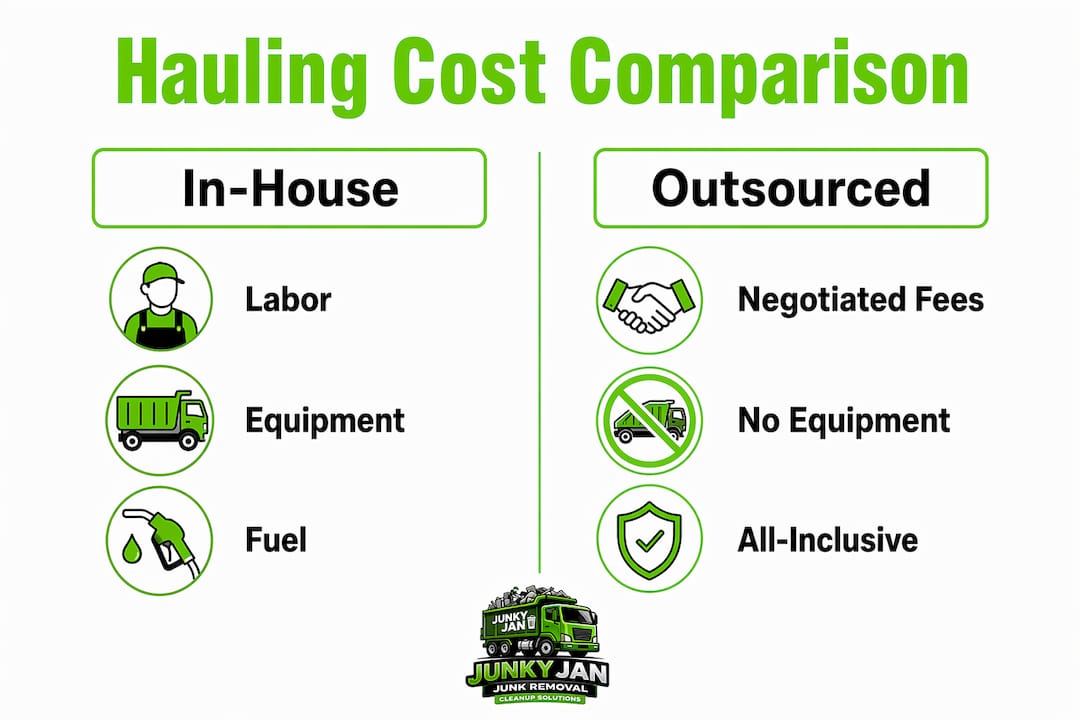
Professional haulers negotiate tipping fees at volume rates your single project cannot match. A debris removal firm running 20 loads per week at a regional landfill pays a different rate than a contractor dropping off one load. That volume discount passes through to your contract price. The result is more predictable disposal costs and fewer surprise invoices at project close.
Pro Tip: When evaluating hauling bids, ask for an all-in price that includes tipping fees, fuel surcharges, and minimum load charges. A low base rate with add-on fees often costs more than a slightly higher flat rate.
How does outsourcing improve jobsite safety and compliance?
General contractors can be cited for hazards created by subcontractors they oversee. OSHA's multi-employer citation policy means the GC carries liability for trip and fall risks even when a sub created the debris. That exposure is real and recurring on active sites.
Outsourcing debris hauling to a licensed, insured firm transfers a portion of that liability. Licensed handlers provide proper sorting and disposal documentation, creating a paper trail that demonstrates your duty-of-care compliance. That documentation matters when an OSHA inspector walks the site or when a subcontractor injury leads to litigation.
The safety benefits of professional debris removal include:
- Reduced trip and fall exposure. Cleared walkways and work areas directly reduce the most common construction site injury category.
- Proper hazardous material handling. Licensed haulers are trained to identify and segregate materials like treated lumber, asbestos-containing debris, and lead-painted components that require separate disposal streams.
- Consistent site housekeeping. Regular scheduled removal prevents the gradual accumulation that turns a manageable site into a hazard zone by week three.
- Compliance documentation. Manifests and weight tickets from a licensed hauler give you a defensible record of responsible disposal. Learn more about what responsible junk disposal requires from a legal and operational standpoint.
The practical result is fewer OSHA housekeeping violations, lower workers' compensation exposure, and a site that passes inspection without emergency cleanouts the morning before a walkthrough.
What are live-loading and phase-aligned pickups?
Live-loading is a debris removal model where the hauler's crew loads material directly from the work area while your trades continue working. Construction crews stay focused on core work while haulers load debris, eliminating the billable-hour waste that occurs when a carpenter stops framing to move drywall scraps to a dumpster.
Phase-aligned pickups take a different approach. Instead of on-demand or reactive removal, the hauler's schedule mirrors your project phases. Pickup windows are set before framing completion, before drywall hang, before final punch-out, and before the certificate of occupancy inspection. Each pickup clears the site for the next trade to enter without obstruction.
The key to making either model work is interface management. Handling the interface between hauler and site is the central operational challenge. Your site supervisor needs to know when the hauler arrives, where they stage, and what materials are ready. Without that coordination, even a well-priced hauling contract creates friction instead of removing it.
- Assign a single site contact for all hauler communication. Confusion about who approves access causes delays.
- Mark staging areas clearly. Haulers load faster when debris is consolidated rather than scattered across three floors.
- Confirm the pickup window 24 hours in advance. Last-minute changes cost both parties time and money.
- Review the types of construction debris removal your project generates so you can match the right service model to each phase.
Pro Tip: For large projects with multiple active trades, schedule live-loading during shift transitions. The site is naturally less congested, haulers move faster, and you avoid the coordination conflicts that slow down mid-shift removal.
Key takeaways
Contractors who outsource debris hauling gain measurable advantages in schedule control, cost predictability, and safety compliance that in-house waste management cannot match.
| Point | Details |
|---|---|
| Schedule protection | Phase-aligned hauling prevents trade overlap bottlenecks and keeps inspections on track. |
| Cost predictability | Contracted hauling rates eliminate variable tipping fee surprises and reduce skilled labor waste. |
| Safety and compliance | Licensed haulers provide documentation that supports OSHA compliance and reduces GC liability. |
| Live-loading efficiency | Haulers load debris while trades work, preserving billable hours on core construction tasks. |
| Interface management | Assigning a site contact and staging areas is the difference between smooth removal and costly delays. |
What i've learned about choosing the right hauling partner
After watching contractors make this decision dozens of times, the pattern is clear. The ones who get burned by outsourcing pick a hauler based on price alone. The ones who benefit pick based on reliability and communication.
A hauler who quotes $200 less but shows up two hours late on demo day costs you far more than $200. Crew idle time, delayed inspections, and rescheduled trades compound fast. The price of a hauling contract is not the number on the invoice. It is the total cost of what happens when the hauler does not perform.
The contractors I respect most treat hauling contracts the same way they treat subcontractor agreements. They define the scope, set the schedule, specify the materials, and include a performance clause. That level of contractual control is what separates a debris removal vendor from a debris removal partner.
One more thing worth saying directly: phase-aligned hauling is not a luxury for large commercial projects. A remodeling contractor running a $150,000 kitchen and bath renovation generates enough debris to stall the project if removal is not planned. The scale is smaller, but the operational logic is identical. Build the hauling schedule before the project starts, not after the first pile forms.
The contractors who treat debris removal as a logistics function rather than a cleanup afterthought finish faster, spend less on surprises, and have cleaner safety records. That is not coincidence.
— gam
How junky jan supports contractor debris hauling in south florida
Contractors in Miami, Hollywood, and Broward County need a hauling partner who shows up on time and handles the full removal cycle without adding coordination overhead to your day.

Junky jan provides same-day and next-day construction site cleanup for contractors and construction managers across South Florida. The crews are licensed, insured, and trained to handle construction debris, appliance removal, and full property cleanouts. Pricing is based on load size with no hidden fees, so your budget stays predictable from the first call to the final invoice. Whether you need a single phase cleanout or a recurring removal schedule tied to your project timeline, Junky jan delivers the reliability your site depends on.
FAQ
Why do contractors outsource debris hauling instead of handling it in-house?
Contractors outsource debris hauling to avoid pulling skilled tradespeople off billable work and to control rising disposal costs. In-house hauling adds hidden expenses including truck costs, fuel, driver labor, and variable tipping fees that a contracted hauler can manage more efficiently.
How does scheduled debris removal keep a construction project on schedule?
Scheduled hauling aligned to project phases prevents debris accumulation that blocks trade access and delays inspections. Reactive removal, by contrast, causes work stoppages as crews reorganize around waste piles before the next phase can begin.
What safety risks does outsourcing debris hauling reduce?
Outsourcing reduces trip and fall hazards, ensures proper handling of hazardous materials, and provides disposal documentation that supports OSHA compliance. General contractors can be cited for subcontractor-created hazards, so consistent professional removal directly lowers that liability exposure.
What is live-loading in construction debris removal?
Live-loading is a service model where the hauler's crew loads debris directly from the work area while your trades continue working. This preserves billable hours by eliminating the time skilled workers spend moving waste instead of completing their core tasks.
How do tipping fee trends affect the outsourcing decision?
U.S. tipping fees rose 10% between 2023 and 2024, reaching $62.28 per ton. Professional haulers negotiate volume-based disposal rates that individual contractors cannot access, making outsourcing a cost-effective alternative as landfill costs continue to rise.