
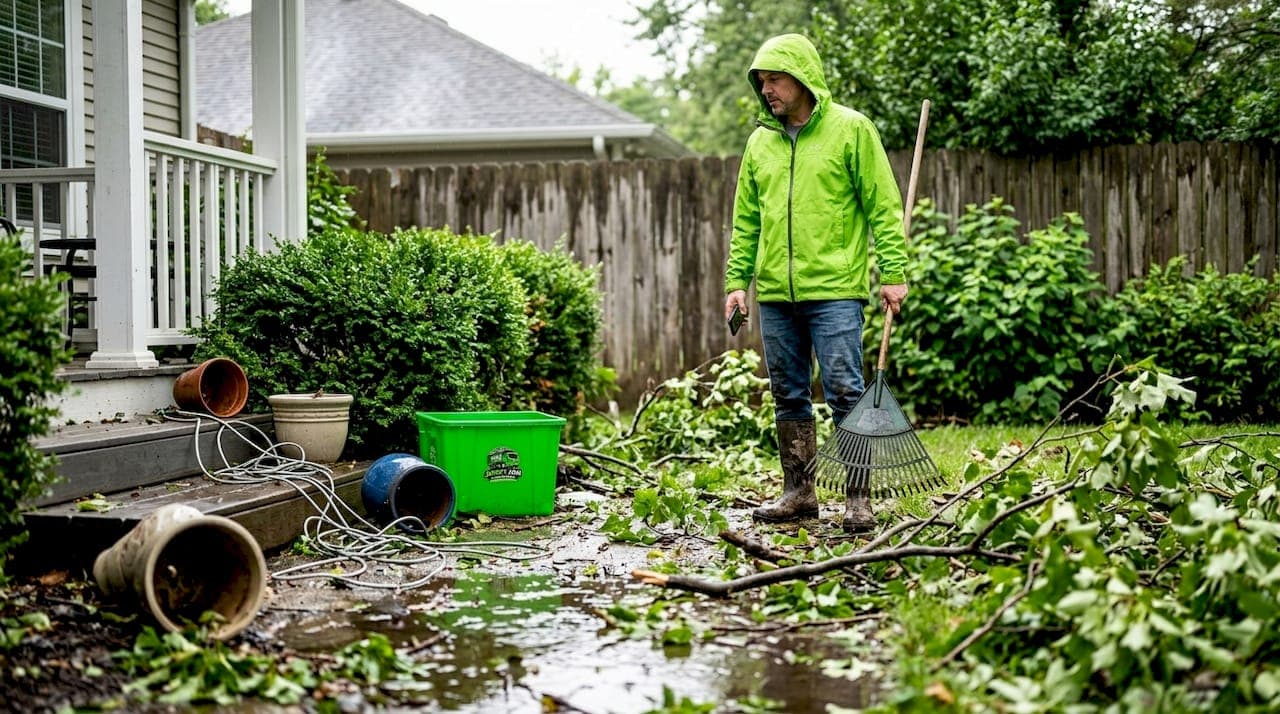
A storm rolls through South Florida overnight, and by morning your yard looks like a lumber yard crossed with a compost pile. Branches everywhere, leaves plastered to the lawn, maybe a whole tree leaning against your fence. Yard debris removal after storm events is not just about appearances. Left too long, that debris damages your lawn, creates safety hazards, and can complicate insurance claims. This guide walks you through exactly what to do, in the right order, so you can get your property back to normal without getting hurt or wasting money.
Table of Contents
- Key Takeaways
- Yard debris removal after storm: getting prepared
- Step-by-step storm yard cleanup process
- Disposal options for storm debris
- Safety concerns during post-storm cleanup
- What I have learned from years of post-storm cleanups
- Get your yard cleared fast with Junky Jan
- FAQ
Key Takeaways
| Point | Details |
|---|---|
| Safety comes before cleanup | Check for downed power lines and unstable trees before touching any debris. |
| Document everything first | Photograph all storm damage before moving a single branch to support insurance claims. |
| Sequence your cleanup | Clear high-traffic areas and urgent hazards before tackling general yard debris. |
| Sort debris by category | Separating organic, construction, and hazardous debris speeds disposal and meets local rules. |
| Know when to call pros | Large limbs, roof debris, and hazardous conditions require professional equipment and crews. |
Yard debris removal after storm: getting prepared
Before you grab a rake or fire up a chainsaw, spend 15 minutes on a proper walkthrough of your property. This step saves hours later and could save your life.
Start with a safety sweep. Downed power lines are the most dangerous thing in any post-storm yard. Electricity can still be live even when a line is lying flat on the ground. Stay at least 30 feet back and call your utility company immediately. Do not assume a line is dead because it is not sparking.
Look up, not just down. Branches that were partially broken during the storm, what arborists call "widow makers," can fall without warning. Any large limb hanging at an angle overhead needs professional attention before anyone works beneath it.
Document before you touch anything. FEMA's 2026 guidance is clear: photograph and video all storm damage before cleanup begins, and keep every receipt from debris removal for insurance or disaster assistance purposes. Spend five minutes with your phone before you move a single branch.
Once the safety walkthrough is done, gather your tools. Rakes, hand saws, leaf blowers, tarps, and safety gear are the core kit for storm yard cleanup. Add work gloves, safety goggles, and steel-toed boots if you have them. A wheelbarrow cuts down on trips across a soggy yard.
Sort your debris mentally before you start physically moving it:
- Organic debris: leaves, small branches, pine needles, mulch
- Structural debris: broken fence boards, roofing materials, concrete fragments
- Hazardous debris: anything with nails, broken glass, chemicals, or unknown materials
Sorting materials into clear categories before disposal saves time at the dump and keeps you compliant with local regulations. Many municipalities in Broward County and Miami-Dade treat these categories very differently.
Pro Tip: If the ground is saturated after heavy rain, wait a day before using heavy equipment or wheelbarrows. Working on waterlogged soil compacts it and can damage tree roots that are still stressed from the storm.
Step-by-step storm yard cleanup process
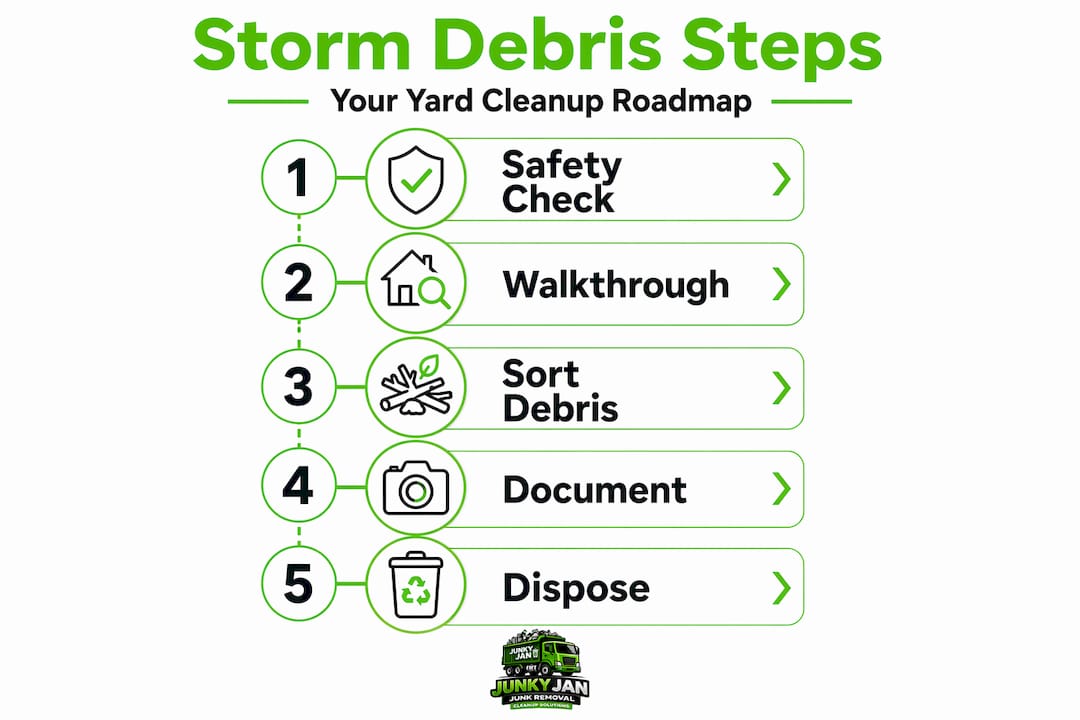
Order matters here. Cleaning the pretty stuff before the dangerous stuff is a common mistake that leads to injuries and property damage. Here is the sequence that works.
-
Clear access paths first. Before anything else, clear your driveway, front walkway, and any gate or exit you might need in an emergency. If a branch blocks your car, you cannot leave quickly if conditions worsen.
-
Address urgent branch hazards. Hanging or partially broken branches are the next priority. For branches you can safely reach with a handsaw from the ground, cut them cleanly at the branch collar, not flush with the trunk. For anything above shoulder height or requiring a ladder over unstable ground, call a professional. This is not the moment to be a hero.
-
Work from large to small. Cut larger fallen branches into manageable sections before raking. Trying to drag a 20-foot branch across a yard damages your lawn and your back. Section it first, then move the pieces.
-
Rake and blow small organic debris. Once the large material is handled, use a leaf blower to push light debris into rows, then rake into piles on tarps. Tarps make hauling piles to the curb or truck much faster than multiple wheelbarrow trips.
-
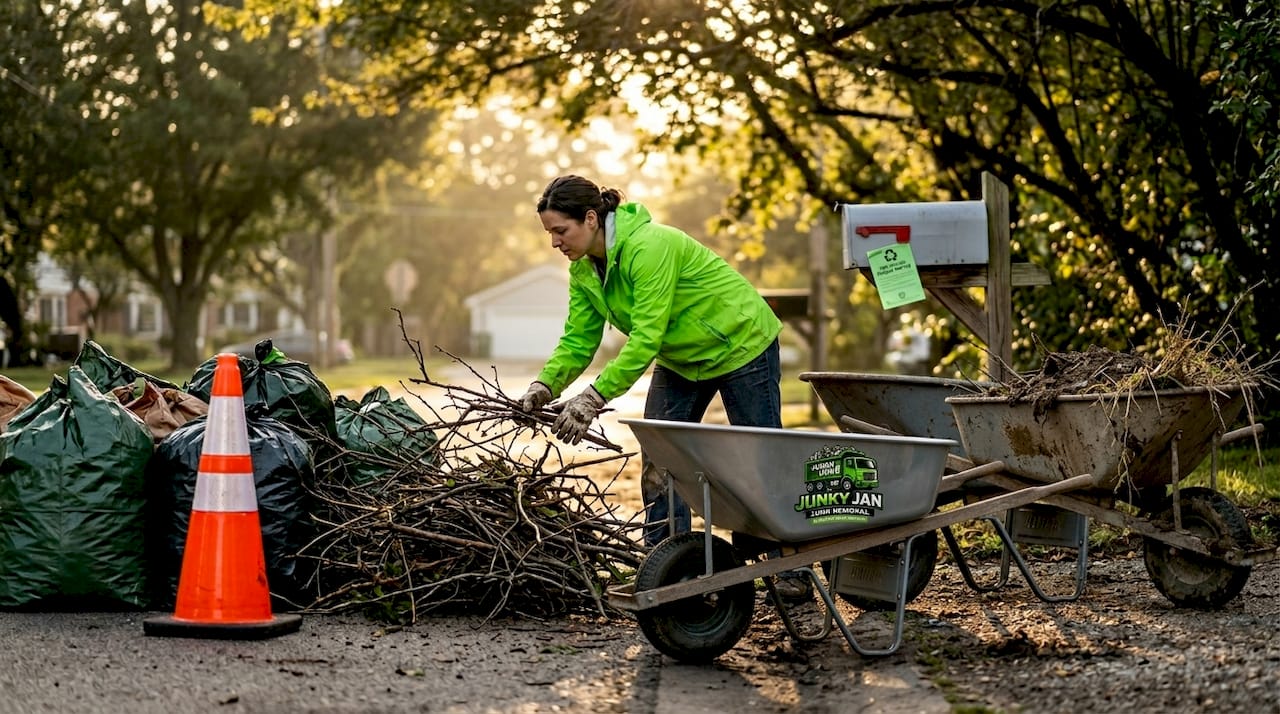
Create organized piles near your curb. Group by debris type: organic in one pile, wood in another, construction materials separate. This makes municipal pickup or a junk removal crew's job faster, which often reduces your cost.
-
Never run a lawn mower over debris. It sounds obvious, but people do this to speed things up. Rocks, nails, and dense wood fragments turn into projectiles at mower speed.
The cleanup sequence matters more than the speed. Addressing urgent hazards before general debris is what protects people and property during storm damage cleanup.
Pro Tip: Wet leaves and organic debris block sunlight and airflow at ground level. Lawn damage from debris left sitting for more than a few days includes grass dieback and fungal growth. Prioritize getting organic material off the grass even if you cannot dispose of it immediately.
Disposal options for storm debris
Getting the debris off your lawn is only half the job. Now you need it off your property entirely. You have several options, and the right one depends on your volume, timeline, and budget.
| Disposal Method | Best For | Cost Range | Key Limitation |
|---|---|---|---|
| Municipal curbside pickup | Light to moderate organic debris | Free | Scheduling delays, size restrictions |
| Green waste drop-off center | Organic debris you can haul yourself | Low to free | Requires your own transport |
| Dumpster rental | Large volumes of mixed debris | $300 to $600+ | You load it yourself |
| Wood chipper rental | Heavy branch volume on-site | $100 to $250/day | Physical labor intensive |
| Professional junk removal | All debris types, fast turnaround | Varies by load | Cost higher than DIY |
Municipal pickup is the cheapest option, but local town rules vary significantly. Many municipalities require debris be placed curbside in specific piles by type, on designated collection days. After a major storm, those schedules can back up by weeks. Contact your public works department the day after the storm to understand what is available.
Green waste facilities and drop-off centers work well if you have a truck or trailer. This route is often free or very low cost, but you do the hauling.
For large volumes of branches and structural material, renting a dumpster gives you flexibility. You fill it on your timeline. The downside is that debris removal costs spike significantly right after a storm due to high demand. If you can safely store piled debris and wait a week or two, you may save a meaningful amount on rental or service fees.
Hiring a professional junk removal service is the fastest path to a clear yard. A crew handles loading, hauling, and disposal. For property managers overseeing multiple units or homeowners dealing with large quantities of mixed debris, the time savings alone justify the cost. You can learn more about what junk removal crews do with collected debris before you book.
Different debris types require different disposal protocols. Many South Florida municipalities separate vegetative, construction, and hazardous debris for recycling and safe disposal compliance. Mixing them in one pile can result in the whole load being rejected at pickup.
Safety concerns during post-storm cleanup
Even experienced homeowners get hurt during storm damage cleanup. The yard looks manageable, but the conditions underfoot, overhead, and out of sight create risks that do not exist on a normal day.
The most serious hazards to watch for include:
- Downed or sagging power lines anywhere on or near your property
- Unstable trees that lost major limbs and may be structurally compromised at the root
- Saturated or slippery ground that makes ladder use and heavy lifting dangerous
- Hidden debris under leaf piles, including broken glass, nails, and sharp metal
- Chainsaw kickback from improper cutting technique on branches under tension
Protective gear is not optional on a storm-damaged property. Wear work gloves on every trip outside. Safety goggles matter whenever you are cutting or raking near debris that can flip up. Closed-toe boots with ankle support reduce both puncture and sprain risk.
Knowing when to stop DIY efforts is as important as knowing how to start them. Professional services handle complex cleanup situations including large limb removal, roof debris, and hazardous conditions that require specialized equipment.
Heavy lifting is where most storm cleanup injuries happen. Use your legs, not your back, and cut large sections into smaller pieces before moving them. Two people moving a heavy branch beats one person throwing out their back and losing two weeks of work.
Timing matters for lawn protection too. Piles of wet organic material sitting on grass for more than two or three days cause real damage. Removing debris quickly preserves the lawn you spent money on. For guidance on sorting storm construction debris, that resource breaks down how to handle structural material safely.
What I have learned from years of post-storm cleanups
I have watched a lot of homeowners approach storm cleanup the same way: they walk outside, feel overwhelmed, and start grabbing whatever is closest. That is how people get hurt and how yards take twice as long to clear.
What I have found actually works is treating the first 20 minutes as planning time, not work time. Walk the whole property. Make a mental map of where the hazards are, where the debris concentrations are, and what category each pile falls into. That single step changes everything about how efficiently the rest of the job goes.
The other thing I have seen consistently underestimated: people wait too long to call for help. There is a real pride factor in handling your own property. I get it. But a crew with a truck that can clear your yard in three hours is genuinely worth more than two full weekends of DIY hauling, especially when your time has value and your back has limits.
My honest take on the cost question: waiting after the storm to save money on removal services only makes sense if your debris is contained and not sitting on the lawn. If it is covering grass, the lawn damage cost can exceed what you saved on the removal bill.
Sorting before you start is the one habit that separates efficient cleanups from chaotic ones. When organic debris goes to one pile and structural material to another, disposal becomes a logistics problem instead of a guessing game. That also helps you stay compliant with local rules without having to figure it out under pressure.
— gam
Get your yard cleared fast with Junky Jan
After a storm in Miami or Broward County, the last thing you want is to spend the whole weekend hauling branches. Junky Jan's crew handles same-day and next-day yard debris removal for homeowners and property managers across South Florida. No hidden fees, no guessing at the price. You see the quote before we load anything.

Whether you are dealing with a single downed tree or a yard full of mixed storm debris, the team arrives with the equipment and experience to clear it safely and quickly. Junky Jan is licensed, insured, and familiar with local disposal requirements in Miami-Dade and Broward County. If you manage multiple properties, ask about scheduling across locations. Reach out today and get your yard back by tomorrow.
FAQ
How soon should I remove yard debris after a storm?
Remove debris from your lawn within two to three days to prevent grass dieback and fungal growth from blocked sunlight and airflow. Hazardous debris like hanging branches should be addressed the same day if conditions are safe.
What do I do with downed power lines in my yard?
Never touch or approach downed power lines. Stay at least 30 feet away and call your utility company immediately, as lines can remain live even when they appear inactive.
Can I put all storm debris in one pile for pickup?
Most municipalities require debris to be separated by type, including organic, construction, and hazardous materials. Mixing them can result in your pile being skipped during collection.
When should I hire a professional for storm debris removal?
Hire a professional when debris includes large or hanging tree limbs, roofing material, hazardous items, or any situation requiring equipment beyond basic hand tools. Professional crews handle these situations more safely and faster than DIY methods.
Does homeowner's insurance cover storm debris removal costs?
Many policies cover debris removal that results from a covered storm event. Document all damage with photos and keep receipts from any removal services, as required for insurance or disaster assistance claims.