
Managing yard waste removal for rental properties is one of those operational headaches that compounds fast. Miss a pickup, mix the wrong materials, or ignore a local mandate, and you're looking at contamination fees, municipal fines, or angry tenants. Known in the industry as green waste management, this discipline covers everything from grass clippings and tree branches to post-storm debris and seasonal garden cleanouts. What you choose for rental property waste disposal directly affects your bottom line, your compliance record, and the condition of your asset. This guide breaks down what actually works.
Table of Contents
- Key Takeaways
- 1. Key criteria for choosing yard waste removal solutions
- 2. Roll-off dumpster rentals for yard debris
- 3. Dedicated green waste containers
- 4. Bulk pickup services from municipal haulers
- 5. Contracted yard waste hauling
- 6. Seasonal and event-based cleanout services
- 7. Recycling and composting program integration
- 8. Comparison of yard waste removal methods
- 9. Situational recommendations by property type
- My take on what most property managers get wrong
- How Junky Jan supports rental property cleanouts in South Florida
- FAQ
Key Takeaways
| Point | Details |
|---|---|
| Compliance is non-negotiable | Local yard waste separation laws carry real fines; using green-only containers keeps you protected. |
| Mixed loads cost money | Contamination surcharges apply when yard debris mixes with household trash, making proper sorting a financial priority. |
| Service type should match property scale | Small rentals need flexible pickups; large complexes benefit from dedicated containers and contracted hauling. |
| Seasonal planning prevents overflow | Scheduling extra pickups during peak seasons prevents tenant complaints and property code violations. |
| Recycling cuts disposal costs | Diverting yard waste to compost or mulch programs can lower your tipping fees significantly. |
1. Key criteria for choosing yard waste removal solutions
Before you evaluate any service or container option, you need a clear set of criteria. Too many property managers default to whatever is cheapest or most familiar, which almost always creates problems later.
Regulatory compliance. This is the starting point, not an afterthought. Waste compliance requires licensed services, proper documentation, and regular monitoring to avoid penalties. Some jurisdictions have strict separation mandates. Regions like Omaha now enforce yard waste separation laws that ban mixing yard debris with household trash entirely, and South Florida municipalities are moving in the same direction. Know your local rules before you sign any service contract.
Cost control. Beyond the base service fee, watch for contamination surcharges, overage charges, and tipping fees. Recycling programs divert more than 60% of debris from landfills, which translates directly into lower disposal costs. If your current vendor charges you every time yard waste contaminates a general load, you are overpaying for a preventable problem.
Scheduling flexibility. Rental properties do not generate waste on a fixed calendar. Move-outs, storms, and seasonal landscaping all create spikes. Your removal solution needs to accommodate that variability without penalty fees for unscheduled pickups.
Waste segregation. The cleaner your separation, the lower your risk. Green-only containers reduce contamination risk and protect you from surcharges that can add hundreds of dollars to a single pickup.
Environmental sustainability. Tenants notice. So do municipal inspectors. Services that compost or mulch yard debris are worth prioritizing, especially when the cost difference is minimal.
Pro Tip: Request a written contamination policy from any hauler before signing. Knowing the exact threshold that triggers a surcharge gives you data to build tenant education around.
2. Roll-off dumpster rentals for yard debris
Roll-off containers are the workhorse of landlord waste management for larger properties and major cleanouts. They come in sizes ranging from 10 to 40 cubic yards, with 10 and 15-yard options best suited for yard debris because of weight limits. Grass clippings, soil, and stumps are surprisingly heavy.
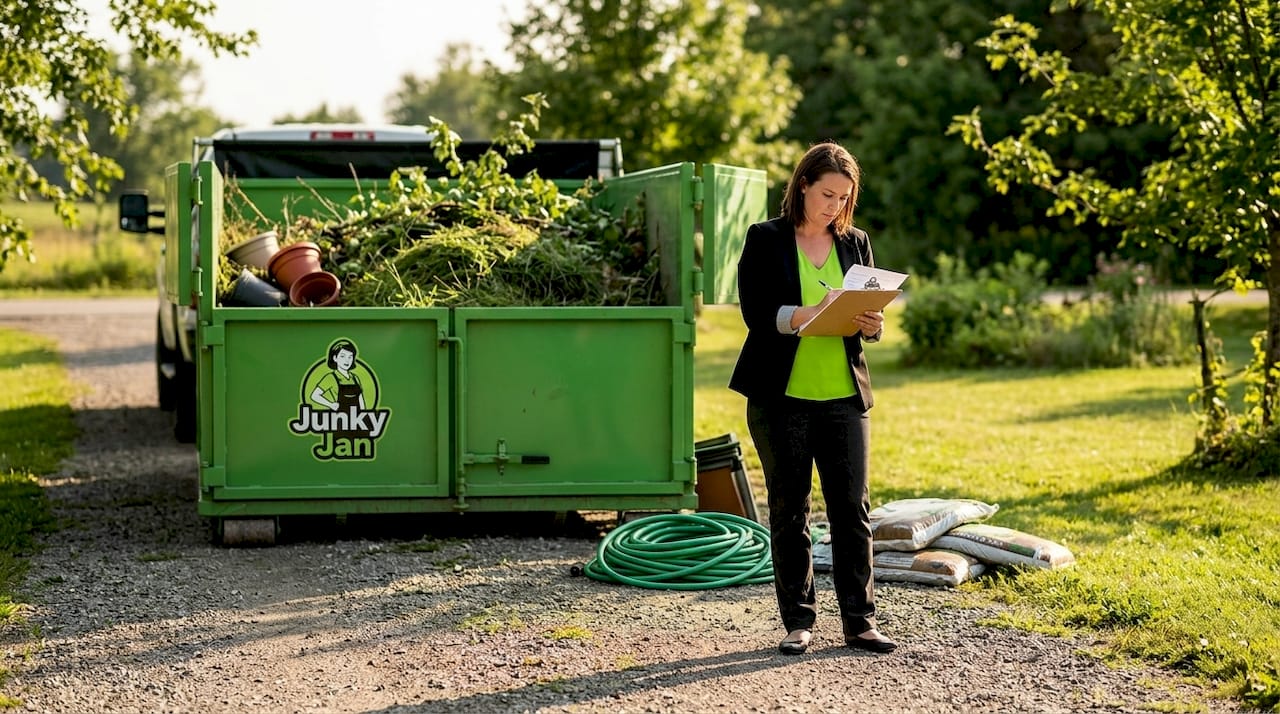
The main advantage is capacity. You can handle a full property cleanout, a post-storm debris pile, or a major landscaping overhaul without scheduling multiple pickups. Proper dumpster placement close to the work area also reduces labor and prevents unnecessary property damage during loading.
The downside is that roll-offs require a permit in many municipalities when placed on public streets. For high-density rental properties with limited driveways, placement logistics can be complicated.
3. Dedicated green waste containers
These are the containers specifically designed for garden waste collection at rentals. Unlike general trash bins, green waste containers signal to tenants exactly what goes where, which dramatically reduces contamination incidents.
Many municipalities offer dedicated green bin programs as part of standard waste collection. Some charge an additional monthly fee; others include it in base utility rates. If your local waste hauler offers this, it is usually the most cost-effective solution for ongoing yard debris pickup services at smaller residential rentals.
For property managers overseeing multiple units, you may need to negotiate a multi-property contract to get consistent service schedules across your portfolio.
4. Bulk pickup services from municipal haulers
Most cities and counties offer at least one annual bulk pickup date specifically for yard waste and bulky green debris. Some offer quarterly scheduling. This is a zero-cost option worth factoring into your annual maintenance calendar.
The limitation is obvious: you cannot count on bulk pickup for unplanned cleanouts. A tenant who abandons a property with an overgrown yard in July is not going to wait until November for the next scheduled pickup date.
Use bulk pickup as a supplement, not a primary strategy.
5. Contracted yard waste hauling
Signing a recurring contract with a private yard debris pickup service gives you predictability. You know the pickup schedule, the pricing, and the compliance standards your vendor is held to. This matters most for apartment complex cleanouts and mid-to-large rental portfolios where waste volumes are consistent and high.
Contracted hauling also puts documentation in your corner. Proper waste management requires licensed services and record-keeping to avoid fines. A contracted vendor should provide pickup confirmation and disposal documentation you can store for compliance purposes.
The tradeoff is inflexibility. If you sign a 12-month contract and your property sits vacant for three months, you are still paying.
6. Seasonal and event-based cleanout services
This is the most underused option in trash removal for rentals. On-demand cleanout services, typically offered by local junk and debris removal companies, fill the gap between scheduled pickups and urgent needs.
Think post-storm cleanup. Think move-out cleanouts where the departing tenant left behind branches, patio furniture, and a dead shrub. Storm debris removal requires a fast response to prevent property damage and safety hazards, and your standard hauler is not going to show up same-day.
On-demand services are priced by load, which makes them easy to budget without long-term commitment.
7. Recycling and composting program integration
If your municipality or a local private vendor offers composting or mulching programs, integrate them. This is how to dispose of yard waste in a way that actually lowers your long-term costs. Diverting yard debris to compost or mulch reduces the volume hitting the landfill, which cuts your tipping fees on every load.
Some programs will pick up green waste and return processed mulch you can use in common areas or landscaping. That is a direct cost offset worth calculating.
8. Comparison of yard waste removal methods
Here is how the main options stack up across the criteria that matter most to property managers:
| Method | Cost | Compliance support | Flexibility | Best for |
|---|---|---|---|---|
| Roll-off dumpster rental | Moderate to high | Requires coordination | High | Large cleanouts, multi-unit properties |
| Green waste containers | Low to moderate | Built-in segregation | Low | Ongoing residential rentals |
| Municipal bulk pickup | Free | Varies by locality | Very low | Planned, infrequent debris |
| Contracted hauling | Moderate | Strong documentation | Moderate | Consistent, high-volume portfolios |
| On-demand cleanout services | Pay per load | Depends on vendor | Very high | Urgent, seasonal, or move-out needs |
| Composting programs | Low | Eco-compliance focus | Low to moderate | Smaller ongoing green waste |
Pro Tip: For mixed portfolios, the best waste removal for landlords is usually a combination: dedicated green containers for routine debris, a contracted hauler for predictability, and an on-demand service for cleanouts and storms.
9. Situational recommendations by property type
Choosing the right method depends on your specific situation. Here is a practical breakdown:
-
Small single-family or duplex rentals. Municipal green waste containers plus a reliable on-demand service for move-outs covers most scenarios. You do not need a contract.
-
Large apartment complexes. Contracted hauling with dedicated green bins at each building is the baseline. Add an on-demand service for seasonal surges and post-storm cleanup.
-
High-turnover rental properties. You need flexibility above all else. Seasonal surges from frequent move-outs require pickups that can be scheduled with short lead times. On-demand services are your primary tool here.
-
Properties in strict separation jurisdictions. If your municipality enforces yard waste separation, you cannot afford to skip dedicated containers. Contamination fees compound quickly, especially across multiple properties.
-
Budget-conscious management. Maximize your existing containers before adding services. Sorting and breaking down debris properly can increase dumpster capacity by 20 to 30%, reducing how often you need extra pickups.
-
Post-storm or seasonal spike situations. Pre-schedule extra pickups in advance of hurricane season or heavy foliage months. React after the fact and you will pay surge pricing and deal with overflow complaints.
My take on what most property managers get wrong
I have worked around enough landlords and property managers to know the pattern. Green waste management gets treated like a minor operational detail until a fine shows up or a tenant complaint escalates. By then, the problem has already grown.
The single most common mistake I see is relying on one method for every situation. A contracted hauler is great for routine weeks, but they will not show up the morning after a storm takes down three trees. You need layered solutions.
Tenant education is also wildly underestimated. The cleanest, most compliant bin setup in the world falls apart if tenants do not understand what goes where. A single laminated sign near the bin with clear categories cuts contamination incidents significantly. Pair that with the right container choice and you have a system that mostly runs itself.
Seasonal planning is the other gap. The properties that stay compliant and clean are managed by people who look at the calendar in January and schedule extra capacity for hurricane season, fall cleanouts, and end-of-lease months. They are not reacting. They are ahead of it.
Local partnerships matter too. A vendor who knows your properties by name, who picks up the phone, and who can dispatch same-day is worth more than a national contract with a three-day lead time.
— gam
How Junky Jan supports rental property cleanouts in South Florida
If you manage rental properties in Miami, Hollywood, or Broward County, Junky Jan handles the yard debris, junk, and cleanout work that scheduled haulers cannot or will not touch on short notice. Same-day and next-day pickups mean you are not waiting around with an overgrown lot or a post-storm debris pile while tenants complain.
Pricing is straightforward, based on load size with no hidden fees. Junky Jan's crews are licensed and insured, which matters when you need documentation for compliance records. Whether you need a one-time property junk removal after a move-out or a recurring arrangement for your portfolio, the service adapts to your situation. Reach out directly to get a same-day quote.
FAQ
What counts as yard waste at a rental property?
Yard waste typically includes grass clippings, leaves, branches, shrubs, soil, and plant trimmings. Most municipalities exclude treated wood, concrete, or mixed trash from green waste bins.
Can landlords be fined for improper yard waste disposal?
Yes. Poor waste handling can trigger municipal fines and damage long-term property values. In jurisdictions with separation mandates, mixing yard debris with general trash generates contamination surcharges on top of standard penalties.
How often should yard waste be removed from rental properties?
It depends on property size and tenant activity. Routine residential rentals typically need weekly or biweekly collection. High-turnover properties and those in heavy-foliage areas benefit from more frequent pickups, especially during seasonal peaks.
What is the cheapest way to dispose of yard waste at a rental?
Municipal bulk pickup programs are free but infrequent. Integrating a composting or mulching program lowers tipping fees over time. For urgent needs, on-demand services priced by load offer the best cost-to-flexibility ratio without long-term contracts.
Do tenants or landlords handle yard waste removal?
Lease agreements determine responsibility, but landlords remain liable for code compliance regardless of how duties are split. Most property managers take direct control of yard waste removal to avoid compliance risk from tenant mishandling.